
A Connoisseur’s Guide to North Indian Curries: Flavours, Textures, and Traditions

What if the vibrant orange hue of your favourite curry isn't just a colour, but a complex architectural blueprint designed to balance heat, fat, and fragrance? For many, the first encounter with a traditional menu can be a daunting experience, often leading to a safe but repetitive order of the same familiar dishes. You might feel that the distinctions between velvety gravies are subtle, or perhaps you worry that a new choice might result in an overwhelming level of spice that masks the delicate flavours of the meat and vegetables.
It's a common sentiment among diners who appreciate quality but haven't yet mastered the nuances of the regional kitchen. This guide to North Indian curries is designed to transform that uncertainty into expertise, offering you a seat at the table to discover the rich "mother gravies" that form the heart of this world-renowned cuisine. We'll peel back the layers of tradition to show you how specific spice pairings create the soul of a dish, from the slow-cooked indulgence of Dal Makhani to the aromatic depths of a Mutton Rogan Josh. By the time we finish our journey, you'll possess the sensory vocabulary to order a perfectly balanced meal with the confidence of a seasoned connoisseur.
Key Takeaways
Uncover the sophisticated architecture of bespoke masalas that define the rich, aromatic profile of authentic Northern regional dishes.
Use this guide to North Indian curries to identify the "mother gravies", including the velvety Makhani foundation and the intensely savoury Bhuna onion base.
Learn to navigate a menu with confidence by understanding the unique sensory details of classics like Butter Chicken and the vibrant Mutton Rogan Josh.
Master the art of bread pairings by exploring the textural differences between Garlic Naan and Tandoori Roti to perfectly complement your choice of gravy.
Discover how to elevate any occasion through professional catering that honours traditional hospitality while maintaining high-end culinary excellence.
Table of Contents
The Essence of the North: What Defines an Authentic North Indian Curry?
To understand the soul of a true authentic North Indian curry, one must look past the generic heat often associated with the term. In the North, the profile is defined by a luxurious richness, a velvety texture, and an aromatic complexity that lingers on the palate. Unlike the thinner, coconut-based broths of the South, Northern dishes lean into the abundance of the land, using dairy, nuts, and slow-cooked onions to create a heavy, satisfying body. This isn't just food; it's a legacy of hospitality that treats every diner like a royal guest.
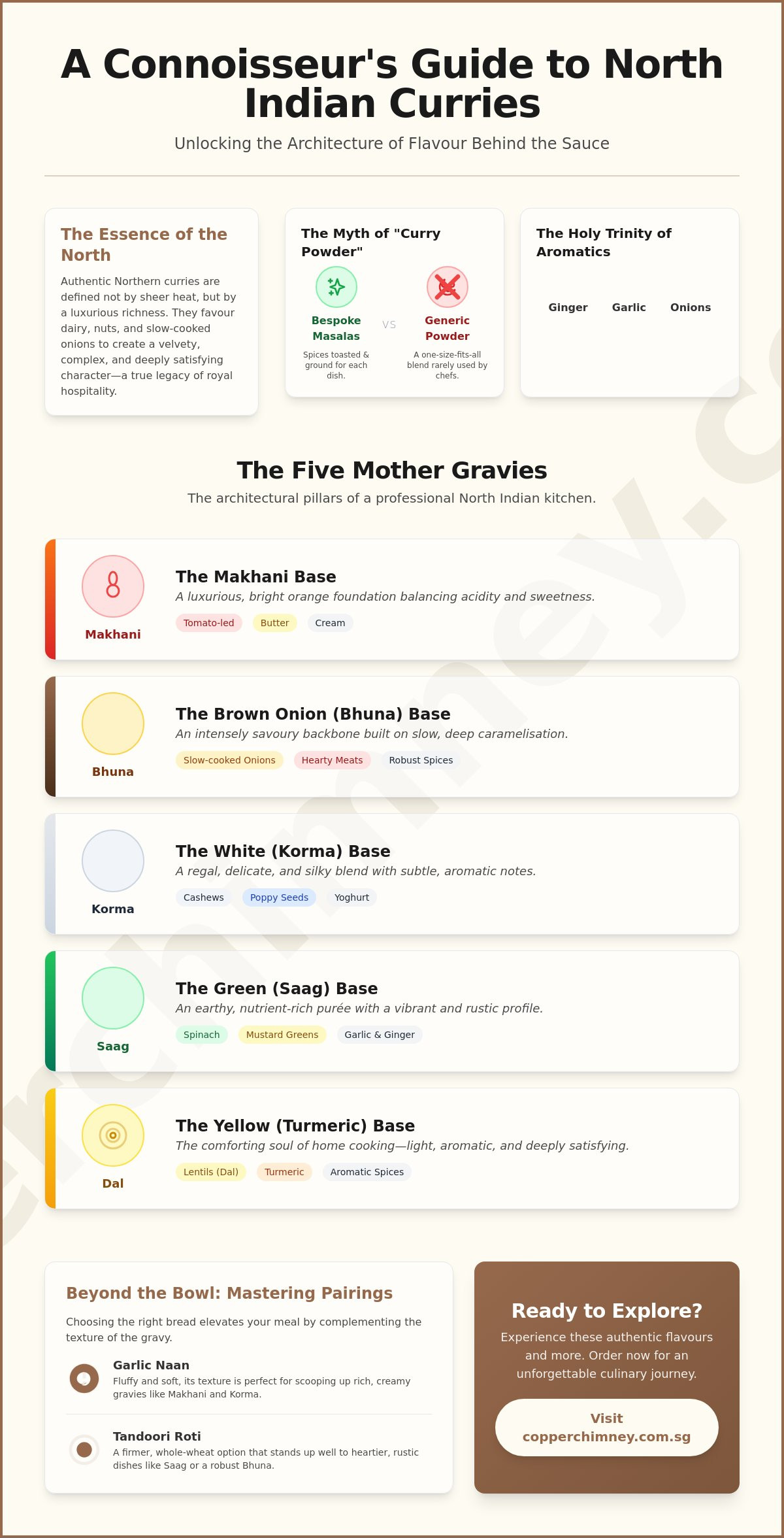
A vital part of any guide to North Indian curries is debunking the myth of "curry powder." In a professional kitchen, such a thing doesn't exist. Instead, chefs rely on bespoke masalas, where spices are toasted and ground specifically for each individual dish. This process is anchored by the art of bhuna. This technique involves slow-frying spices in oil or ghee until the fat separates, a sensory signal that the raw edges of the spices have been tamed into a deep, savoury essence. It's a test of patience that defines the difference between a rushed meal and a masterpiece.
In the spirit of traditional regional hospitality, Halal-certified preparation is a non-negotiable standard for an authentic experience. It ensures that every guest can partake in the meal with complete peace of mind, reflecting the historic role of the North as a cultural crossroads. This commitment to dietary inclusivity isn't just a certification; it's a mark of respect for the diverse community that has shaped these flavours over centuries.
The Historical Tapestry of Flavours
The flavours we celebrate today are a vibrant weave of Persian and Mughal influences. Over centuries, rustic stews from the frontier transformed into "darbari" or royal delicacies, refined for the emperors of Delhi and Lucknow. Because the Northern climate experiences harsher winters, the cuisine naturally evolved to include energy-dense ingredients like cream, yoghurt, and ground cashews. These elements don't just add richness; they provide the cooling, silky counterpoint to the warmth of the spices.
The Holy Trinity of Aromatics
The foundation of almost every dish starts with the "holy trinity" of ginger, garlic, and onions. While whole spices like cardamom and cinnamon are added early to infuse the oil, ground masalas are introduced later to preserve their volatile oils. The final flourish is often the tadka, or tempering. This is where whole spices are sizzled in hot ghee and poured over the dish just before serving, releasing a final burst of fragrance that triggers an immediate physical response from the hungry diner.
The Five Mother Gravies: The Architecture of a Masterpiece
In the disciplined environment of a professional kitchen, a chef doesn't simply "make a curry." Instead, they construct a dish upon one of five foundational pillars known as the mother gravies. This architectural approach is the technical secret that ensures consistency and depth across a diverse menu. If you're using this guide to North Indian curries to refine your palate, understanding these bases is the first step toward appreciating the skill required to balance such intense flavours.
The Makhani Base: A luxurious, tomato-led foundation enriched with butter and cream. It's famous for its bright orange hue and a delicate balance of acidity and sweetness.
The Brown Onion (Bhuna) Base: This intensely savoury foundation relies on onions that have been slow-cooked until they reach a deep, chocolatey caramelisation. It provides the backbone for many of the heartier meat dishes.
The White (Korma) Base: A regal and delicate blend of ground cashews, poppy seeds, and thickened yoghurt. It's prized for its silky texture and subtle floral notes.
The Green (Saag) Base: An earthy, nutrient-rich puree of spinach and mustard greens, often tempered with garlic and ginger to create a vibrant, rustic profile.
The Yellow (Turmeric) Base: Often considered the comforting soul of the home, this lentil-based foundation is light, aromatic, and deeply satisfying.
Makhani vs. Korma: A Study in Creaminess
While both bases are celebrated for their richness, they occupy opposite ends of the flavour spectrum. The Makhani base relies on the natural tanginess of tomatoes, which cuts through the heavy cream to create a refreshing finish. In contrast, a true Shahi Korma is purely indulgent, featuring nutty undertones and a hint of kewra or rose water. These bases are often paired with Essential North Indian Classics, where the Makhani suits charred tandoori proteins and the Korma elevates tender vegetables or mild meats.
The Boldness of Bhuna and Saag
For those who prefer a more robust dining experience, the Bhuna and Saag bases offer incredible textural complexity. The slow-cooking of onions in a Bhuna base eventually causes the fats to rise, creating the signature "Rogani" oil finish that carries the heat of the spices. Saag dishes provide a different sensation, where the slight bitterness of the tempered greens is rounded off by a dollop of fresh butter. These bases are the choice of the true spice connoisseur who seeks a lingering, multi-dimensional heat. If you're curious to taste these architectural marvels for yourself, you might find your new favourite among the authentic offerings at Copper Chimney.
The Connoisseur’s Selection: Essential North Indian Classics
Having explored the technical foundations of the mother gravies, we can now turn our attention to the specific masterpieces that define a professional menu. This guide to North Indian curries wouldn't be complete without highlighting the dishes that have become global benchmarks for excellence. These selections represent a journey through history, where royal patronage and regional innovation met to create something truly extraordinary. Each dish tells a story of its own, from the slow-simmered depths of the Punjab to the aromatic valleys of Kashmir.
The Signature Poultry and Meat Delights
Butter Chicken, or Murgh Makhani, stands as the undisputed global ambassador of Indian taste. An authentic version relies on more than just cream; it requires pieces of Tandoori Chicken that have been charred in a clay oven to provide a subtle, smoky counterpoint to the velvet-smooth gravy. Its spicier cousin, Chicken Tikka Masala, offers a more vibrant heat and a thicker texture, catering to those who desire a bolder profile. For a truly aromatic experience, Mutton Rogan Josh is an essential Kashmiri treasure. Its signature red hue traditionally comes from Alkanet root, while the inclusion of fennel powder and ginger gives it a refreshing finish that belies its rich appearance.
Vegetarian Gems of the North
The vegetarian repertoire of the North is equally prestigious, often led by Paneer Butter Masala. This dish uses the versatile, unaged cheese to absorb the essence of a tangy Makhani base, providing a satisfying bite that rivals any meat-based dish. When Experiencing the North, one must also appreciate the humble lentil. Dal Makhani is the ultimate test of a chef's patience. It's slow-cooked for up to 24 hours until the black lentils and kidney beans reach a creamy complexity that is worlds away from the rustic, tempered charm of a Dal Tadka.
For a modern twist, Gobi Manchurian represents the unique Chindian fusion heritage, where Northern techniques meet bold Szechwan influences. This dish highlights the adaptability of the regional palate, offering a crispy, tangy alternative to traditional gravies. Whether you're dining in a prestigious establishment or arranging professional catering for a corporate event, these classics remain the gold standard for any connoisseur. They represent a balance of spice and substance that has been perfected over generations.
Beyond the Bowl: Mastering the Art of Pairing
A true connoisseur understands that a masterpiece on the plate is only complete when paired with the correct accompaniment. While many casual diners might default to a side of plain rice, a comprehensive guide to North Indian curries must emphasise that these gravies were historically designed to be enjoyed with bread. The thick, indulgent textures of a Makhani or Bhuna base require a sturdy vehicle to carry the flavour from the bowl to the palate. It's a tactile experience where the choice of bread can fundamentally alter the sensory profile of the meal.
Beyond the primary pairing, the North Indian table is a study in balance. The intense heat and richness of the main dishes are constantly moderated by cooling sides and sharp condiments. Raita, a seasoned yoghurt dip, isn't just a side dish; it's a culinary tool used to reset the taste buds between bites. Similarly, a small serving of Achar (pickle) provides the necessary acidity to cut through the heavy fats of the dairy-based gravies, ensuring that each spoonful feels as vibrant as the first.
The Tandoori Bread Selection
The hierarchy of tandoori breads offers a range of textures to suit different gravies. Garlic Naan, with its charred bubbles and buttery finish, is the perfect vessel for scooping up thick, velvety sauces like Butter Chicken or Paneer Butter Masala. For those enjoying lighter, onion-based curries, the Tandoori Roti offers a rustic, whole-wheat alternative that doesn't overwhelm the delicate spices. The secret lies in the smoky environment of the clay tandoor oven, which imparts a distinct charred aroma that complements the toasted masalas within the curry itself.
Rice, Biryani, and Refreshments
While bread is the traditional choice, rice still plays a prestigious role, particularly when served as a Lucknowi Mutton Biryani. Unlike the spicy, layered versions found in the South, this Northern variant is known for its subtle fragrance and long-grain basmati rice, acting as a sophisticated companion rather than a competing flavour. Within this guide to North Indian curries, we also find that a salt or mango Lassi provides a probiotic-rich cooling effect that aids digestion after a heavy meal. If you're ready to master these pairings for yourself, you can reserve a table at Copper Chimney to experience the perfect harmony of tandoori bread and authentic gravy.
Experiencing the North: From Restaurant Dining to Grand Catering
At Copper Chimney, we view ourselves as custodians of flavour, bridging the gap between historical tradition and the vibrant, modern palate of Singapore. This guide to North Indian curries has detailed the technical artistry behind the cuisine, but the true magic happens when these elements come together on your table. Our philosophy is rooted in the warmth of regional hospitality, where every meal is treated as an invitation into our heritage. Whether you're visiting our bustling Little India location or our serene spot at Mandai, the experience is designed to be a sensory journey that rewards the curious diner.
Our signature Butter Chicken and Mutton Rogan Josh remain the gold standards of our kitchen because we refuse to take shortcuts. We understand that a connoisseur can taste the difference between a rushed gravy and one that has been allowed to develop its "Rogani" oil finish through patient slow-cooking. By maintaining these high-end culinary standards, we ensure that every bite carries the nostalgia of a traditional Northern kitchen while meeting the expectations of a sophisticated international audience.
A Legacy of Halal Excellence
Inclusivity is at the heart of our hospitality. We've made a firm commitment to Halal-certified ingredients and preparation techniques, ensuring that our authentic flavours can be enjoyed by everyone. This dedication allows us to serve as a cultural bridge, particularly through our specialised Chindian fusion offerings like Gobi Manchurian and Chilli Chicken. These dishes represent a unique regional niche that has become a beloved part of the Singaporean food landscape. We invite you to bring this spirit of excellence to your next event with a Halal Indian catering experience that your guests will remember for its authenticity and depth.
Planning Your Next Culinary Journey
The beauty of North Indian cuisine lies in its versatility, making it as suitable for a quick professional lunch as it is for a grand celebration. For the office, our Executive and Premium Bento Boxes offer a curated, high-quality meal that brings the richness of the North to your desk without compromise. When the occasion calls for something more theatrical, our live stations featuring a Chaat Master create an interactive culinary environment that engages all the senses. From intimate team dinners to large-scale corporate gatherings, we provide the expertise to ensure your meal is perfectly balanced. Don't leave your next meal to chance; book your authentic dining experience today and let us guide you through the storied flavours of the North.
Embark on Your Next Culinary Adventure
Mastering the nuances of Northern cuisine turns every meal into a sophisticated exploration of heritage. You now understand that the secret lies in the architectural foundation of the mother gravies and the deliberate, smoky charred finish of the tandoor. By choosing the right bread to cradle your curry and balancing the heat with cooling raitas, you've elevated your dining from a simple routine to a true connoisseur's experience.
At Copper Chimney, we pride ourselves on being a bridge between tradition and modern fusion. As a trusted catering partner for corporate events across Singapore, we bring our Halal-certified North Indian and Chindian fusion directly to your professional gatherings. Whether you're craving our award-winning signature Butter Chicken or looking to explore the vibrant depths of our regional specialties, we're here to host you. This guide to North Indian curries is just the beginning of your journey. We invite you to explore our authentic North Indian menu and book your table today. We look forward to welcoming you as our guest for an unforgettable meal.
Frequently Asked Questions
What is the difference between Butter Chicken and Chicken Tikka Masala?
Butter Chicken is defined by its silkiness and mild, buttery finish, whereas Chicken Tikka Masala offers a more robust, textured experience with a punchier spice profile. While both feature tandoori-grilled poultry, the latter's gravy is typically thicker and includes more sautéed aromatics like onions and peppers. It's a choice between velvety elegance and a vibrant, chunky sauce that holds its own against a crisp Garlic Naan.
Is North Indian food always spicy?
North Indian cuisine prioritises aromatic complexity and richness over raw heat, meaning many dishes are surprisingly mild. This guide to North Indian curries highlights that while spices like cumin and cardamom provide depth, the inclusion of cream, yoghurt, and nuts often tempers the chilli. You'll find that the warmth is designed to be comforting rather than overwhelming, allowing the delicate flavours of the proteins to shine through.
What are the best vegetarian options in North Indian cuisine?
Paneer Butter Masala and Dal Makhani are the crowning jewels for any vegetarian connoisseur. The former features soft, unaged cheese in a tangy tomato base, while the latter offers a deep, smoky complexity from slow-cooked black lentils. Other excellent choices include Gobi Manchurian for those seeking a tangy fusion or a rich Paneer Tikka for a truly indulgent, meat-free feast that doesn't compromise on texture.
Why is Dal Makhani cooked for so many hours?
The extended cooking time for Dal Makhani is essential to transform tough black lentils and kidney beans into a buttery, homogenous masterpiece. Traditionally simmered over low heat for up to twenty-four hours, this process allows the lentils to soften completely while the spices penetrate deep into every grain. It's this dedication to time that creates the legendary creamy texture that simply can't be replicated with a quick boil.
What makes Mutton Rogan Josh so red if it isn’t always spicy?
The vibrant crimson hue of a traditional Mutton Rogan Josh comes from Kashmiri red chillies or the dried Alkanet root, known as Ratan Jot. These ingredients are prized for their ability to impart an intense, royal colour without delivering a scorching level of heat. When combined with fennel powder and ginger, they create a balanced, aromatic treasure that is as visually stunning as it is delicious on the palate.
Can I get Halal-certified North Indian catering in Singapore?
You can certainly find premium Halal-certified North Indian catering in Singapore for both private and corporate events. Copper Chimney provides a comprehensive range of services, from Executive Bento Boxes for office lunches to elaborate live stations featuring a Chaat Master. It's a reliable way to ensure that your guests enjoy authentic regional flavours while adhering to important dietary standards and trust markers.
What bread should I order with a creamy Korma curry?
A soft, pillowy Garlic Naan or a plain Naan is the ideal companion for the delicate, nutty profile of a Korma. Because Korma gravies are typically thinner and more refined than a Bhuna or Makhani base, you need a bread that can absorb the sauce without competing with its floral notes. The slight char from the tandoor oven adds a subtle smokiness that perfectly offsets the Korma's creamy sweetness.
What is the "Chindian" fusion mentioned in North Indian menus?
"Chindian" fusion is a unique culinary niche that blends traditional Indian masalas with Chinese wok-cooking techniques and ingredients like soy sauce and ginger. This guide to North Indian curries wouldn't be complete without mentioning favourites like Chilli Chicken or Gobi Manchurian. These dishes offer a tangy, spicy, and often crispy alternative to traditional gravies, representing the innovative spirit of the regional kitchen.


Comments