
Lucknowi Mutton Biryani: A Connoisseur’s Guide to Awadhi Elegance in Singapore

Updated: May 6
What if the most luxurious biryani you've ever tasted didn't rely on a single gram of aggressive chili heat to impress your palate? Many diners in Singapore often find themselves overwhelmed by the fiery intensity of common biryani styles, where the delicate flavour of the meat is frequently lost beneath a mountain of spice. You likely appreciate the complexity of Indian cuisine but crave a more refined, aromatic experience that prioritises scent and subtlety over sheer heat. At Copper Chimney, we've spent over 12 years perfecting the art of the Awadhi kitchen to ensure every grain of rice tells a story of royal heritage.
In this connoisseur's guide, you'll discover the elegant world of lucknowi mutton biryani and see why this Nawabi masterpiece is the definitive choice for those seeking a sophisticated Halal-certified meal. We'll explore the centuries-old "dum" cooking technique, identify the hallmarks that separate it from its bolder Hyderabadi cousins, and show you how to bring this award-winning tradition to your next corporate event or family dinner with confidence. From the fragrance of saffron to the tender texture of slow-cooked meat, you're about to learn what makes this dish a true icon of culinary excellence.
Key Takeaways
Uncover the regal heritage of Awadhi cuisine and learn how the Nawabs of Lucknow transformed biryani into a masterpiece of subtle elegance and Persian influence.
Master the art of identifying authentic Lucknowi Mutton Biryani through its unique aromatic profile, favouring delicate spices like mace and cardamom over intense chilli heat.
Understand the technical brilliance of the "breath-heavy" slow-cooking method, which uses a traditional dough seal to lock in every molecule of fragrance and moisture.
Learn the essential differences between the major regional preparation styles to help you navigate Singapore’s diverse menus like a true culinary expert.
Discover why seeking out a Halal-certified, award-winning establishment is the secret to savouring the most authentic and sophisticated Nawabi flavours locally.
Table of Contents The Royal Heritage: What is Lucknowi Mutton Biryani? Fragrance over Fire: The Distinctive Flavour Profile Lucknowi vs. Hyderabadi Biryani: Which Should You Choose? The Culinary Craft: Understanding the Dum Pukht Method Savouring Authentic Lucknowi Mutton Biryani in Singapore
The Royal Heritage: What is Lucknowi Mutton Biryani?
To understand the soul of North Indian gastronomy, one must look toward the historic city of Lucknow. Often referred to as the crown jewel of Awadhi cuisine, The Royal Heritage: What is Lucknowi Mutton Biryani? represents a legacy of refinement that dates back to the 18th century. Unlike the fiery, spice-heavy versions found in the south, this dish is a masterclass in subtlety. It was perfected in the royal kitchens of the Nawabs of Awadh, who were inspired by Persian culinary traditions to create something uniquely aromatic and sophisticated. The hallmark of an authentic Lucknowi Mutton Biryani is the "Pakki" method; this involves partially cooking the meat and the long-grain Basmati rice separately before they're layered and finished together under a slow "dum" seal.
The Awadhi Culinary Philosophy
The essence of Lucknow's kitchen lies in "Ganga-Jamuni tehzeeb," a poetic term describing the harmonious fusion of Hindu and Muslim cultures. This cultural blend resulted in a courtly style of cooking that values aroma over raw heat. While regional biryanis can be rustic and bold, the Awadhi approach is one of quiet elegance. Every spice is chosen to complement, not overpower, the other ingredients. This commitment to culinary grace is exactly what we bring to the table when searching for high-quality Indian food in Singapore today. It's a dining experience that feels like an invitation to a royal banquet, where the scent of saffron and screwpine water fills the air without overwhelming the palate.
Why "Mutton" is the Traditional Choice
In the original royal recipes of Lucknow, tender goat meat was the undisputed choice for a feast. The preference for mutton isn't just about tradition; it's a matter of culinary chemistry. As the Lucknowi mutton biryani slow-cooks, the natural fats from the bone-in mutton melt into the rice. This process enriches each grain with a velvety texture that chicken simply cannot replicate. In the local Singaporean context, sourcing is vital for authenticity. Professional kitchens ensure that only Halal-certified, premium cuts of mutton are used. This ensures that the dish remains inclusive and respects the dietary traditions of our diverse community while maintaining the high standards set by the Nawabs centuries ago. The result is a dish where the meat is so tender it yields at the touch of a fork, perfectly balanced by the fragrant, separate grains of rice.
Fragrance over Fire: The Distinctive Flavour Profile
To understand Lucknowi Mutton Biryani, one must first set aside any expectations of aggressive chilli heat. Unlike its fiery counterparts from the south, this Awadhi masterpiece prioritises aroma over spice. The heat is subtle, derived from white pepper and green chillies rather than heavy red powders. This allows the sophisticated "potli masala" to shine. Central to this bouquet are mace (javitri), green cardamom, and cloves, which provide a warm, woody foundation that lingers on the senses without scorching the tongue.
The true magic lies in the addition of floral waters. A few drops of "Itar" (edible perfume) and "Kewra" (screwpine water) transform the dish into a sensory experience that begins long before the first bite. To achieve that iconic elegance, chefs use a blend of warm milk and hand-picked saffron. This mixture isn't just for colour; it creates a creamy, luxurious mouthfeel and ensures the rice grains transition beautifully from pearly white to a rich golden hue.
The Secret Spice Blend of the Khansamas
The royal chefs, or Khansamas, of the Awadhi courts guarded their recipes with immense pride. Their blends often included rare ingredients like stone flower (pathar ka phool) for an earthy depth and royal cumin (shahi jeera) for its sweet, nutty fragrance. You'll notice a distinct absence of tomatoes in an authentic lucknowi mutton biryani. Instead, the meat is tenderised through a long yogurt marination, which provides a gentle tang and a velvety texture. This process is essential for creating the Yakhni, which is the flavourful, clarified mutton stock used to cook the rice to ensure every grain is infused with the essence of the meat. The Culinary Craft: Understanding the Dum Pukht Method explains how this slow-cooking technique allows these delicate spices to meld without losing their individual character.
Sensory Hallmarks of a Perfect Plate
A perfect serving of this biryani is a visual and tactile triumph. The rice grains must be long, distinct, and entirely non-greasy, appearing like polished jewels on the plate. When you press a piece of mutton, it should yield to the slightest pressure, exhibiting a "melt-in-the-mouth" quality that is the result of hours of patient simmering. The final hallmark is the aftertaste. Rather than a burning palate, you're left with a complex, lingering note of rose, saffron, and sweet spices. It's a refined finish that invites you back for another forkful. If you're eager to experience this royal tradition in Singapore, you can reserve a table at our Syed Alwi location to taste our award-winning preparation firsthand.
Lucknowi vs. Hyderabadi Biryani: Which Should You Choose?
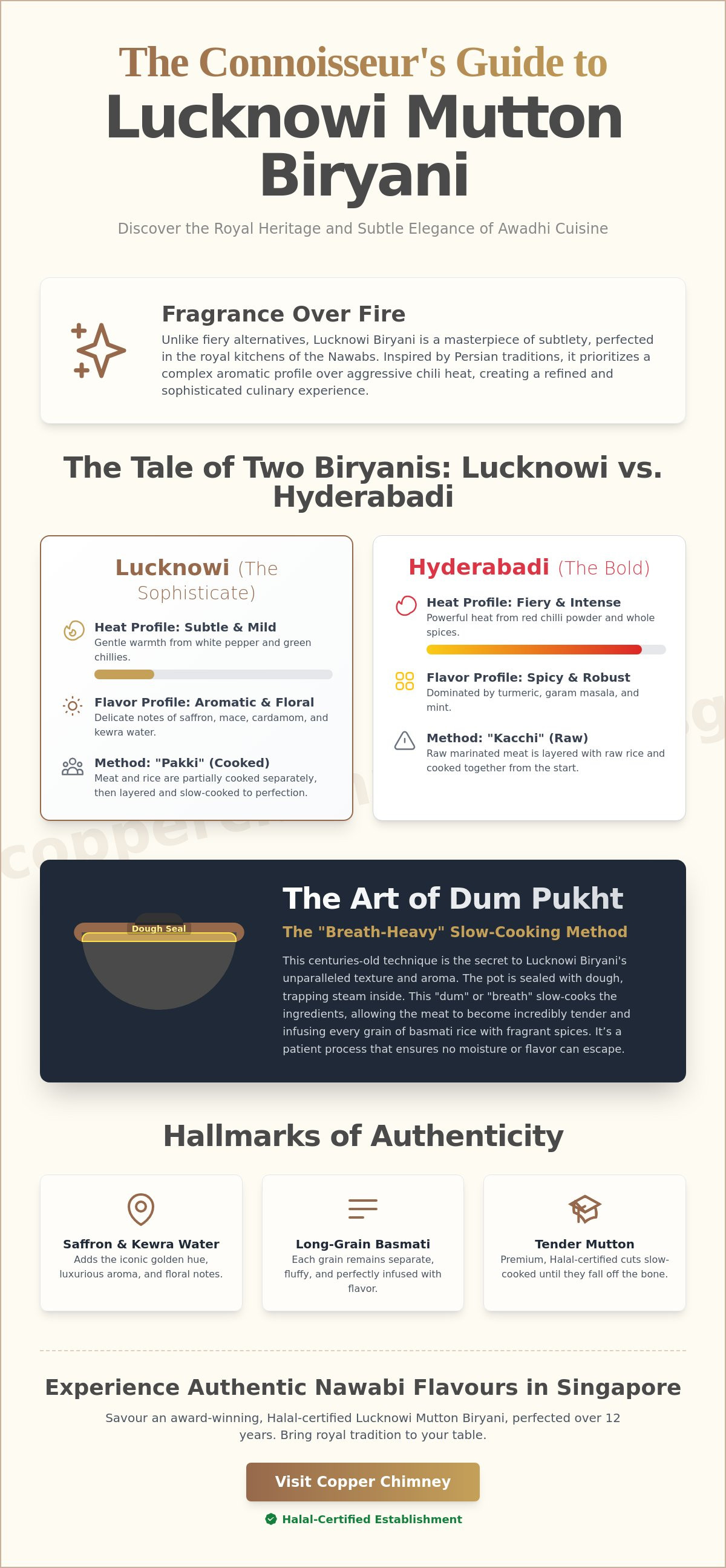
Choosing between these two legendary styles often feels like a delightful culinary crossroads. The technical heart of the debate lies in the cooking method. Lucknowi mutton biryani employs the "Pakki" technique; the meat and rice are partially cooked separately before being layered and finished on a slow "dum" heat. This results in a dish where every grain of long-stalked basmati is moist, separate, and infused with a gentle perfume. In contrast, the Hyderabadi "Kacchi" method involves layering raw, marinated mutton with parboiled rice. The intense heat of the sealed pot forces the meat juices directly into the rice, creating a more robust and oily texture.
The flavour palettes are worlds apart. Lucknowi preparations lean into subtle, floral aromatics like mace, star anise, and screwpine water. It's a sophisticated experience where the spices don't shout; they whisper. Hyderabadi biryani is the louder cousin. It's famous for its bold, spicy, and tangy notes, often derived from a generous use of green chillies and souring agents. While the Lucknowi "masala" is seamlessly integrated into the rice, the Hyderabadi version often features a distinct, fiery layer of masala at the bottom of the handi.
Technique: Lucknowi uses Pakki (cooked meat) while Hyderabadi uses Kacchi (raw meat).
Aromatics: Lucknowi focuses on floral notes; Hyderabadi focuses on spice and heat.
Texture: Lucknowi grains are delicate and moist; Hyderabadi grains are often firmer and more saturated with fat.
Presentation: Lucknowi is typically lighter in colour, whereas Hyderabadi often shows vibrant orange and yellow hues from heavy saffron and spice use.
When to Order Lucknowi Mutton Biryani
This dish is the perfect selection for diners who appreciate complexity without the aggressive sting of chilli heat. It's particularly well-suited for elegant corporate catering across Singapore, as its balanced profile appeals to a broad range of international palates. For a truly regal spread, pair your Lucknowi Mutton Biryani with the creamy, slow-cooked Dal Maharaja. The lentils' buttery richness complements the biryani's aromatic mutton without competing for attention.
The Hyderabadi Alternative
If you're craving a pungent kick, the Hyderabadi style is your go-to. It relies heavily on crisp fried onions and fresh mint to create a sharp, vibrant profile. Both styles have carved out their own territory within the vibrant Little India restaurant scene. While one offers the fiery spirit of the Deccan, the Lucknowi Mutton Biryani remains the choice for those seeking the refined grace of the Awadhi courts.
The Culinary Craft: Understanding the Dum Pukht Method
To truly appreciate a Lucknowi Mutton Biryani, one must understand the ancient alchemy known as Dum Pukht. Translated literally as "breath-heavy" or "to breathe and cook," this Persian-influenced technique is the soul of Awadhi cuisine. Unlike other styles that rely on aggressive frying or high-flame sautéing, Dum Pukht treats ingredients with a gentle, patient reverence. The meat and rice are placed in a heavy-bottomed pot, which is then hermetically sealed with a "Parda," a thick ribbon of wheat dough. This seal ensures that not a single molecule of aroma escapes; it forces the steam to circulate within and infuse every grain of rice with the deep, meaty essence of the mutton.
The magic happens through slow, indirect heat. Our chefs rely on this steady temperature to transform even the most robust cuts of mutton into succulent morsels that practically melt on the tongue. It is a process that cannot be rushed, as it requires a master's intuition to know exactly when the "Dum" is ready. There are no digital timers that can replace the seasoned nose of a chef who identifies the precise moment the steam has done its work. When the dough seal is finally broken, the resulting cloud of fragrance is enough to transport any diner from the busy streets of Singapore straight to the royal courts of Lucknow.
Layering: The Architect’s Work
Construction is just as vital as the cooking itself. The process begins with the "Yakhni," a rich, spiced mutton stock that simmers at the base of the pot. Over this, the chef carefully layers long-grain Basmati rice that has been parboiled to exactly 70 per cent doneness. Between these layers, we drizzle saffron-infused milk and artisanal ghee, creating a tapestry of flavour and moisture. A strict rule in our kitchen is that the pot must never be stirred. The layers must remain distinct until the final fluffing, ensuring the rice retains its structural integrity and elegant length.
The Art of the Serve
Presentation is the final flourish of this culinary performance. A proper serving of Lucknowi Mutton Biryani should showcase a spectrum of white, pale yellow, and deep saffron grains, each separate and glistening. To balance the richness, we recommend a side of Burani Raita, a traditional garlic-infused yoghurt that provides a cool, sharp contrast to the warm spices. The experience reaches its peak the second the knife pierces the golden crust of the dough seal, releasing a concentrated burst of cardamom and mace that perfumes the entire room.
Ready to experience this royal tradition for yourself? You can reserve your table at our Syed Alwi location to witness the artistry of Dum Pukht firsthand.
Savouring Authentic Lucknowi Mutton Biryani in Singapore
Finding a plate of Lucknowi Mutton Biryani that stays true to the royal kitchens of Uttar Pradesh is a rare feat in Singapore's crowded food scene. Most versions you'll encounter lean too heavily on aggressive spice mixes, which unfortunately masks the delicate floral notes and subtle aromatics that define the Awadhi style. We've spent years refining our process at Copper Chimney to ensure that every grain of rice tells a story of heritage. Our Halal-certified kitchen allows us to share this regal tradition with a diverse community, ensuring that everyone can enjoy the succulent, tender texture of premium mutton without compromise.
The secret lies in the patience of the "dum" cooking method. We don't believe in shortcuts. Every batch uses long-grain Basmati rice that's been aged to perfection, ensuring it absorbs the essence of the meat without becoming mushy. It's a balance of science and soul that sets a true connoisseur's meal apart from a standard takeaway order. By sourcing only the freshest cuts of meat and premium saffron, we maintain a standard of quality that reflects the Nawabi history we represent.
The Copper Chimney Difference
Our kitchen remains a sanctuary for old-world techniques. We insist on using heavy-bottomed copper vessels for our biryanis. These traditional pots are essential because they distribute heat with incredible precision, preventing the rice from sticking while allowing the mutton to tenderise in its own juices. Our chefs are masters of the original spice ratios, carefully blending cardamom, mace, and saffron to achieve that elusive fragrance. If you want to create a truly indulgent meat-lover's feast, pair your biryani with our signature Mutton Rogan Josh. The combination of the aromatic rice and the rich, slow-cooked gravy is a match made in culinary heaven.
Plan Your Next Nawabi Feast
Whether it's a quiet weeknight dinner or a grand family celebration, the experience is designed to be seamless and welcoming. You can find our award-winning dishes at various locations across Singapore, each offering a unique atmosphere that blends modern comfort with traditional hospitality. For those hosting a family gathering, we recommend that you reserve a table in advance to ensure your party is accommodated in our main dining room.
If you're planning a special event or corporate lunch, our premium catering services bring the elegance of Lucknow directly to your venue. We handle the intricate details of service and presentation, allowing you to focus on your guests while we provide a feast that would satisfy a Sultan. Experience the difference that premium ingredients and decades of expertise make in every bite of our lucknowi mutton biryani.
Embark on Your Own Awadhi Culinary Journey
Savouring the perfect Lucknowi Mutton Biryani is more than just a meal; it's an encounter with centuries of royal heritage. You've discovered how the delicate Dum Pukht method transforms simple ingredients into a fragrant masterpiece, prioritising aroma over the aggressive heat found in other regional varieties. This isn't just about food. It's about the subtle art of spice and the patience of slow cooking that defines true Awadhi elegance.
Since 2012, Copper Chimney has served as a trusted custodian of these traditions for Singaporean foodies. Our award-winning recipe relies on authentic Awadhi spices to recreate the flavours of the Nawabs right here in the city. As a Halal-certified destination for North Indian excellence, we ensure every guest enjoys a meal that's both prestigious and deeply personal. Whether you're a long-time devotee or a curious newcomer, the refined layers of our biryani offer a sensory experience that lingers long after the final bite.
We look forward to sharing this timeless tradition with you soon.
Frequently Asked Questions
Is Lucknowi mutton biryani very spicy?
Lucknowi mutton biryani is celebrated for its delicate balance of spices rather than intense chilli heat. Unlike its fiery southern counterparts, this dish focuses on the fragrance of mace, cardamom, and saffron. It’s an elegant choice for those who appreciate nuanced layers of flavour. This refined profile has earned it a 4.8 star rating among diners who prefer a sophisticated, aromatic palate over a burning sensation.
What is the difference between Lucknowi and Hyderabadi biryani?
The primary distinction lies in the preparation style, with Lucknowi mutton biryani following the "Pukka" method where meat and rice are partially cooked separately before being layered. Hyderabadi biryani typically uses the "Kutchi" style, involving raw marinated meat. While the Hyderabadi version is bold and spicy, the Lucknowi version is light, fragrant, and easy on the stomach. It’s a transition from robust intensity to royal subtlety.
Is the Lucknowi mutton biryani at Copper Chimney Halal-certified?
Yes, Copper Chimney is a Halal-certified establishment, ensuring our culinary traditions are accessible to all guests in Singapore. Since our inception in 2012, we’ve maintained strict adherence to Halal standards across our diverse menu. This commitment allows us to serve our award-winning dishes to a wide community of food lovers. You can dine with complete peace of mind while enjoying our authentic North Indian and Indian Chinese fusion.
What makes the "Dum" method so special for biryani?
The "Dum" method is a slow-cooking technique where the pot is sealed with dough to trap steam and infuse flavours. This process allows the mutton to tenderise in its own juices while the long-grain basmati rice absorbs every aromatic note. It’s a 200 year old tradition that ensures nothing escapes the pot. The result is a moist, fragrant masterpiece that defines the soul of Awadhi cuisine.
Which side dishes pair best with Lucknowi biryani?
A cooling Burani Raita or a rich Mirchi Ka Salan provides the perfect contrast to the fragrant rice. At Copper Chimney, we often recommend pairing your meal with our hand-crafted Malai Chicken Tikka or a crisp salad. These additions enhance the meal without overpowering the delicate saffron notes. A side of pickled onions adds a sharp crunch that elevates the entire dining experience.
Can I order Lucknowi mutton biryani for corporate catering in Singapore?
You can certainly order our lucknowi mutton biryani for corporate catering events across Singapore. We provide tailored packages for groups of 20 to over 500 guests; our team ensures every bento or buffet tray arrives sizzling and fresh. We’ve managed over 1,000 corporate bookings, delivering a taste of royal India to offices in the CBD and beyond. It’s a sophisticated way to impress clients and reward your team.
Why is Lucknowi biryani sometimes called "Awadhi Biryani"?
The term "Awadhi" refers to the historic Awadh region of Northern India, where Lucknow served as the capital under the rule of the Nawabs. These 18th century rulers were legendary patrons of the arts and gastronomy, fostering a refined culinary culture. Calling it Awadhi biryani pays homage to this royal heritage and the sophisticated techniques developed in the Nawab’s kitchens. It’s more than a meal; it’s a piece of history.
What kind of rice is used in authentic Lucknowi biryani?
Authentic Lucknowi biryani exclusively uses premium, aged long-grain Basmati rice for its superior aroma and fluffy texture. Each grain must remain separate and distinct, never clumping together. This specific variety of rice is typically aged for at least 12 to 24 months to ensure it absorbs the flavours of the mutton stock perfectly. The long, slender grains act as the perfect canvas for the golden hues of saffron.


Comments