
Tiffin: The Timeless Art of the Indian Lunchbox and its Modern Legacy
- Copper Chimney

- 9 hours ago
- 13 min read
Last Tuesday, 14 May, a diner named Sarah discovered that her usual plastic-packaged salad felt remarkably hollow compared to the aromatic, three-tiered stainless steel carrier sitting on the next desk. This wasn't just a simple lunchbox; it was a tiffin, a vessel carrying centuries of heritage and carefully layered flavours. It’s a common frustration for many of us in Singapore that the convenience of modern delivery often comes at the cost of authenticity and warmth. You likely agree that a meal should be more than just fuel; it should be a sensory journey that connects you to tradition and craft.
With over 5,000 specialised delivery couriers still transporting home-cooked meals across Mumbai daily, this practice remains a global gold standard for culinary precision. In this guide, you'll discover the rich cultural significance of these stacked meals and learn how to elevate your daily routine with a balanced, Halal-certified Indian feast. We’ll explore the art of composing the perfect meal and show you how our award-winning kitchen keeps this timeless legacy alive for the modern Singaporean palate, ensuring every bite is as soulful as it is convenient.
Key Takeaways
Trace the fascinating evolution of the midday meal from its colonial British origins to its enduring status as a cherished icon of Indian culinary heritage.
Understand the ingenious design of the tiered stainless steel vessel, crafted to preserve heat and ensure that delicate, aromatic flavours remain perfectly distinct.
Discover why the tiffin is leading a sustainable renaissance in Singapore’s corporate dining scene as an elegant, plastic-free alternative for 2026.
Learn how to curate a sophisticated weekly meal plan that balances traditional North Indian comfort with adventurous, modern fusion options.
Explore how Copper Chimney’s premium catering and bento services bring this timeless tradition to life for contemporary events and office gatherings.
Table of Contents The Story of the Tiffin: From Colonial Tradition to Modern-Day Staple The Anatomy of an Authentic Tiffin: Layers of Flavour and Function Why Tiffin Culture is Seeing a Sustainable Renaissance in 2026 How to Curate Your Own Tiffin Experience: A Connoisseur’s Guide Bringing the Tiffin Spirit to Your Table with Copper Chimney
The Story of the Tiffin: From Colonial Tradition to Modern-Day Staple
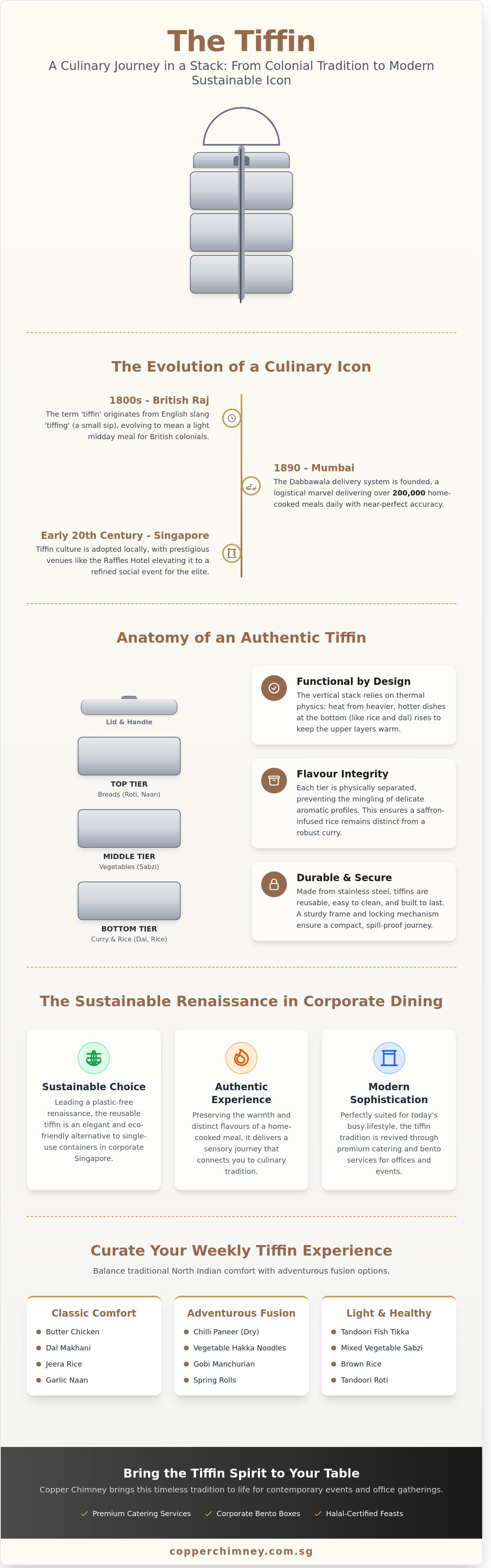
To any seasoned food lover, the word tiffin evokes a specific, rhythmic sound: the metallic clatter of stainless steel latches being unfastened to reveal a steaming, multi-layered treasure. It's a term that describes both the light midday meal itself and the ingenious tiered vessels used to transport it. This culinary tradition is a silver-hued promise of a warm meal, offering a sensory bridge between the home kitchen and the busy professional world. The Story of the Tiffin is one of cultural adaptation, beginning in the 1800s during the British Raj. The term originated from the English slang 'tiffing', which referred to taking a small sip of drink, but it quickly evolved into a substantial meal that filled the long gap between a colonial breakfast and a late dinner.
As the practice matured, the tiffin carrier became an icon of functional design. These cylindrical stacks, usually comprising three or four compartments, allowed for a complete meal of dal, rice, sabzi, and freshly made rotis to be carried without the flavours ever mingling prematurely. The nostalgia of the experience is deeply rooted in the tactile nature of the object. There is a certain joy in the weight of the steel and the way it retains the aromatic heat of a hand-crafted curry. It's an experience that prioritises authenticity over convenience, ensuring that the integrity of every spice is preserved until the very moment of consumption.
To better understand this concept, watch this helpful video:
The Rise of the Dabbawala
The Mumbai dabba delivery system remains a global benchmark for logistical excellence. Founded in 1890 by Mahadeo Havaji Bachche, this network of thousands of delivery men ensures that home-cooked warmth reaches office workers with surgical precision. Even today, they handle over 200,000 lunchboxes daily with an error rate so low it has been studied by Harvard Business School. This system prioritises the 'home-away-from-home' dining experience, connecting the modern professional's needs with the comforting flavours of their own kitchen. It's a testament to how a simple meal can provide emotional sustenance amidst a concrete jungle.
Tiffin in the Singaporean Context
In Singapore, the tiffin culture found a natural home within our vibrant, multi-cultural food landscape. It wasn't merely a container; it was a vessel of heritage that integrated into the local lifestyle. During the early 20th century, prestigious establishments like the Raffles Hotel famously served tiffin curry, turning a humble tradition into a refined social event for the elite. This legacy continues to influence how we perceive Indian cuisine today, blending tradition with modern sophistication. For those eager to explore these deep-rooted culinary traditions further, our guide to authentic Indian food offers a broader look at the flavours and fusions that define our local scene.
The Anatomy of an Authentic Tiffin: Layers of Flavour and Function
The physical structure of a traditional tiffin is a masterclass in functional design. These shimmering stainless steel towers, comprised of individual tiers known as dabbas, are secured by a sturdy metal frame and a tension-based locking mechanism. This clever engineering ensures that a complete, multi-course meal remains compact and portable. In the bustling streets of Singapore, where space and time are at a premium, the tiffin remains a reliable vessel for transporting home-cooked warmth to the office or a picnic at Gardens by the Bay.
Every layer serves a specific purpose beyond just holding food. The vertical stack relies on basic thermal physics; the heat from the lower tiers rises to keep the upper sections warm. More importantly, the physical separation prevents the mingling of distinct aromatic profiles. This isolation ensures that a delicate saffron-infused rice doesn't take on the pungent, spicy notes of a lime pickle. As detailed in the fascinating history of How South Asians Reclaimed Tiffin, this vessel has evolved from a simple lunchbox into a powerful symbol of culinary identity and pride.
For many diners in our diverse community, the most vital aspect of the modern tiffin is its inclusivity. Copper Chimney takes immense pride in being Halal-certified, ensuring that our hand-crafted dishes meet strict dietary standards. This certification acts as a seal of trust, allowing friends and colleagues of all backgrounds to share in the joy of a traditional Indian feast without hesitation.
The Base Layer: Grains and Breads
The foundation of any satisfying meal is the grain. The bottom-most tier usually carries a generous portion of long-grain basmati rice or a fragrant, spice-laden biryani. This layer provides the necessary weight to keep the stack stable. It's also the ideal spot for breads like garlic naan or layered paratha. These breads stay soft and pliable by absorbing the residual heat from the steaming curries positioned directly above them.
The Heart of the Meal: Curries and Proteins
The middle tiers are where the soul of the meal resides. These compartments house rich, gravy-based dishes such as our signature Butter Chicken or a robust Mutton Rogan Josh. We use hand-crafted masalas, ground in-house, to create a depth of flavour that defines North Indian excellence. The tight seals between the dabbas are essential here, preventing any leakage of these precious, aromatic gravies while keeping the sizzling proteins tender.
The Finishing Touches: Sides and Sweets
The uppermost tier is reserved for the lighter, more delicate elements of the meal. You'll often find dry vegetable preparations like Gobi Manchurian, which showcases our award-winning Chindian expertise. This tier also holds crunchy salads, sharp pickles, or a small dessert to cleanse the palate. This arrangement creates a beautiful contrast of textures, ranging from the creamy consistency of a dal to the crisp bite of a fresh onion salad. If you're looking to experience this harmony at your next gathering, consider ordering a curated catering set to bring these authentic layers to your table.
Why Tiffin Culture is Seeing a Sustainable Renaissance in 2026
The rhythmic clink of stainless steel against a mahogany desk is becoming the new soundtrack of the Singaporean lunch hour. As we move through 2026, the sleek, silver silhouette of the tiffin has transitioned from a nostalgic relic into a symbol of modern environmental responsibility. Singapore's Zero Waste Masterplan has accelerated this shift, with the National Environment Agency reporting a 20 percent reduction in single-use plastic waste within the Central Business District since 2024. Corporate professionals are no longer satisfied with the "dabao" culture of flimsy plastic containers that leak heat and flavour; they're choosing the permanence of steel.
High-quality 304-grade stainless steel carriers offer a lifetime of value that plastic simply cannot match. These vessels are virtually indestructible, resisting the dents and scratches of a busy commute on the MRT. Unlike their plastic counterparts, they don't leach chemicals into your steaming hot Dal Maharaja or retain the pungent aromas of a spicy Schezwan stir-fry. This durability makes them a cornerstone of the circular economy, where the focus is on items that last for decades rather than minutes.
Eco-Friendly Lunching for the Modern Professional
The "throwaway culture" that once defined office lunches is being replaced by a more mindful, circular approach. Modern takeaway containers often end up in the Semakau Landfill after a single use, but a stainless steel tiffin can be washed and reused thousands of times without losing its lustre. High-quality steel is non-porous and naturally antibacterial, which makes the cleaning process effortless even after a rich, oil-based curry. Switching from daily plastic disposables to a reusable carrier prevents approximately 250 single-use containers from entering Singapore’s waste stream every year.
The Health Benefits of Tiered Dining
There is a unique psychological satisfaction in unboxing a multi-course meal, tier by tier, at your workstation. This vertical format is naturally designed for nutritional balance; it encourages you to fill one compartment with protein, another with complex carbohydrates like Jeera rice, and the third with fibre-rich vegetables or salads. This structure prevents the "one-pot" overeating habit often found in large, single-compartment bowls. By providing a fixed, pre-portioned volume, the tiered system helps you maintain a healthy intake while ensuring your meal remains as fresh and vibrant as the moment it left the kitchen. For those looking to bring this level of sophisticated, balanced dining to their corporate gatherings, our catering services provide the perfect bridge between traditional flavours and modern presentation.
The minimalist aesthetic of the polished steel carrier also fits perfectly into the contemporary, eco-conscious lifestyle. It's a statement piece that says you value both heritage and the planet. In an age of digital clutter, the tactile experience of assembling and disassembling these tiers provides a brief, meditative pause in a frantic workday. It turns a simple lunch into a curated culinary event, honouring the food and the person eating it.
How to Curate Your Own Tiffin Experience: A Connoisseur’s Guide
Creating a tiffin isn't just about packing leftovers; it's a curated ritual that honours the midday break. To keep your palate engaged throughout the week, I recommend a rotating framework that balances nutrition with sensory delight. A successful lunchbox relies on a simple trio: a complex starch, a primary protein or vegetable curry, and a bright, acidic side to cleanse the palate. By alternating between aromatic basmati rice and hand-crafted rotis, you change the entire texture of the meal, preventing the monotony that often sets in by Wednesday afternoon.
Monday: North Indian comfort with Dal Tadka and Jeera Rice.
Tuesday: Zesty Chindian fusion to spark the senses.
Wednesday: Lean Tandoori proteins with a crisp kachumber salad.
Thursday: Richer gravies like Butter Chicken paired with whole-wheat phulka.
Friday: A celebratory Biryani to signal the start of the weekend.
Maintaining the right temperature is vital if you don't have access to a pantry microwave. In Singapore, high-grade vacuum-insulated stainless steel carriers are a staple for the discerning professional. These vessels, often priced between S$45 and S$80 at local retailers, can preserve heat for up to six hours; ensuring your meal stays as inviting as when it left the kitchen. Beyond heat, don't overlook the visual appeal. A 2023 study on workplace wellness suggests that a visually vibrant meal can improve mood and digestion. Use fresh coriander, a squeeze of lime, or a sprinkling of pomegranate seeds to make your lunch a visual treat.
Blending Tradition with Chindian Fusion
I often find that a tiffin needs a bold, unexpected element to break the routine. You might consider filling one tier with Szechwan Fried Rice for a spicy, wok-charred kick. This pairs beautifully with Chilli Chicken or Paneer Manchurian, providing a tangy, soy-infused contrast to more traditional, creamier gravies. It's this unique Chindian identity that Copper Chimney has refined over the last 12 years, bridging the gap between two beloved culinary worlds with sophisticated ease.
The Essentials of a Halal Tiffin
In our diverse local context, ensuring strict Halal compliance is about both respect and peace of mind. It’s essential to verify the source of every ingredient to maintain these standards. Ordering from a certified establishment removes the guesswork, allowing you to enjoy your meal with total confidence. I recommend choosing proteins that retain their succulence during transit. Tandoori Chicken or a slow-cooked Lamb Shank are excellent choices; they hold their aromatic integrity well and remain tender even after a few hours in a sealed container.
Ready to elevate your office lunch or plan your next corporate gathering? Explore our premium Indian and Chindian catering options to bring the authentic Copper Chimney experience to your team.
Bringing the Tiffin Spirit to Your Table with Copper Chimney
The tiffin represents more than just a meal; it's a connection to home and a testament to the enduring appeal of balanced, soulful food. Since we first opened our doors in Singapore in 2012, Copper Chimney has honoured this legacy by reimagining the classic tiered experience for a modern audience. Through our catering and bento services, we've distilled the essence of a home-cooked Indian feast into a format that fits perfectly into a busy afternoon. Our award-winning North Indian and Chindian flavours are crafted with the same care as a traditional lunchbox, ensuring every bite is aromatic and deeply satisfying.
Corporate Catering with a Personal Touch
Our Executive Bento Boxes mirror the variety and balance of a traditional tiffin, providing a complete meal that satisfies the palate and the spirit. Each box features a curated selection of proteins, vegetables, and grains, carefully partitioned to maintain the integrity of our sizzling Tandoor specialities and saucy Hakka dishes. For organisers managing large teams, our events team simplifies the logistics, handling everything from dietary requirements to timely delivery across the island. We act as the culinary bridge where centuries of Indian tradition meet the precision of modern-day logistics, ensuring that your team feels valued with every hand-crafted morsel. Being 100% Halal-certified, we offer a truly inclusive dining experience that reflects the diverse fabric of Singapore.
Join Us for an Authentic Experience
While our bento boxes bring the feast to you, nothing compares to the atmosphere of our physical homes. We invite you to visit our flagship restaurant on Syed Alwi Road in the heart of Little India. Here, the tiffin spirit is palpable in the warmth of our hospitality and the rhythmic clatter of the kitchen. If you're exploring the lush greenery of the north, our outlet at Mandai Wildlife West offers a family-friendly dining adventure that pairs perfectly with a day of discovery. Check our various locations to find the nearest Copper Chimney to you.
We look forward to welcoming you to rediscover the joy of the midday meal. Whether you're dining in our vibrant restaurants or enjoying a premium bento at your desk, our hand-crafted specialities are designed to transport you. It's time to experience the authentic taste of heritage, served with the professional excellence that has made us a cornerstone of the Singaporean food scene for over a decade.
Embrace the Evolution of Your Midday Meal
The tiffin remains a powerful symbol of mindful eating, blending historical charm with the practical needs of a sustainable 2026 lifestyle. It's a reminder that a well-crafted lunch shouldn't be a chore; it’s an experience. These stacked layers offer complex spices and nourishing textures that sustain us through the day. By choosing these reusable, tiered traditions, you're honouring a culinary legacy that celebrates both heritage and environmental responsibility.
Bringing this sophisticated spirit to your office is simpler than you might think. Since 2012, Copper Chimney has maintained its Halal-certified status, making our award-winning North Indian and Chindian fusion a reliable choice for Singapore’s diverse professional landscape. We’ve spent over a decade as a trusted partner for corporate planners who demand excellence, delivering aromatic Tandoor dishes and sizzling Hakka specialities that always impress.
Elevate your next corporate lunch with Copper Chimney's Halal-certified catering and enjoy a seamless blend of tradition and modern service. We look forward to bringing a touch of authentic Indian hospitality to your table soon.
Frequently Asked Questions
What is the meaning of tiffin in an Indian context?
In an Indian context, the word tiffin refers to a light meal or a packed lunch, typically carried in tiered metal containers. This term traces its roots back to the 1800s during the British Raj; it evolved from the word "tiffing" which meant taking a sip of liquor. Today, it represents a cherished ritual of home-cooked nourishment shared at workplaces or schools across the subcontinent.
Is tiffin a breakfast or a lunch meal?
A tiffin is primarily considered a midday lunch meal, though it occasionally refers to a substantial afternoon snack. In Southern India, you'll find the term used for light breakfast items like idli or dosa served outside of standard meal times. It's a versatile concept that fills the gap between early morning tea and the evening family dinner, providing a much-needed energy boost.
What are the common items found in a traditional tiffin carrier?
A traditional tiffin carrier typically holds a balanced assortment of dal, seasonal vegetable sabzi, freshly made rotis, and aromatic basmati rice. Each tier of the cylindrical container keeps these components separate; this ensures the textures remain distinct until they're ready to be enjoyed. You might also find a small portion of tangy pickle or cooling curd tucked into one of the layers.
Why are tiffin boxes usually made of stainless steel?
Stainless steel is the preferred material for these boxes because it's exceptionally durable, non-reactive, and easy to sanitise after oily curries. Since 1950, when mass production of steel became more accessible in India, these containers replaced brass and copper alternatives. They don't retain food odours or stains, making them the perfect vessel for transporting vibrant, spice-rich dishes without any flavour leaching.
Can I get Halal-certified tiffin delivery in Singapore?
You can certainly enjoy Halal-certified tiffin delivery in Singapore through established restaurants like Copper Chimney. We ensure all our offerings meet strict MUIS standards, providing peace of mind for our diverse local community. Whether you're craving a sizzling Tandoori platter or a comforting North Indian curry, our award-winning kitchen delivers authentic, hand-crafted flavours directly to your doorstep or office.
What is the difference between a tiffin and a bento box?
The primary difference lies in the vertical, tiered design of a tiffin compared to the horizontal, compartmentalised layout of a Japanese bento box. While bento boxes often focus on cold or room-temperature artistic arrangements, the Indian version is built for hot, liquid-heavy dishes like gravies and dals. The stainless steel construction offers superior heat retention for hearty, home-style meals that satisfy the soul.
How do I keep the food warm in a tiffin carrier for several hours?
To keep food warm for several hours, you should use an insulated carrier bag or choose a modern double-walled vacuum container. A professional trick involves rinsing the stainless steel tiers with boiling water for 30 seconds before packing your hot food. This pre-heats the metal; it prevents the container from immediately absorbing the thermal energy from your aromatic curries and steaming rice.
Is tiffin culture still relevant in modern-day Singapore?
Tiffin culture remains incredibly relevant in modern-day Singapore as a sustainable, zero-waste alternative to single-use plastic containers. With over 176,000 tonnes of food plastic waste generated locally in 2022, many eco-conscious diners are returning to these classic steel carriers. It's a beautiful way to honour heritage while enjoying a fresh, hand-crafted meal that feels far more personal and sophisticated than standard takeaway packaging.


Comments