
A Connoisseur’s Guide to Indian Mangoes: Varieties, Seasons, and Flavours (2026)

Updated: May 4
Last April, a regular guest at our Singapore restaurant shared their frustration after spending S$45 on a box of imported fruit, only to find them stringy and underwhelming because they were harvested just ten days before their peak. We've all felt that sting of disappointment when the promise of a golden, honey-sweet dessert turns into a bland, fibrous chore. It's often difficult to navigate the vibrant but confusing world of Indian Mangoes when every market vendor in Little India claims to stock the true 'King of Fruits'.
You deserve to experience the authentic, aromatic bliss that only a perfectly ripe specimen can provide. This guide will help you identify the top five varieties arriving in Singapore this 2026 season, from the buttery texture of the Alphonso to the intense sweetness of the Kesar. You'll learn exactly how to select fruit that's ready for the table and understand the rich cultural heritage behind these seasonal treasures. We'll even share professional insights on how to use them to elevate your home cooking, ensuring every bite is a celebration of tradition and craft.
Key Takeaways
Uncover the storied history of the "King of Fruits" and why these specific cultivars have been cherished in royal courts for centuries.
Explore the distinct flavour profiles of the buttery Alphonso and aromatic Kesar, the most coveted varieties of Indian Mangoes arriving this season.
Master the art of selecting the perfect fruit by learning to identify the floral "nose" and sensory cues that signal peak ripeness beyond mere skin colour.
Discover the versatility of the fruit in both sweet and savoury applications, including the traditional role of green mangoes in heritage chutneys.
Learn how Copper Chimney celebrates the harvest in Singapore with authentic, Halal-certified dishes that capture the essence of the mango season.
Table of Contents The Royal Heritage of Indian Mangoes: Why They Reign Supreme A Connoisseur’s Selection: The Most Coveted Varieties The Connoisseur’s Eye: Selecting and Ripening Your Fruit Culinary Artistry: Beyond the Simple Slice Savouring the Season with Copper Chimney
The Royal Heritage of Indian Mangoes: Why They Reign Supreme
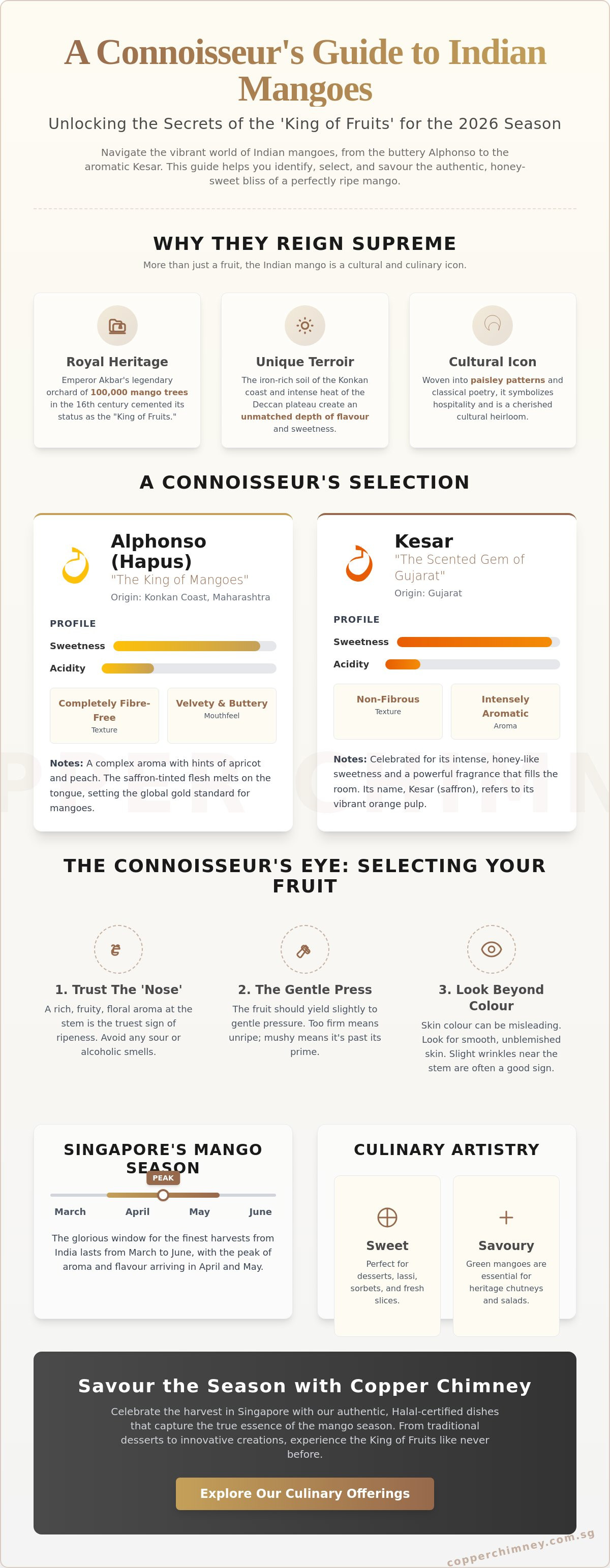
Long ago, the Mughal Emperor Akbar demonstrated his devotion to the fruit by planting an orchard of 100,000 trees in Darbhanga during the 16th century. This wasn't just an act of agriculture; it was a royal obsession that cemented the mango's status as the "King of Fruits." Today, Indian Mangoes continue to hold this throne, distinguished by a profile that's vastly different from the thinner, more acidic varieties often found in Southeast Asia. While many regional mangoes lean towards a tart, firm texture, the Indian cultivars are prized for their buttery, fibre-free pulp and an intense, honey-like sweetness. This unique flavour is a direct result of India's specific terroir. The iron-rich, red laterite soil of the Konkan coast and the intense heat of the Deccan plateau work in harmony to concentrate sugars, creating a depth of flavour that's impossible to replicate elsewhere.
For us in Singapore, the anticipation begins in March and peaks through June. During these four months, the air in premium markets and specialty boutiques fills with a distinct, heady aroma that signals the arrival of these seasonal treasures. It's a short but glorious window where the finest harvests make their way from the orchards of Maharashtra and Gujarat to our tropical shores.
The Cultural Iconography of the Mango
The mango is woven into the very fabric of Indian life, appearing in the intricate paisley patterns of Pashmina shawls and the classical verses of ancient poets. It's the ultimate gesture of hospitality, where a sliced mango served to a guest represents the highest form of welcome. The Alphonso variety stands alone as the global gold standard for mangoes, legendary for its saffron-tinted flesh and velvety texture. For the Indian diaspora in Singapore, biting into a perfectly ripe fruit is more than a culinary experience; it's a sensory bridge to childhood summers and ancestral homes. This nostalgia is a powerful force, turning a simple fruit into a cherished cultural heirloom.
Why India is the Global Epicentre of Mango Diversity
India is home to a staggering 1,000 different varieties, each with a specific lineage and flavour profile. This diversity is protected through traditional farming methods, where farmers still rely on hand-harvesting to ensure the delicate skin isn't bruised by heavy machinery. This meticulous care is why a box of premium Indian Mangoes remains a significant symbol of prestige in Singapore's professional circles. Gifting a crate of hand-picked Kesar or Alphonso isn't just a seasonal trend; it's a sophisticated mark of respect and a shared appreciation for the finer things in life. If you're looking to bring a touch of this royal tradition to your own table, you can explore our curated culinary offerings at the Copper Chimney shop.
A Connoisseur’s Selection: The Most Coveted Varieties
To truly appreciate Indian Mangoes, one must treat them with the same reverence a sommelier reserves for a vintage wine. The subcontinent’s diverse topography creates a seasonal calendar that unfolds like a well-paced tasting menu. Each variety arrives with its own pedigree, offering a specific window of peak ripeness that connoisseurs in Singapore eagerly anticipate every year. From the coastal groves of Maharashtra to the sun-baked orchards of Gujarat, the diversity is staggering.
The Alphonso: A Masterclass in Flavour
Often hailed as the "King of Mangoes," the Alphonso, or Hapus, is the undisputed flagship of the Konkan coast. Its reputation isn't merely marketing; it's built on a texture that's entirely non-fibrous and velvety. When you slice into a ripe Alphonso, you're met with a firm yet yielding flesh that melts on the tongue like a fine saffron-infused custard. The aromatic profile is equally complex. It carries sophisticated hints of apricot and peach, balanced by a subtle citrus lift that prevents the sweetness from becoming cloying.
This variety sets the gold standard for what a premium fruit should be. Its short season, typically peaking in April and May, makes every shipment a celebrated event. Understanding these nuances is part of a larger appreciation for the subcontinent's culinary gifts, much like exploring The Ultimate Guide to Authentic Indian Food in Singapore to see how these traditions translate into a local context. The Alphonso isn't just a fruit; it's a sensory experience that defines the start of the summer heat.
Kesar and Beyond: Exploring Regional Gems
While the Alphonso is celebrated for its brightness, the Kesar mango from Gujarat offers a different kind of allure. Known as the "Queen of Mangoes," its skin often remains a humble green even when the interior has turned a deep, glowing orange. The Kesar is prized for its intense, earthy sweetness and an aroma so potent it can fill an entire room. It typically takes centre stage in May, providing a robust alternative for those who find the Alphonso too delicate.
Other regional stars deserve a place on your plate as the season progresses:
Badami: Often called the Alphonso of Karnataka, it shares a similar buttery texture but usually arrives slightly earlier in the season.
Banganapalli: Hailing from Andhra Pradesh, these are large, oval fruits with a thin skin. Their firm flesh makes them the ideal choice for elegant slicing and presentation.
Langra and Chausa: These are the late-season heroes of the north, appearing in June and July. They offer a honey-like, syrupy sweetness that marks the grand finale of the harvest.
The demand for premium Indian Mangoes in Singapore has grown by 15% annually over the last three years, reflecting a local palate that values authenticity. If you're looking to pair these seasonal flavours with a beautifully crafted meal, we invite you to reserve a table at Syed Alwi and experience the warmth of our traditional hospitality.
The Connoisseur’s Eye: Selecting and Ripening Your Fruit
Choosing the perfect specimen from a crate of Indian Mangoes requires a mastery of the senses. While a golden hue is tempting, colour is often a deceptive indicator of maturity. A seasoned fruit lover knows that true ripeness reveals itself through a gentle give under the thumb and a heady, intoxicating fragrance. If you're browsing a market in Little India or a high-end grocer, don't be afraid to pick up the fruit and engage with it personally.
Focus your attention on the "nose" of the mango, which is the area surrounding the stem. A ripe fruit should emit a rich, floral perfume that hints at the concentrated nectar within. If the fruit lacks this aromatic signature, it likely hasn't reached its peak sugar content. Avoid any fruit with sunken pits, shrivelled skin, or dark, soft bruises. These are clear signs of internal fermentation or poor handling during the long transit from the orchards of Maharashtra or Gujarat.
Patience is a virtue when seeking the best flavour. Many commercial importers use calcium carbide to speed up the process, but this chemical shortcut ruins the delicate flavour profile and can be harmful. Seek out vendors who guarantee naturally ripened fruit. The difference in the velvety texture and complex, honey-like sweetness is undeniable and well worth the extra search.
How to Ripen Mangoes in a Tropical Climate
In Singapore, our consistent humidity and heat provide a fantastic environment for natural maturation. If your mangoes arrive slightly firm, you can easily guide them to perfection at home. Follow these simple steps for the best results:
Place the fruit in a brown paper bag to trap the natural ethylene gas, which accelerates ripening.
Alternatively, bury the fruit in a bin of dry rice; this traditional Indian method ensures even heat distribution and absorbs excess moisture.
Keep the fruit at a consistent room temperature of 25 to 30 degrees Celsius for optimal sugar development.
Don't put firm fruit in the fridge. Cold temperatures halt the enzymatic process, leading to a mealy texture and a permanent loss of sweetness. Only chill the fruit once it's fully ripe and you're ready to enjoy its cooling embrace.
Storage Tips for Maximum Longevity
Once sliced, Indian Mangoes can lose their vibrant lustre quickly. To prevent this, toss the cubes in a small splash of lime juice. The acidity prevents oxidation and keeps that brilliant orange glow intact for your fruit platter. If you've over-purchased during the peak season months of May and June, blend the flesh into a smooth pulp. This pulp stays fresh in an airtight container in the freezer for up to six months, allowing you to whip up a lassi or dessert long after the season ends.
Be mindful of the "sap" near the stem area. This sticky resin, sometimes called "chep," can cause skin irritation or a mild rash for some people. Always wash the fruit thoroughly under cold running water and trim the stem end by about half a centimetre before peeling to ensure the sap doesn't touch the edible flesh or your skin.
Culinary Artistry: Beyond the Simple Slice
While a perfectly ripe slice is a joy, the true magic of Indian Mangoes lies in their incredible versatility. These fruits bridge the gap between sweet and savoury with a grace that few other ingredients possess. In a professional kitchen, we view the mango not just as a dessert, but as a complex component capable of transforming a dish through its acidity, sugar, and floral aroma.
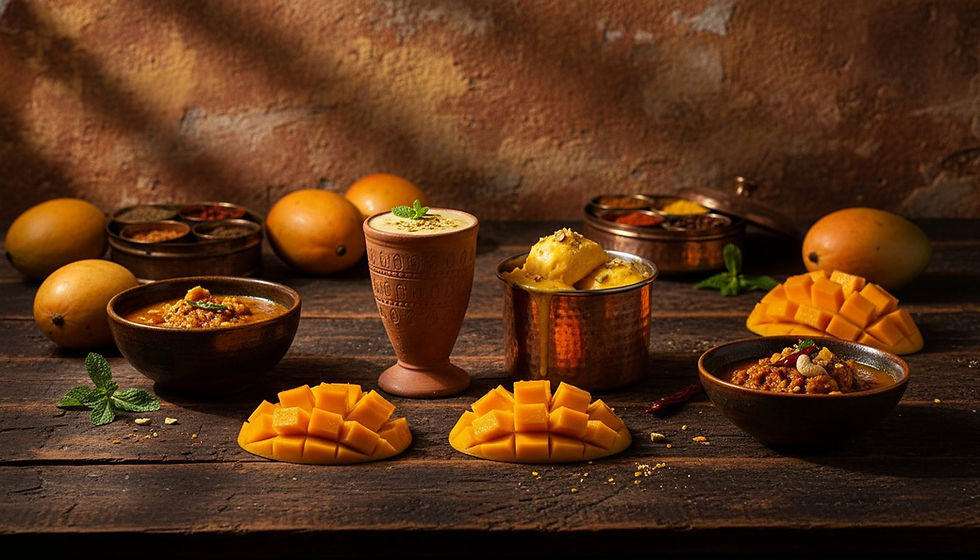
The culinary journey actually begins before the fruit ripens. Green, unripe mangoes are a staple in traditional Indian households, providing a sharp, astringent bite that's essential for authentic pickles and chutneys. These preserves, often matured in jars under the Singapore sun, offer a fermented complexity that balances the heat of a heavy meal. When we look at the iconic Mango Lassi, the secret to its sophistication is the use of premium Alphonso pulp. By infusing the yoghurt blend with aromatic cardamom and hand-picked saffron strands, the drink transitions from a simple refreshment to a royal treat.
Savoury Pairings and Chindian Fusion
Mango acidity is a powerful tool for balancing rich, creamy textures. The heavy, buttery gravy of a classic Butter Chicken finds a brilliant foil in the bright, tropical punch of a mango-based side. We often suggest mango salads, tossed with lime and red chilli, as a refreshing accompaniment for smoky tandoori meats. It cleanses the palate and prepares you for the deep, charred flavours of the clay oven.
This fruit also plays a starring role in the evolution of Chindian food in Singapore. The bold, spicy notes of Schezwan sauces and the umami of soy find a surprising partner in the fruit's natural sugars. This fusion creates a unique profile that resonates with the diverse Singaporean palate, blending the heritage of the subcontinent with local influences. Whether it's a glaze for spicy wings or a component in a tangy stir-fry, the fruit adds a layer of sophistication that's hard to replicate.
The Ultimate Mango Desserts
Traditional Indian desserts celebrate the fruit in its purest form. Aamras is perhaps the most beloved delicacy, consisting of thick, pureed mango served alongside hot, golden puris. It's a dish that evokes deep nostalgia, representing the height of the summer harvest. For those seeking something more refined, Mango Shrikhand offers a sophisticated alternative. This strained yoghurt dessert is whipped until silky, then folded with fresh pulp to create a mousse-like consistency that's light yet indulgent.
The quality of these desserts depends entirely on the source of the fruit. It's vital to use fresh, hand-scooped pulp rather than canned alternatives; the processed versions simply cannot match the vibrant, floral top notes of a fresh Indian mango. This commitment to fresh ingredients ensures that every spoonful carries the authentic soul of the season.
Experience the vibrant flavours of the season at home. Order our seasonal mango specialities online for a taste of authentic Indian craftsmanship.
Savouring the Season with Copper Chimney
As the mercury rises and the scent of ripening fruit fills the air, we welcome the arrival of Indian Mangoes to our kitchens in Singapore. At Copper Chimney, this isn't just a seasonal change; it's a celebration of heritage. We've spent years perfecting the art of North Indian cuisine, ensuring every dish meets our rigorous Halal-certified standards. Our chefs treat these golden fruits with the reverence they deserve, blending them into a menu that balances time-honoured techniques with the vibrant energy of a Singaporean summer. It's a delicate dance of flavours that we've curated to transport you straight to the heart of a sun-drenched orchard.
A Taste of Tradition in Every Dish
Our culinary philosophy centres on authenticity. We source premium produce and hand-ground spices to create the complex layers of flavour found in our North Indian menu. When mango season peaks, our kitchen transforms. We integrate the tartness of raw mango and the honey-like sweetness of the Alphonso into both classic and contemporary recipes. For those planning a special gathering, our catering services offer bespoke mango-themed menus that bring the essence of the orchard to your corporate or private event. You can find these seasonal inspirations at any of our locations across the island, where the aroma of the tandoor meets the perfume of fresh fruit.
Hand-crafted chutneys using seasonal harvests.
Refreshing mango-infused beverages to beat the tropical heat.
Desserts that highlight the buttery texture of premium Indian Mangoes.
Experience the Copper Chimney Hospitality
We believe that great food is only half the story. Our service is built on the warmth of traditional Indian hospitality, where we treat every guest who walks through our doors like a member of our own family. It's a conversational, relaxed atmosphere that invites you to linger over your meal. Since our inception, we've acted as a bridge between the deep-rooted traditions of India and the diverse tastes of Singapore. Every bite of our seasonal specials is designed to evoke the nostalgia of a dusty Indian afternoon, cooled by a refreshing lassi or a decadent dessert. It's an award-winning experience that combines professional excellence with a deeply personal touch. Don't miss out on this fleeting season. Book your table for a seasonal feast at our Syed Alwi flagship and taste the magic for yourself.
Savour the Golden Harvest of the Subcontinent
The fleeting window for Indian Mangoes is a period of pure sensory indulgence that transforms the culinary landscape every year. You've explored the regal lineage of the Alphonso and the honeyed depth of the Kesar, mastering the delicate art of selecting fruit at its aromatic peak. Whether enjoyed as a simple, chilled slice or woven into sophisticated desserts, these fruits represent a centuries-old heritage of flavour.
At Copper Chimney, we bring this seasonal magic to life through our award-winning culinary excellence in Singapore. Our chefs have expertly crafted seasonal menus that celebrate the fruit's versatility alongside our signature Halal-certified North Indian and Chindian specialities. Since 2012, we've welcomed guests into a space where traditional hospitality meets modern refinement. It's an invitation to rediscover authenticity through dishes that have earned us a prestigious reputation across the island for over 12 years.
We look forward to sharing this vibrant season with you soon.
Frequently Asked Questions
When is the best time to buy Indian mangoes in Singapore?
The peak season to buy Indian mangoes in Singapore is between April and June each year. This 90-day window is when the most coveted varieties arrive at local markets like Little India or speciality grocers. While some early shipments start in late March, the quality and natural sweetness reach their absolute zenith in mid-May when temperatures in India peak.
What is the difference between Alphonso and Kesar mangoes?
Alphonso mangoes are prized for their creamy, buttery texture and distinct saffron-hued flesh, whereas Kesar mangoes offer a more intense sweetness with a notable earthy aroma. While the Alphonso is often called the king, the Kesar, primarily from Gujarat, is the queen of pulp due to its lack of fibre. You'll find Alphonso is usually more expensive, often costing 20% to 30% more than Kesar in Singaporean markets.
How can I tell if an Indian mango is ripe without cutting it?
You can identify a ripe mango by its fragrant, floral aroma at the stem end and a slight give when gently squeezed. Don't rely solely on colour, as some varieties like the Langra remain green even when perfectly mature. A ripe fruit'll feel heavy for its size, indicating a high sugar content and plenty of juice that's ready to be enjoyed.
Why are Indian mangoes more expensive than those from other countries?
Indian mangoes command a higher price because they're typically air-freighted to Singapore within 24 to 48 hours of harvest to ensure peak freshness. Unlike varieties from neighbouring countries that may arrive by sea, these fruits have a short shelf life and high transport costs. The 2023 export data showed that logistics can account for up to 50% of the final retail price in premium boutiques.
Can I use Indian mangoes for cooking savoury dishes?
You can certainly use Indian mangoes in savoury dishes, particularly the tart, unripe green mangoes used for traditional pickles or refreshing drinks. Even ripe varieties add a sophisticated depth to curries or salads. At Copper Chimney, we appreciate how the fruit's natural acidity balances rich, spicy gravies, creating a harmonious blend of flavours that define authentic North Indian cuisine.
Are Indian mangoes available in Singapore year-round?
Indian mangoes aren't available year-round in Singapore as they're strictly seasonal fruits harvested once a year. The export window usually closes by late July or early August after the monsoon begins in India. If you see mangoes in December, they're likely sourced from Thailand, Australia, or South America, which offer different flavour profiles compared to the traditional Indian orchards.
How should I store mangoes to keep them fresh for longer?
Store your unripe mangoes at room temperature in a breathable paper bag to speed up the ripening process. Once they're soft and fragrant, move them to the refrigerator's crisper drawer to keep them fresh for another 3 to 5 days. Avoid keeping them in plastic bags, which can trap moisture and cause the fruit to spoil prematurely or lose its aromatic punch.
What makes Alphonso mangoes the "King of Fruits"?
The Alphonso is hailed as the "King of Fruits" because of its unparalleled velvety texture and a complex flavour profile that balances sweetness with a hint of acidity. Its royal status dates back to the 15th century when it was named after Afonso de Albuquerque. With its vibrant golden skin and lack of fibrous threads, it remains the gold standard for Indian mangoes globally.

What a wonderfully detailed guide to Indian mangoes! The insights on varieties, ripeness, and culinary uses make this a delightful read for every mango lover. It also highlights how thoughtful presentation matters, whether serving fresh fruit or using custom mailers boxes to deliver premium seasonal mangoes with care and freshness.