
A Connoisseur’s Guide to Non-Spicy Indian Food Options in Singapore (2026)

What if the most profound secrets of Indian cuisine aren't found in the sting of a chilli, but in the silken embrace of a cashew-based gravy or the delicate perfume of hand-picked saffron? Many diners across Singapore hesitate to explore this vibrant culinary landscape because they fear an accidental mouth-burn, often assuming that authenticity is synonymous with heat. It's a common struggle, especially when you're trying to find gentle yet soul-warming dishes for children or guests with sensitive palates who deserve to enjoy the heritage of the region without discomfort.
I've spent years observing how the right balance of aromatics can transform a meal, and I promise that you don't need fire to experience true culinary depth. This guide reveals the sophisticated world of non-spicy Indian food options that prioritise fragrance and creaminess over sheer intensity. We'll journey through the rich history of mild delicacies like velvety Dal Makhani and the aromatic Lucknowi Mutton Biryani; you'll gain the insight needed to understand the ingredients that create these lush profiles. By the end, you'll be able to lead any group through a diverse menu with the absolute confidence of a seasoned connoisseur.
Key Takeaways
Learn to distinguish between 'spiced' and 'spicy' by understanding how aromatics like cardamom and cloves provide culinary depth without the heat.
Discover why creamy North Indian staples such as Butter Chicken and slow-cooked Dal Makhani are the gold standard for mild, comforting flavours.
Explore a curated selection of non-spicy Indian food options ranging from fragrant tandoori delights to the unique savoury-sweet balance of Chindian fusion.
Understand how traditional techniques like 'dum' cooking and high-heat clay ovens seal in moisture and aroma without needing heavy chilli.
Gain the confidence to curate inclusive menus for corporate events by effectively communicating heat levels and selecting diverse, mild dishes.
Table of Contents
Beyond the Heat: Understanding the Aromatic World of Non-Spicy Indian Cuisine
The Creamy Pillars of North Indian Flavours: Butter Chicken and Beyond
Tandoori and Grain-Based Delights: Aromatics Without the Burn
Chindian Fusion and Street Food: Savoury, Sweet, and Tangy Alternatives
Curating the Perfect Mild Feast: Ordering and Catering for Every Palate
Beyond the Heat: Understanding the Aromatic World of Non-Spicy Indian Cuisine
To truly appreciate the breadth of subcontinental flavours, one must first dismantle the persistent myth that all Indian food is designed to set the palate ablaze. For the discerning diner, the beauty of the menu lies in its incredible nuance; it is a complex architecture of taste where heat is merely one possible layer. When exploring non-spicy Indian food options, we aren't looking for "watered-down" versions of classics, but rather for dishes that celebrate the diverse history of Indian cuisine through fragrance and texture. North Indian culinary traditions are particularly generous in this regard, as they lean heavily on the luxury of dairy, slow-rendered fats, and ground nuts to create profiles that are as regal as they are approachable.
The distinction between 'spiced' and 'spicy' is a fundamental concept that every food lover should master. While a dish might be heavily spiced with a dozen different seeds and barks, it can remain entirely mild if the chef excludes the green and red chillies that provide capsaicin heat. This approach allows the subtle notes of the ingredients to shine through, creating a meal that is deeply satisfying without being overwhelming. It's this masterful control of aromatics that defines the best non-spicy Indian food options available in Singapore today.
The Science of Aromatics
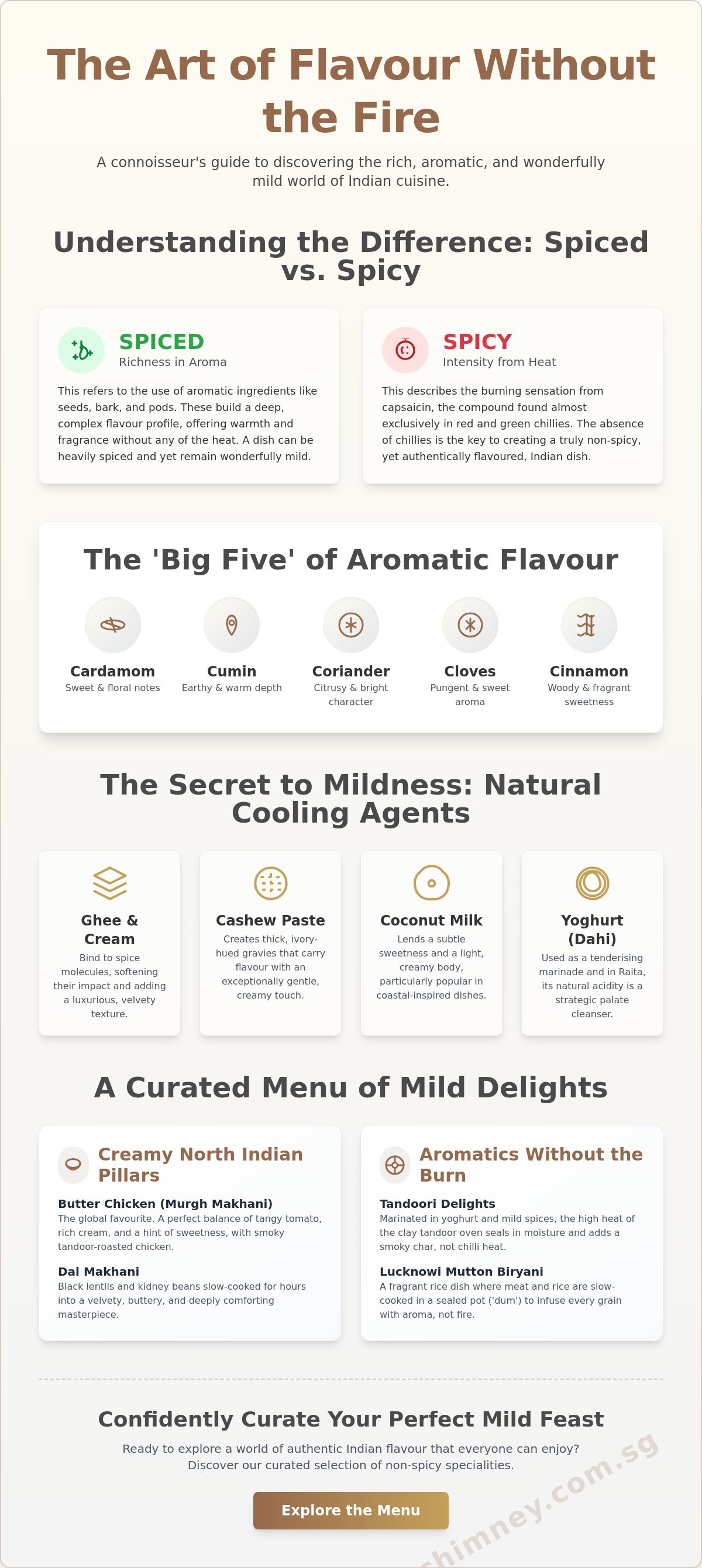
The secret to depth without distress lies in what I call the 'Big Five' aromatics: cardamom, cumin, coriander, cloves, and cinnamon. These ingredients provide a foundation of warmth and earthiness that satisfies the senses without triggering the sharp sting of capsaicin. Aromatic depth is the presence of fragrance without the presence of capsaicin. Skilled chefs use slow-cooking techniques to mellow these spices, allowing their raw, volatile oils to transform into a rounded, mellow essence that permeates every bite. This process ensures that the spices are integrated into the sauce rather than standing out as harsh or bitter notes on the tongue.
Cooling Agents in Indian Cooking
The kitchen relies on a sophisticated toolkit of cooling agents to manage intensity and add a velvety mouthfeel. Fats like ghee and heavy cream don't just add richness; they actually bind to spice molecules and soften their impact on the tongue. Coconut milk and cashew nut pastes are frequently employed to create thick, ivory-coloured gravies that carry flavour with a gentle touch. Yoghurt, or dahi, serves as both a tenderising marinade and a crucial side dish. A well-prepared Raita, for instance, isn't just a garnish; it's a strategic palate cleanser that uses the natural acidity of dairy to reset your taste buds between courses. This tradition ensures that even the most sensitive palate can enjoy a full-flavoured feast with total peace of mind.
The Creamy Pillars of North Indian Flavours: Butter Chicken and Beyond
If the aromatic spices we explored previously are the foundation of a meal, then the "Makhani" family of dishes represents its most luxurious peaks. North Indian cuisine has long been celebrated for its ability to transform humble ingredients into regal feasts through the generous use of dairy and slow-rendering techniques. For those seeking non-spicy Indian food options, these preparations are the gold standard. They offer a deep, resonant satisfaction that relies on the richness of the sauce rather than the intensity of the chilli, making them an ideal entry point for heat-shy diners and children alike. This evolution is a fascinating part of Singapore's food heritage, where regional Indian classics have been embraced for their comforting, mild qualities.
Deconstructing the Perfect Butter Chicken
Butter Chicken, or Murgh Makhani, is perhaps the most famous of all mild Indian delicacies. The secret to its global appeal lies in the delicate balance of three primary elements: the tanginess of sun-ripened tomatoes, the richness of heavy cream, and a subtle sweetness derived from honey or sugar. The chicken is first roasted in a tandoor, which imparts a wonderful charcoal smokiness that provides a layer of complexity without the need for any capsaicin heat. For a deeper look at what makes this dish so special, you might enjoy reading Singapore's Best Butter Chicken: A Rich & Creamy Guide. This dish proves that flavour can be bold and memorable without being "hot".
The Luxury of Dal Makhani
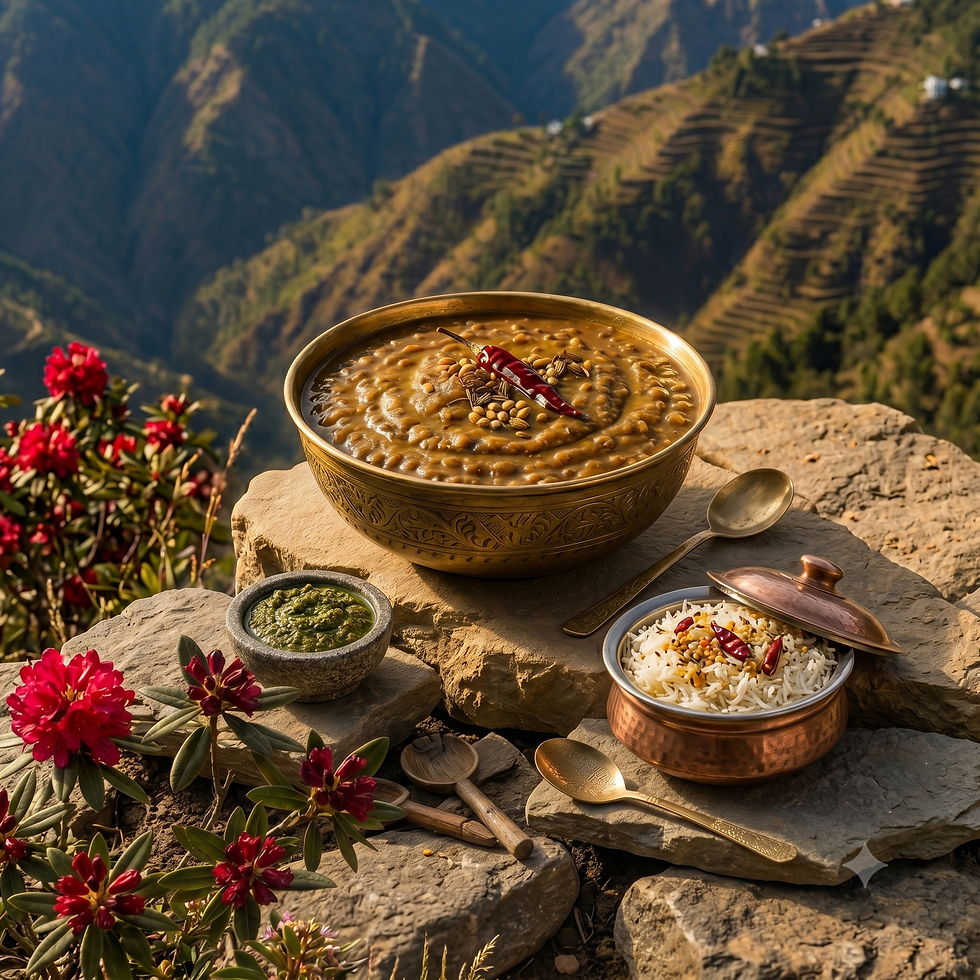
While meat dishes often steal the spotlight, Dal Makhani is the true king of comfort food. This 24-hour slow-cooked black lentil delicacy is defined by its namesake quality; 'Makhani' literally translates to 'buttery'. The lentils are simmered overnight with butter and cream until they reach a consistency that is almost like a thick, savoury porridge. It's an earthy, deeply aromatic dish that provides a perfect vegetarian alternative to poultry. Because of its universal appeal and reliable mildness, it has become a staple for corporate catering in Singapore, ensuring that every guest can enjoy a hearty meal. Similarly, Paneer Butter Masala offers the same velvety tomato-based gravy for those who prefer the firm, milky texture of Indian cottage cheese. These non-spicy Indian food options ensure that no one is left behind during a group feast, providing a reliable and delicious experience for every palate.
Tandoori and Grain-Based Delights: Aromatics Without the Burn
While the creamy gravies of the North offer a lush introduction to mild dining, the ancient art of the tandoor provides a different kind of sensory satisfaction. The tandoor, a traditional bell-shaped clay oven, is a marvel of culinary engineering that relies on intense, dry heat to seal in natural juices while imparting a distinct charcoal-kissed aroma. For those exploring non-spicy Indian food options, tandoori preparations are often misunderstood. Many assume the vibrant red hue of Tandoori Chicken signifies high heat, yet this colour traditionally comes from mild Kashmiri chillies or beetroot, which offer more pigment than punch. When prepared with a focus on ginger, garlic, and a touch of lemon, these dishes become a masterclass in succulent, smoke-infused flavour that remains entirely accessible to sensitive palates.
The Fragrance of Lucknowi Biryani
In the world of rice dishes, the Lucknowi Mutton Biryani stands as an aristocratic alternative to the more aggressive, chilli-forward Hyderabadi variants. Originating from the royal kitchens of the Awadh region, this style of biryani prioritises a "dum" cooking method, where meat and parboiled rice are layered in a heavy-bottomed pot and sealed with dough to trap every ounce of steam. The result is a meat-and-rice masterpiece characterised by floral notes rather than capsaicin sting. By using premium saffron and kewra (screwpipe water), chefs create a nuanced bouquet of scents that feel incredibly celebratory. It is precisely this refined, mild profile that makes it a sophisticated choice for wedding catering, where guests of all ages and backgrounds can enjoy a heritage dish without the fear of mouth-burn.
Breads: The Ultimate Palate Companion
No exploration of mild Indian cuisine is complete without acknowledging the essential role of leavened breads. These grain-based delights act as more than just a side; they are the neutral canvas that balances the richness of the main courses. While plain Naan or Roti are excellent for soaking up sauces, the Garlic Naan offers a slightly more indulgent experience. Tearing into a fresh, warm Garlic Naan is a visceral delight, as the steam escapes from the pillowy centre and the aroma of toasted butter mingles with the pungent sweetness of roasted garlic. These breads provide a reassuring texture and a familiar, savoury comfort that grounds the meal. For a diverse group, ordering a basket of mixed, non-spicy breads ensures there is always a mild accompaniment to bridge the gap between different flavour profiles, making it one of the most reliable non-spicy Indian food options on any menu.
Chindian Fusion and Street Food: Savoury, Sweet, and Tangy Alternatives
While the creamy gravies of the North provide a lush sanctuary for the heat-shy diner, another vibrant corner of the menu offers a completely different sensory profile. Chindian cuisine, a unique specialty born from the historic Chinese community in Kolkata, represents a masterful bridge between cultures. This fusion marries the stir-fry techniques of Chinese cooking with the bold aromatics of India, resulting in dishes that are often savoury, sweet, or tangy rather than purely "hot". For those seeking non-spicy Indian food options in Singapore, this category is a revelation. It provides a punchy, umami-rich experience that satisfies the craving for bold flavour without the need for a glass of ice water on standby.
Street food, or Chaat, also offers a treasure trove of mild delights. These dishes are designed to hit every part of the palate simultaneously, using crunch, dairy, and fruit-based chutneys to create a balanced bite. When you move beyond the heavy curries, you discover a world where texture and tanginess take centre stage, proving that the Indian culinary map is far more diverse than many competitors suggest. Whether it is a quick snack or a side to a larger feast, these alternatives ensure your dining experience remains exciting and inclusive.
The Allure of Gobi Manchurian
Gobi Manchurian is the undisputed star of the Chindian world and a quintessential crowd-pleaser. This dish features cauliflower florets that are battered and deep-fried to a golden crisp before being tossed in a luscious, soy-based glaze. The sauce is a sophisticated blend of ginger, garlic, and spring onions, providing a deep savoury base that feels incredibly indulgent. While some versions can be fiery, it is easy to request a mild version that focuses on the natural sweetness of the cauliflower and the umami of the sauce. For a deeper dive into this fascinating culinary marriage, you can explore our Chindian Food in Singapore: A Connoisseur’s Guide. Even traditionally bold dishes like Szechwan Fried Rice can be prepared to highlight the fragrance of the peppercorns rather than their sting, making them excellent non-spicy Indian food options for the whole family.
Chaat: A Symphony of Sweet and Tangy
The magic of Indian street food lies in the interplay of its chutneys. While the green chutney often carries a coriander-and-chilli kick, the dark, silken tamarind chutney is a sweet and tangy masterpiece that provides a cooling contrast. Dahi Puri is perhaps the perfect mild snack for those who prioritise texture; these hollow, crispy shells are filled with spiced potatoes and then drowned in chilled, sweetened yoghurt and tamarind sauce. The result is a burst of creamy, crunchy, and tart flavours that is entirely gentle on the tongue. For those planning a special event, a Live Chaat counter with a dedicated Chaat Master adds an element of theatre, allowing guests to customise their heat levels and watch as these delicate snacks are assembled with expert precision.
Curating the Perfect Mild Feast: Ordering and Catering for Every Palate
Mastering a menu requires more than just a quick glance at the chilli icons next to a dish's name. To dine like a true connoisseur, you must learn to guide the service staff toward your specific preferences, ensuring that flavour remains the hero of your meal. Finding the best non-spicy Indian food options is about understanding how to request depth without the burn. It's about creating a table where every guest, from the local professional to the international visitor, feels like an invited guest at a banquet where aromatics are the priority. Copper Chimney has long served as a bridge between cultures, offering a refined space where authentic heritage and mild, sophisticated fusion meet with effortless grace.
The Art of the Order
When you speak with your server, use precise language to describe the experience you desire. Rather than simply asking for "no spice", try phrases like "aromatic but mild" or "focus on the creaminess". Mentioning that you prefer a profile with "low capsaicin" signals that you appreciate the spices but wish to avoid the heat. A well-balanced meal often combines "dry" tandoori items, like the succulent Tandoori Chicken, with lush "gravy" dishes such as Paneer Butter Masala. This contrast in texture creates a more dynamic sensory journey. If you're planning a larger gathering and want to ensure the menu is perfectly tailored, consider booking an appointment for a personal event consultation to discuss your specific needs.
Inclusive Catering for Singaporean Events
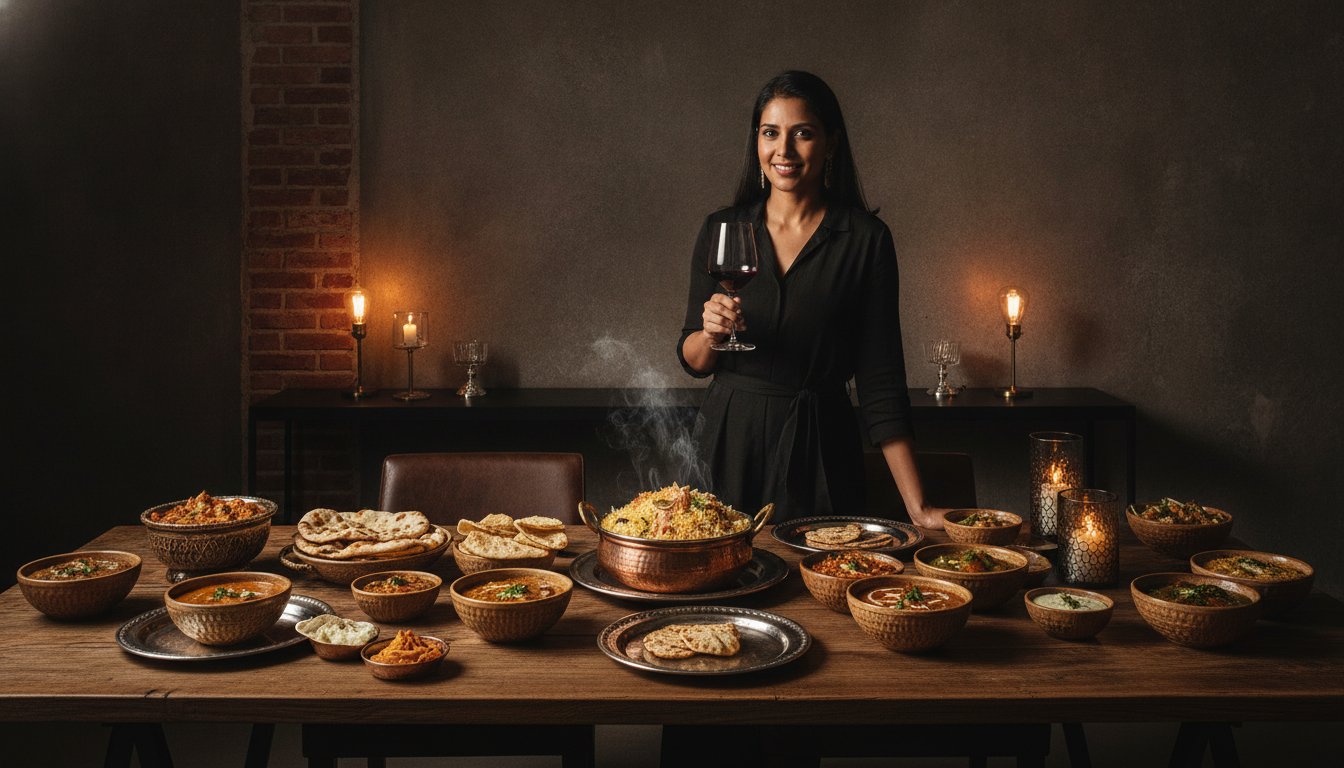
In a multicultural hub like Singapore, inclusive dining is a mark of professional excellence. When planning corporate events, it's vital to design a menu that caters to varied spice tolerances. Executive and Premium Bento Boxes are excellent for this, as they allow for a curated selection of mild staples that satisfy international palates. Incorporating live stations, such as a Chaat counter, adds an interactive element where guests can customise their own spice levels under the guidance of a master. Our commitment to quality is underscored by our Halal certification, which serves as a crucial trust marker for a diverse audience. This ensures that your feast is not only delicious but also accessible to everyone. Whether you choose to visit our locations for an intimate dinner or order for delivery to your office, you can be certain that your meal will be a masterclass in flavour and tradition.
Begin Your Journey Through the Art of Mild Flavours
Exploring the vibrant tapestry of non-spicy Indian food options in Singapore is a rewarding pursuit that reveals the true craftsmanship of subcontinental cooking. We've seen how the delicate interplay of aromatics like saffron and cardamom can create a meal that is profoundly satisfying without the need for intense heat. From the velvety textures of our award-winning Butter Chicken and Dal Makhani to the unique savoury-sweet balance of our Chindian fusion, there's a world of flavour waiting to be discovered by every palate.
For over a decade, corporate planners across Singapore have trusted us to deliver inclusive, Halal-certified dining experiences that bridge cultures and satisfy diverse groups. Whether you're hosting a grand event or seeking a quiet, sophisticated dinner, our heritage-rich menu ensures that every guest feels truly welcomed. It's time to put aside the fear of the burn and embrace the aromatic depth that defines our traditional regional hospitality. Explore Copper Chimney’s diverse menu and book your table today to experience a culinary journey where the history of the food is as important as the service itself. We look forward to welcoming you to our table.
Frequently Asked Questions
What is the least spicy Indian dish for beginners?
Butter Chicken is widely considered the quintessential entry point for those new to the cuisine. This dish features tandoori-grilled chicken submerged in a velvety sauce of tomatoes, butter, and cream, providing a lush sweetness that avoids any sharp heat. It's one of the most reliable non-spicy Indian food options for anyone who prioritises fragrance and comfort over fire.
Is Butter Chicken always mild, or can it be spicy?
While traditionally prepared as a mild dish, the spice level of Butter Chicken can vary depending on the chef's specific recipe. At its heart, it should be a symphony of tanginess and cream. If you're dining at a reputable establishment, you can expect a consistently mild experience that focuses on the richness of the dairy rather than the sting of chillies.
Can I request any Indian dish to be made non-spicy?
Many made-to-order dishes can be adjusted to your preference, though some traditional preparations rely on spice for their core identity. Curries cooked from scratch are easily modified, but pre-marinated items like certain tandoori meats may have a baseline level of warmth. It's always best to ask your server for recommendations on which non-spicy Indian food options can be tailored to a completely mild profile.
What are some non-spicy vegetarian Indian options?
Paneer Butter Masala and Dal Makhani are exceptional choices for vegetarians seeking a mild yet indulgent feast. The former offers firm cubes of cottage cheese in a rich tomato gravy, while the latter consists of black lentils slow-cooked for 24 hours with butter and cream. Gobi Manchurian also provides a wonderful savoury alternative with its ginger-garlic glaze and crispy texture.
Is Indian-Chinese (Chindian) food spicier than traditional Indian food?
Chindian cuisine typically prioritises umami, tanginess, and sweetness over the deep, lingering heat found in some traditional curries. While dishes like Chilli Chicken can be fiery, many others focus on the aromatic qualities of ginger, garlic, and soy sauce. This fusion style offers a unique flavour profile that is often more accessible to those who prefer a savoury stir-fry experience over a spicy stew.
What should I drink to cool down if I accidentally eat something spicy?
A yoghurt-based Lassi is the most effective way to neutralise heat because the protein called casein in dairy helps break down capsaicin. Whether you choose a sweet or mango-flavoured version, the chilled, creamy texture provides immediate relief to a burning palate. Avoid water or carbonated drinks, as these can actually spread the spice molecules around your mouth.
Are there non-spicy Biryani options available in Singapore?
The Lucknowi Mutton Biryani is a celebrated non-spicy variant that focuses on floral aromas rather than chilli heat. Unlike the sharper Hyderabadi style, this preparation uses saffron and kewra water to create a refined, aristocratic scent. It's a meat-and-rice masterpiece that relies on the "dum" slow-cooking method to seal in juices and fragrance without overwhelming the palate.
What makes North Indian food different from South Indian food regarding spice levels?
North Indian cuisine frequently uses dairy, nuts, and cream to create thick, mild gravies that soften the impact of spices. In contrast, South Indian cooking often features coconut milk, tamarind, and a higher concentration of fresh green chillies; this results in a sharper and more vibrant heat profile. This makes North Indian dishes a safer haven for those specifically looking for mild, aromatic dining experiences.

Comments