
Common Event Planning Mistakes with Food: A Connoisseur’s Guide to Flawless Catering

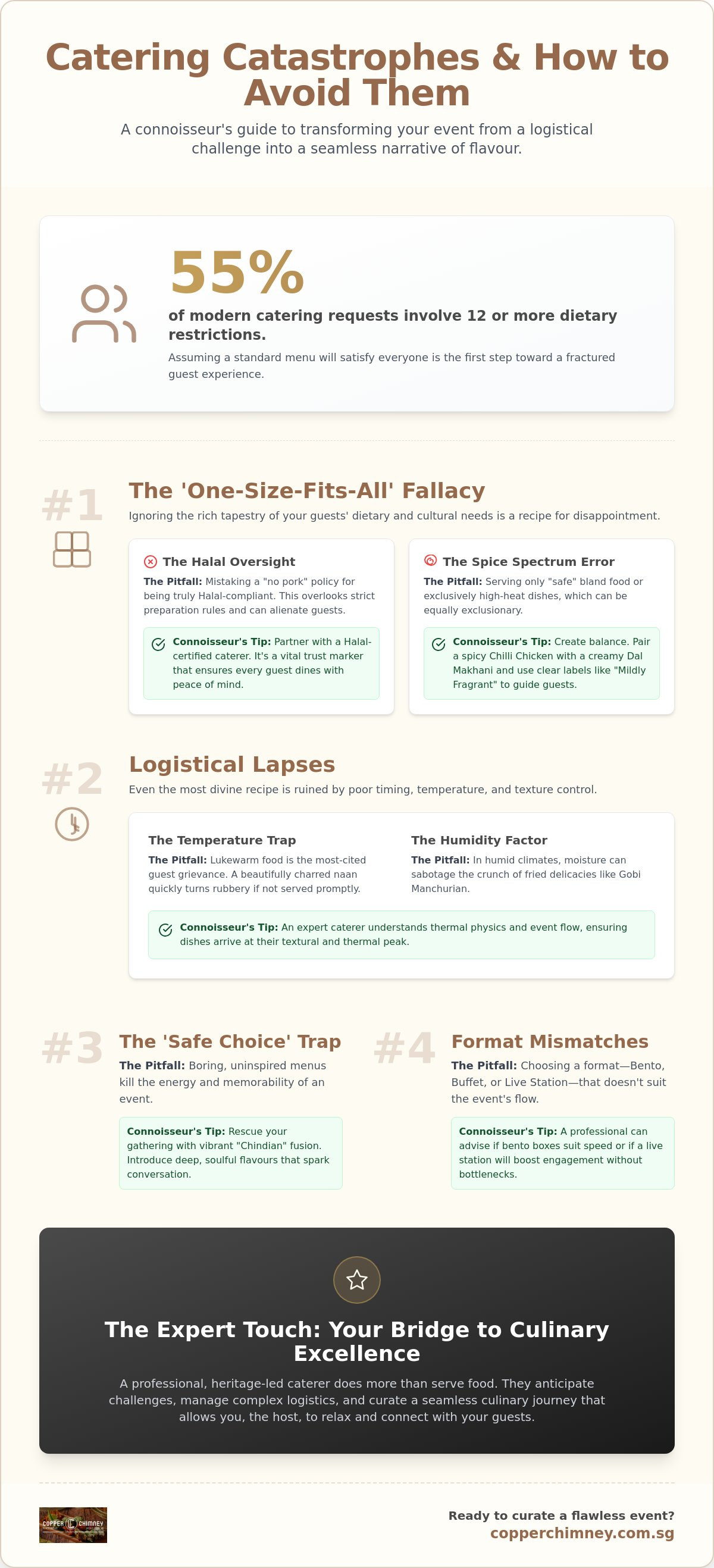
What if the most enduring memory of your evening isn't the elegant decor or the eloquent speeches, but the quiet disappointment of a guest left hungry due to a lack of inclusive options? It is a sobering thought for any host, yet many people unknowingly fall into common event planning mistakes with food that can overshadow even the most beautiful heritage settings. We all understand the anxiety that comes with hosting; there is the fear of a dwindling buffet or the worry that a guest's dietary requirements, whether they seek Halal standards or vegetarian excellence, might be overlooked. Indeed, with 55 per cent of catering requests now involving 12 or more dietary restrictions according to 2025 Datassential research, the pressure to get the menu right is significant.
In this connoisseur's guide, you will discover how to transform your catering from a mere logistical necessity into a sophisticated narrative of flavour and tradition. We promise to provide the insights needed to curate a menu that is as seamless as it is memorable, ensuring every individual feels like a truly invited guest. We will explore the critical importance of food safety, the art of the specialised fusion menu, and how to use interactive elements like a live Chaat master to ensure your next gathering is defined by culinary excellence rather than avoidable pitfalls.
Key Takeaways
Learn why assuming a standard menu works for everyone is one of the most common event planning mistakes with food and how to use Halal certification as a vital trust marker.
Discover the logistical secrets to maintaining the delicate texture of artisanal breads while avoiding the "buffet bottleneck" through strategic event flow.
Uncover how vibrant "Chindian" fusion can rescue your gathering from the safe choice trap, replacing uninspired menus with deep, soulful flavours.
Master the nuances of menu formats to ensure your bento boxes stay fresh and your live stations remain engaging without causing frustrating delays for your guests.
Understand the value of heritage-led expertise in bridging the gap between a simple meal and a truly professional, seamless culinary journey.
Table of Contents
The One-Size-Fits-All Fallacy: Ignoring Dietary and Cultural Diversity
One of the most common event planning mistakes with food is the assumption that a single, standard menu can satisfy every guest at the table. It's a tempting shortcut, but it often leads to a fractured experience where some guests feel like guests of honour while others feel like an afterthought. When we consider what is catering in its truest sense, it's more than just delivering calories; it's an act of cultural connection and respect. Dietary inclusivity is the cornerstone of professional hospitality. A host who ignores the nuances of their guest list risks creating a silent divide between those who can indulge and those who must abstain, ultimately dampening the collective energy of the event.
The Halal Certification Oversight
True hospitality requires more than just removing certain ingredients from a dish. Many planners mistake a "no pork, no lard" policy for being truly Halal-compliant, which is a significant oversight in a diverse landscape. This lack of official certification can alienate a significant portion of your audience who look for these trust markers as a sign of respect and authenticity. In the intricate world of fusion cuisines, the risk of cross-contamination is high if the kitchen isn't strictly managed and audited. Choosing a Halal-certified catering partner ensures that every guest can dine with absolute peace of mind, knowing their cultural and religious needs are prioritised with professional rigour.
Spice Sensitivity and Flavour Balance
Then there's the "Spice Spectrum" error. Serving only "safe," bland food is a disservice to the vibrant heritage of regional cuisine, yet serving only high-heat dishes can be equally exclusionary. The secret is in the layering of flavours and providing a thoughtful variety. You might offer a robust, slow-cooked Mutton Rogan Josh alongside a creamy, velvety Dal Makhani or a cooling Paneer Butter Masala. Using descriptive labels to guide guests through heat levels allows them to enjoy the meal without the fear of an unexpected sensory overload. Balancing heavy, spice-laden mains with refreshing sides creates a harmonious plate that appeals to both the daring and the cautious palate.
To ensure a balanced experience, consider these flavour-pairing strategies:
Contrast Heat with Cream: Pair a spicy Chilli Chicken with the mild, buttery notes of Dal Makhani to soothe the palate.
Provide Neutral Anchors: Always include staples like Garlic Naan or Luckonwi Mutton Biryani to provide a substantial base for more intense gravies.
Label with Precision: Move beyond "spicy" and use terms like "Mildly Fragrant" or "Authentic Heat" to manage guest expectations.
By moving away from a one-size-fits-all mindset, you elevate the dining experience from a simple meal to a thoughtful curated journey. This attention to detail ensures that your event remains inclusive, professional, and, above all, delicious for every person in attendance.
Logistical Lapses: Timing, Temperature, and the Tiffin Trouble
There is a particular kind of heartbreak in seeing a beautifully charred Garlic Naan lose its suppleness to the cooling air, turning from a soft, pillowy delight into something uncomfortably rubbery. This sensory tragedy is often the result of poor timing, which remains one of the most frequent common event planning mistakes with food. While a host might focus on the depth of the spices in a Mutton Rogan Josh, the invisible clock that starts the moment a dish leaves the tandoor is often ignored. Post-event surveys consistently reveal that food temperature is the most cited grievance among guests; it proves that even the most exquisite recipe cannot compensate for a lukewarm serving. Avoiding these common catering mistakes requires a deep understanding of thermal physics and guest psychology.
The local climate also plays a silent role in the success of your menu. In semi-outdoor or humid event spaces, the "Humidity Factor" can wreak havoc on the textures of fried delicacies like Gobi Manchurian or the crisp edges of Tandoori Chicken. Moisture in the air quickly softens what should be crunchy, necessitating a catering partner who understands how to shield dishes from the elements while maintaining proper ventilation. It's about preserving the integrity of the chef's vision from the kitchen to the guest's plate.
The Golden Hour of Catering Delivery
Catering is an exercise in "just-in-time" precision. Setting up a buffet too early is a rookie error that leads to dried-out sauces and toughened meats as they sit under chafing dish flames. For artisanal items like Garlic Naan, the window of perfection is incredibly narrow. A professional team ensures that high-protein dishes and delicate breads are replenished in small, frequent batches rather than in one overwhelming surge. This coordination between the kitchen and the event floor ensures that the last guest in line enjoys the same succulent experience as the first.
Managing the Flow and Buffet Logistics
The "Buffet Bottleneck" is a silent mood-killer. A single-sided buffet line for a group larger than 50 guests is a logistical lapse that leads to long wait times and restless energy. To avoid this, savvy planners use "Live Stations" to break up the queues and add a touch of culinary theatre. A Live Chaat counter with a dedicated Chaat Master not only disperses the crowd but also provides an engaging, sensory experience that keeps guests entertained while they wait. If you are planning a large-scale gathering, choosing professional catering services that prioritise flow as much as flavour can make the difference between a chaotic queue and a seamless social event. Ensuring that high-demand items like Butter Chicken are monitored and refilled before they hit empty is the hallmark of a seasoned service team.
The Safe Choice Trap: Why Boring Menus Kill Event Energy
Many hosts reach for "International" menus under the mistaken belief that neutrality equals universal appeal. This is one of the most common event planning mistakes with food because it often results in a meal that's perfectly edible yet entirely forgettable. A menu without a soul doesn't just fail to excite; it actively drains the energy from a room. Instead of playing it safe with bland pastas or generic roasts, consider the vibrant, punchy world of Chindian Food in Singapore. This unique fusion of Indian spices and Chinese techniques offers a bold alternative that sparks curiosity and delights the senses of every guest.
Another pitfall is "Starter Stagnation," where the appetisers are treated as a mere preamble. If you've ever stood at a cocktail hour nibbling on a dry spring roll, you'll know why this matters. High-impact starters like Gobi Manchurian or Chilli Chicken set a high bar for the rest of the evening; they signal to your guests that they're in for a genuine culinary journey rather than a standard corporate feed. When the first bite is a revelation, the rest of the event follows that same trajectory of excellence.
The Power of Fusion as a Conversation Starter
Fusion dishes like Szechwan Fried Rice serve as more than just sustenance. They're social lubricants. There's a particular psychology to "culinary nostalgia" where familiar ingredients are presented in surprising new ways, bridging the gap between traditional heritage and modern tastes. This creates a shared talking point, which is invaluable for corporate events where networking is the primary goal. When guests are busy discussing the perfect balance of heat and texture in their meal, the barriers to conversation naturally dissolve, making the atmosphere feel both professional and deeply personal.
Beyond the Main Course: The Small Plate Strategy
It's a mistake to allocate 90 per cent of your budget to the main buffet while leaving the starters as an afterthought. A well-executed "Small Plate Strategy" keeps the momentum of an event moving, preventing that mid-afternoon or late-evening lull. Integrating a Live Chaat counter with a Chaat Master provides an interactive element that turns food preparation into a performance, drawing guests together in a shared experience. While the mains like a Lucknowi Mutton Biryani are essential, don't underestimate the power of a side like Dal Makhani. When slow-cooked for hours to achieve a smoky, velvet-like consistency, it often becomes the secret star of the show that guests remember long after the night ends.
To avoid a boring menu, consider these vibrant alternatives:
Swap spring rolls for Gobi Manchurian: Offer a crispy, spicy cauliflower dish that provides a far more satisfying crunch.
Introduce Szechwan Fried Rice: Replace plain steamed rice with a version that carries the aromatic signature of fusion spices.
Engage with Live Stations: Use a Live Chaat counter to create a sense of theatre and freshness that a pre-set buffet simply cannot match.
By stepping away from the "safe" choice, you ensure your event stands out for the right reasons. Authentic, bold flavours don't just feed a crowd; they create a lasting impression of quality and thoughtfulness.
Planning for the Format: Bento vs. Buffet vs. Live Station Blunders
Selecting the right service style is about more than just fitting tables into a room; it is about understanding how different dishes behave once they leave the heat of the kitchen. Choosing an incompatible format is one of the most common event planning mistakes with food that can quietly unravel the guest experience. Whether you are hosting an intimate boardroom lunch or a grand celebration, the vessel and the delivery method must honour the integrity of the ingredients. To help you navigate these choices, our guide to Indian Catering Services Singapore provides a deeper look into selecting the perfect format for your specific guest list.
Bento Box Blunders: Texture and Presentation
The "Soggy Bento" is a frequent disappointment in corporate settings. When fried delicacies like Chilli Chicken or Gobi Manchurian are placed inside a closed container, the trapped steam quickly turns a crisp coating into something damp and unappealing. For individual servings, it is far wiser to select "resilient" dishes. A Lucknowi Mutton Biryani or a fragrant Lamb Shank Biryani holds heat and moisture beautifully, ensuring that the last bite is as succulent as the first. When opting for Executive Bento Boxes or Premium Bento Boxes, ensure the packaging is designed to prevent sauce leakage, keeping your Dal Makhani separate from your Garlic Naan to preserve their distinct textures.
The Theatre of Live Stations
Live stations are designed to add a sense of occasion, yet they often fail due to over-complexity. A common error is selecting dishes that require lengthy preparation times, leading to "queue fatigue" and restless guests. The secret lies in the balance of theatre and efficiency. A Live Chaat counter, led by an experienced Chaat Master, provides an aromatic and visually inviting spectacle that moves quickly. It turns the meal into a performance without the frustration of a long wait. However, you must scale the number of stations to your guest count; one station for every 50 to 75 guests is a reliable rule of thumb to maintain a smooth, professional flow.
Mini-Buffet Misconceptions
For smaller, more intimate gatherings, the Mini-Buffet is an excellent choice, yet many hosts make the mistake of under-ordering. They assume that a smaller guest list requires significantly less variety, but the opposite is often true. In a smaller group, guests tend to linger longer and sample more of each dish. Ensuring you have a generous spread of staples like Butter Chicken and Paneer Butter Masala prevents the buffet from looking picked-over halfway through the event. If you are ready to elevate your next gathering with a perfectly timed and formatted menu, consider booking our professional event catering services to ensure every logistical detail is handled with connoisseur-level care.
Quick tips for format success:
Bento: Prioritise rice-based dishes and thick gravies over deep-fried items.
Live Stations: Ensure the station is a focal point but positioned away from the main thoroughfare to avoid congestion.
Mini-Buffet: Order for 10 per cent more than your confirmed head count to maintain a lush, inviting presentation.
The Expert Touch: How Professional Catering Bridges the Gap
The distance between a functional event and a truly flawless one often lies in the hands of those behind the scenes. While we have explored how to avoid common event planning mistakes with food, such as the disappointment of a soggy bento or the logistical bottleneck of a poorly placed buffet, the final piece of the puzzle is the human element. Entrusting your vision to a professional partner allows you to step away from the stress of coordination and reclaim your role as a host. When the service is seamless, you cease to be a mere customer managing a checklist; instead, you become an invited guest at your own celebration, confident that every sensory detail is being handled with connoisseur-level precision.
In a diverse culinary landscape, a Halal-certified partner acts as your best insurance policy against event failure. It provides a definitive seal of quality and inclusivity that resonates with every guest, ensuring no one feels sidelined by dietary oversight. Copper Chimney’s decade of heritage in the local market provides a foundation of trust that rookie operators simply cannot replicate. This long-standing presence means we've already solved the problems you haven't even anticipated yet, from the thermal requirements of a Lucknowi Mutton Biryani to the delicate timing needed for a live Tandoori Chicken station.
Leveraging Industry Accolades and Expertise
Choosing an award-winning restaurant for your catering needs ensures that the "restaurant-quality" promise isn't just marketing speak; it's a standard that scales from an intimate corporate lunch to a grand wedding. A dedicated catering manager acts as the custodian of your event, overseeing the fine details that often slip through the cracks. They help you customise a menu that doesn't just feed people, but tells a story. Whether you want to highlight the fiery fusion of Chilli Chicken or the comforting, smoky depth of Dal Makhani, professional guidance ensures these flavours are presented with the respect they deserve.
Next Steps for a Flawless Event
Planning for the 2026 event schedule requires a blend of early foresight and culinary curiosity. For large-scale gatherings, we always recommend a tasting session. It's the perfect opportunity for a connoisseur to fine-tune the spice levels of a Mutton Rogan Josh or verify the texture of the Garlic Naan before the big day. This collaborative process ensures there are no surprises, only delights, when the first plate is served.
Ready to elevate your next gathering and move beyond the typical pitfalls of event hosting? You can explore our catering packages to find the perfect fit for your format, or book a consultation today to begin crafting a menu that your guests will talk about for years to come.
Elevate Your Next Gathering with Culinary Precision
A successful event is a tapestry of perfectly timed moments and thoughtfully curated flavours. We have explored how moving beyond common event planning mistakes with food, from the logistical nuances of temperature control to the cultural importance of Halal certification, ensures that your hospitality is felt by every guest. By choosing vibrant, soulful alternatives like Chindian fusion over generic menus, you create a celebratory atmosphere that resonates long after the final plate is cleared.
As masters of North Indian and Chindian fusion, Copper Chimney offers the expertise needed to bridge the gap between a standard meal and a professional culinary experience. Our specialised Executive Bento Boxes and interactive Live Stations, featured in prestigious locations like Mandai Wildlife West and Little India, are designed to bring restaurant-quality excellence to any scale. Every dish from our Halal-certified kitchen is a tribute to heritage and craft.
Plan your flawless event menu with Copper Chimney today and discover the peace of mind that comes with true professional catering. We look forward to helping you host an occasion defined by authenticity, warmth, and impeccable taste.
Frequently Asked Questions
What is the most common food mistake in event planning?
The most frequent of all common event planning mistakes with food is failing to account for the dietary and cultural diversity of your guest list. Simply offering a single vegetarian option is often insufficient in today's sophisticated dining landscape. A connoisseur understands that a truly inclusive menu considers Halal requirements, allergen awareness, and varied spice tolerances to ensure every guest feels genuinely welcomed and valued.
How much food should I order per person for a buffet?
For a standard buffet, you should generally aim for approximately 500 to 600 grams of food per person, distributed across starters, mains, and sides. This ensures a generous spread without excessive waste. It's often wiser to provide a wider variety of smaller portions, such as a mix of Garlic Naan, Lucknowi Mutton Biryani, and Tandoori Chicken, allowing guests to sample the full breadth of the menu's heritage.
Why is Halal certification important for Singaporean events?
Halal certification is a vital trust marker in Singapore's multicultural society because it guarantees that every aspect of food preparation meets strict religious and hygiene standards. It goes beyond simply avoiding pork; it ensures that the entire supply chain is monitored. By choosing a certified partner, you remove the social anxiety some guests may feel, allowing them to focus entirely on the flavour and the occasion.
Can Indian food be catered for guests with low spice tolerance?
Indian cuisine offers a vast spectrum of heat levels, making it perfectly suitable for those with a milder palate. Dishes like the creamy, slow-cooked Dal Makhani or the velvety Paneer Butter Masala provide deep, soulful flavours without overwhelming spice. A professional caterer will use precise labelling to guide your guests, ensuring they can navigate the menu with confidence and enjoy the meal's aromatic complexity.
What are the best dishes for a corporate bento box?
The best dishes for an Executive Bento Box are those that maintain their structural integrity and moisture during transit. Fragrant rice dishes like Lucknowi Mutton Biryani or succulent gravies like Butter Chicken are ideal because they hold their heat beautifully. Avoid deep-fried items that might soften in a closed container, and instead prioritise the rich, slow-simmered textures that define authentic North Indian and Chindian fusion.
How do I avoid long queues at a live catering station?
To prevent frustrating bottlenecks, you should scale your live stations to your guest count, typically providing one station for every 50 to 75 attendees. Strategic placement is also key; keep these interactive elements away from the main buffet to disperse the crowd. Choosing efficient yet theatrical options, such as a Live Chaat counter with a dedicated Master, ensures a steady, engaging flow that keeps guests entertained.
What happens if I have more guests than expected at my event?
While professional caterers typically prepare a small buffer of roughly 10 per cent to handle minor fluctuations, a significant surge in guests can strain resources. It's best to confirm your final head count at least 72 hours before the event. If an unexpected crowd arrives, a seasoned team will focus on replenishing high-volume staples like Szechwan Fried Rice to ensure everyone is fed while maintaining service standards.
How far in advance should I book catering for a large event in 2026?
For large-scale gatherings in 2026, it's advisable to book your catering partner at least three to six months in advance. This lead time is essential for securing your preferred date and allowing for thoughtful menu customisation. Early booking also facilitates essential tasting sessions, where you can refine the sensory details of your menu and ensure it perfectly aligns with the sophisticated tone of your event.


Comments