
Exploring the Essence of an Islamic Restaurant in Singapore: A Connoisseur’s Guide

Updated: May 7
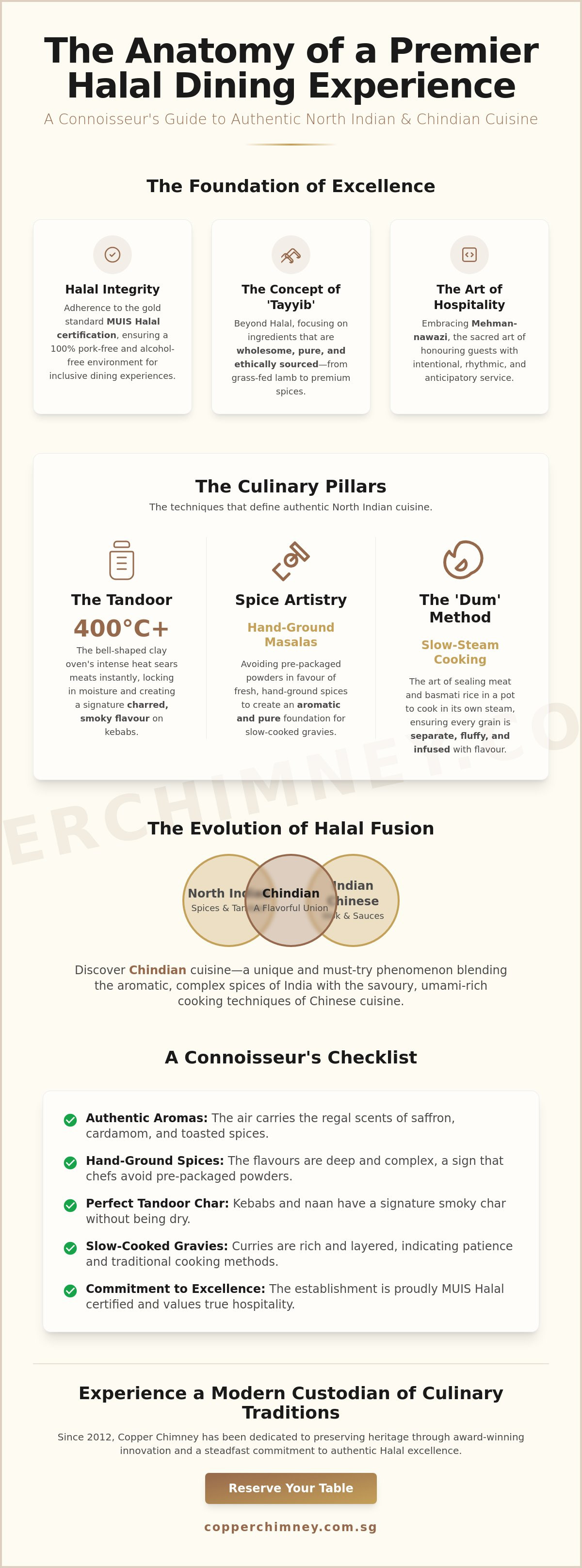
Why settle for the predictable when your palate craves a journey through the royal kitchens of North India? You've likely felt the frustration of seeking a truly sophisticated islamic restaurant in Singapore, only to find menus that feel repetitive or environments that lack a certain spark of elegance. It's a common sentiment among discerning diners who value both strict Halal integrity and a refined atmosphere for their family celebrations or corporate events. We understand that finding a venue that balances heritage with a high-end culinary experience can be a challenge in a bustling city.
This guide promises to show you how we bridge that gap at Copper Chimney by blending traditional hand-crafted flavours with our signature Chindian fusion. Since we began our journey in 2012, we've focused on delivering an experience that's both professional and deeply personal. We will explore the aromatic depths of our Tandoor specialities and the award-winning expertise that ensures every dish is a masterpiece of spice and soul. You're about to discover a reliable sanctuary where the heritage of Indian hospitality meets modern culinary mastery, ensuring your next gathering is truly unforgettable.
Key Takeaways
Understand the intersection of Halal-certified standards and centuries-old Mughlai traditions that define a premier North Indian dining experience.
Discover the sensory artistry behind the tandoor and the "spice bloom," learning how to recognise truly authentic, hand-ground masalas and slow-cooked gravies.
Uncover the unique origins of the "Chindian" phenomenon and why this flavourful fusion is a must-try at any leading islamic restaurant in Singapore.
Master a connoisseur’s checklist to distinguish between convenience and culinary excellence, ensuring every naan and curry meets the highest artisanal standards.
Explore how modern custodians like Copper Chimney preserve heritage through award-winning innovation and a steadfast commitment to authentic Halal excellence.
Table of Contents What Defines an Islamic Restaurant Experience in 2026? The Culinary Pillars of Halal North Indian Flavours The Evolution of Halal Fusion: The Chindian Phenomenon A Connoisseur’s Checklist for Identifying a Premier Establishment Copper Chimney: A Modern Custodian of Islamic Culinary Traditions
What Defines an Islamic Restaurant Experience in 2026?
The modern Islamic restaurant in 2026 has evolved into a sophisticated blend of ancestral wisdom and cutting-edge culinary precision. It isn't just a place to eat; it's a curated space where the aromatic legacy of the Silk Road meets the rigorous standards of the 21st century. When a connoisseur enters such an establishment, they expect the heavy, regal scents of saffron and cardamom that define North Indian and Mughlai cuisines. These flavours aren't accidental. They're the result of centuries of refinement in the royal kitchens of Delhi and Lucknow, brought to life through contemporary techniques that preserve the soul of the dish while elevating its presentation.
Quality in these kitchens goes beyond simple compliance. It's rooted in the concept of Tayyib, which translates to being wholesome and pure. This means every ingredient, from the grass-fed lamb to the hand-ground spices, is selected for its ethical sourcing and nutritional integrity. This adherence to Islamic dietary laws ensures that the meal nourishes the soul as much as the body. Today's diners appreciate this transparency. They want to know that their S$30 biryani isn't just delicious, but also responsibly sourced and prepared with spiritual mindfulness.
The Significance of Halal Certification
In Singapore, the gold standard remains the MUIS Halal certification. This badge of honour isn't easily won; it requires strict adherence to hygiene and preparation protocols that are audited regularly. For a diverse city-state where approximately 15 percent of the population identifies as Muslim, these standards create a bridge between communities. A pork-free and alcohol-free environment isn't a limitation. Instead, it's an invitation. It creates an inclusive sanctuary where corporate teams and multi-generational families can gather without hesitation, knowing the food is prepared with the utmost respect for tradition and cleanliness.
A Legacy of Hospitality
The heartbeat of an Islamic restaurant is Mehman-nawazi, the sacred art of honouring the guest. Unlike the frantic pace of modern fast-casual outlets, service here follows a more rhythmic, intentional flow. You aren't just a customer; you're an invited guest in a home. The staff anticipate needs before they're voiced, ensuring the water glass is full and the sizzling tandoori platter arrives at the exact moment of peak flavour. If you're looking to experience this firsthand, you can reserve a table at Syed Alwi to witness this heritage in action. An Islamic restaurant serves as a sanctuary of flavour and faith-based hospitality where every spice tells a story of devotion.
The Culinary Pillars of Halal North Indian Flavours
The heart of any reputable Islamic restaurant in Singapore beats within its kitchen, where centuries-old traditions meet modern precision. It's a space defined by the intoxicating aroma of toasted spices and the intense heat of the charcoal flame. North Indian cuisine, specifically within the Halal context, relies on a foundation of richness and aromatic depth that sets it apart from other regional styles. It's a culinary language that speaks of royal courts and rustic hearths, translated through techniques that haven't changed for generations.
The tandoor, a bell-shaped clay oven, remains the soul of this cuisine. It reaches temperatures exceeding 400 degrees Celsius, allowing meats to sear instantly while locking in moisture. This process produces that signature charred, smoky exterior that defines authentic kebabs. Beyond the heat, the true magic lies in the spice artistry. Our chefs avoid pre-packaged powders, opting instead for hand-ground masalas that provide the backbone for our slow-cooked gravies. This commitment to purity aligns with the rigorous standards set by Singapore's Halal certification authority, ensuring every bite is both permissible and exceptional.
Biryani remains the undisputed king of the table. In the North Indian tradition, it's about the "dum" method, where meat and long-grain basmati rice are sealed in a pot and cooked in their own steam. It's a delicate balance where every grain of rice stays separate, infused with the essence of saffron and cardamom. It's a dish that demands patience and a connoisseur's eye for detail.
Mastering the Tandoor and Bread
A perfect garlic naan is the litmus test for any Islamic restaurant. It should be blistered by the clay walls, airy in the centre, and brushed with just enough butter to enhance the garlic's punch. Tandoori Chicken follows a similar discipline, requiring a precise balance between a fiery, spiced exterior and a succulent interior. We use yogurt-based marinades to tenderise the meat naturally, allowing the spices to penetrate deep into the bone without the need for alcohol-based agents.
Iconic Gravies and Slow-Cooking
The hallmark of a sophisticated kitchen is its mastery of the gravy. Butter Chicken, or Murgh Makhani, is a study in silkiness, requiring a base of vine-ripened tomatoes and tempered cream. For those seeking heat, the Mutton Rogan Josh offers a vibrant red hue derived from Kashmiri chillies rather than artificial colouring. Perhaps the most dedicated effort goes into our Dal Makhani. We believe 24-hour slow-cooking is essential to achieve that legendary creamy texture, allowing the black lentils to break down until they're nearly velvet on the tongue.
While Southern Indian styles often lean on the sharp tang of vinegar or tamarind, North Indian flavours are celebrated for their mellow, cream-based profiles. This distinction creates a comforting, luxurious dining experience that feels both indulgent and authentic. If you're eager to experience these textures firsthand, you can visit our locations to see our chefs in action.
The Evolution of Halal Fusion: The Chindian Phenomenon
The story of Chindian cuisine began in the late 18th century when the first Chinese settlers arrived in Kolkata, eventually establishing the vibrant Tangra district. Over the following decades, these Hakka and Cantonese immigrants adapted their traditional cooking techniques to suit local Indian preferences, giving birth to a bold hybrid that eventually migrated to South East Asia. For a modern Islamic restaurant, this evolution represents more than just a menu category; it's a testament to how diverse cultures find common ground through fire and spice. The high-heat wok cooking provides a smoky depth, often called wok hei, that contrasts beautifully with the pungent heat of Indian aromatics. This combination offers a lighter, zestier alternative to the heavy gravies of traditional curries, making it a favourite for those seeking a contemporary dining experience.
Singapore's reputation for Muslim-friendly travel in Singapore is bolstered by this variety, ensuring that visitors and locals alike have access to diverse, high-quality dining options. By integrating these fusion techniques, an Islamic restaurant can cater to a wider demographic while maintaining strict Halal standards. It’s about more than just food; it’s about the sensory appeal of sizzling platters and the aromatic blend of soy, ginger, and green chillies that fills the air.
Signature Chindian Specialities
Szechwan Fried Rice: This isn't your standard fried rice. It features a fiery red hue from a bespoke blend of dried chillies and garlic, tossed at high speed to ensure every grain is infused with a smoky, spicy kick.
Gobi Manchurian: A masterclass in texture, this dish involves transforming humble cauliflower florets into crispy, golden nuggets. They're coated in a tangy, umami-rich sauce that balances sweet and savoury notes perfectly.
Chilli Chicken: A quintessential fusion dish that balances the sharp heat of sliced green chillies with a glossy, soy-based sauce. It's a succulent, hand-crafted speciality that remains a top choice for those who enjoy a punchy flavour profile.
Why Fusion Works for Communal Dining
Younger generations in Singapore are increasingly drawn to bold, experimental flavours that don't compromise on their dietary requirements. The versatility of Chindian food in Singapore makes it ideal for large group gatherings where sharing is encouraged. These dishes are designed to be served in the centre of the table, sparking conversation and allowing guests to sample a wide array of textures and heat levels. This culinary marriage bridges the gap between cultural nostalgia and modern palates by preserving the soul of traditional spices while embracing the fast-paced energy of contemporary cooking.
A Connoisseur’s Checklist for Identifying a Premier Establishment
Identifying a truly exceptional Islamic restaurant requires more than just checking for a Halal certificate on the wall. It involves a sensory investigation that separates the masters of the craft from those simply providing convenience. A connoisseur looks for the "Spice Bloom," that specific moment when whole spices hit hot oil at precisely 180 degrees Celsius to release their essential oils. If the aroma hitting your table is multi-layered and vibrant, the kitchen is tempering spices to order. If the scent is dusty or flat, they're likely relying on pre-ground powders that lost their soul weeks ago.
Freshness is equally recognisable in the bread basket. A premier establishment never serves naan that feels elastic or tough. When your naan arrives, it should possess a blistered, charred crust from a tandoor reaching 480 degrees Celsius, while the interior remains pillowy and steaming. This contrast is only possible when the dough is slapped against the clay oven walls seconds before it reaches your plate. Beyond the individual dishes, look for a balance of textures across the entire meal. A well-constructed Halal spread should offer a rhythmic transition from the crisp snap of a pakora to the velvet-smooth consistency of a slow-cooked dhal.
Consistency in large-scale service is another definitive marker of kitchen discipline. A restaurant's ability to replicate its signature flavours for a wedding of 200 guests is just as important as a dinner for two. This reflects a level of professional rigour that ensures every guest receives the same high standard of "Tayyib," or wholesome quality, regardless of the setting.
Evaluating the Dining Environment
The atmosphere of a top-tier Islamic restaurant should feel both sophisticated and welcoming. Cleanliness extends beyond the visible surfaces; it’s about the "Tayyib" of the space. Look for thoughtful lighting that uses warm, amber tones to highlight the rich colours of the cuisine. Traditional elements, such as the presence of a signature copper chimney or an open-concept kitchen, serve as a bridge to heritage. These features allow diners to witness the rhythmic, artisanal process of North Indian and Indian-Chinese cooking firsthand.
Service and Expertise
Staff expertise is the final piece of the connoisseur’s puzzle. A professional server shouldn't just take orders; they should act as a guide through regional nuances. They should be able to explain the Persian roots of a biryani or the specific Hakka influences in a fusion dish. True expertise also shows in the kitchen's flexibility to accommodate dietary needs, such as gluten-free or vegetarian requirements, without compromising the authentic flavour profile. For those planning significant community events, it is essential to check for catering expertise to ensure your guests enjoy a seamless, high-end culinary experience.
Ready to experience this level of culinary precision?
and taste the difference that authentic craft makes.
Copper Chimney: A Modern Custodian of Islamic Culinary Traditions
Copper Chimney stands as a testament to the evolving landscape of the islamic restaurant scene in Singapore. Since our inception in 2012, we've dedicated ourselves to preserving the soul of North Indian cuisine while embracing the vibrant energy of the Lion City. Our Halal-certified kitchens ensure that every guest enjoys our hand-crafted dishes with absolute peace of mind. We don't just serve food; we curate experiences that bridge generations through the warmth of traditional Indian hospitality.
The menu is a masterclass in balance. You'll find the velvety richness of our signature Butter Chicken, a dish that has earned us accolades for its authentic spice profile and aromatic depth. For those seeking a bit of heat, our Szechwan Fried Rice showcases our expertise in "Chindian" fusion, a unique blend of Indian spices and Chinese wok techniques. With a national presence that spans key locations across the island, accessing these award-winning flavours is effortless for local families and international visitors alike.
Beyond the Restaurant: Halal Catering
Our culinary expertise extends far beyond our dining rooms. We specialise in providing Indian catering services in Singapore for grand occasions like weddings and high-profile corporate galas. We understand that modern offices require flexibility, so we've refined our customisable bento boxes and buffet spreads to suit inclusive corporate environments. Our logistics team manages the delivery of freshly prepared Halal meals across the country, ensuring that the food arrives with the same sizzling intensity as if it were served directly from our Tandoor.
Join Us for a Sensory Journey
Stepping into Copper Chimney is an invitation to leave the bustle of the city behind. The atmosphere is sophisticated yet warm, designed to facilitate meaningful conversations over fragrant biryanis and hand-crafted naan. Whether you're planning a quiet family dinner or a high-stakes business lunch, our team provides the attentive, professional service that has become our signature. As a premier Islamic restaurant, we take pride in being a master of our craft and a reliable host for your most cherished moments.
It's easy to secure your spot for an unforgettable meal. You can book a table for your next gathering to ensure a seamless dining experience. If you prefer to enjoy our culinary craft from the comfort of your home, we've made our entire range available at your fingertips. Explore our full menu and order online today to bring the essence of authentic Indian flavours to your doorstep.
Step Into a New Era of Halal Gastronomy
Finding a truly exceptional Islamic restaurant in Singapore requires more than just a glance at a menu; it's about identifying a custodian of flavour that respects both heritage and the contemporary palate. We've explored how the 2026 dining scene prioritises authenticity, from the smoky depths of a Tandoor oven to the bold, wok-tossed zest of Chindian fusion. Copper Chimney stands as a definitive pillar of this culinary evolution. With over 12 years of excellence in Singapore, they've perfected the balance between traditional hospitality and modern flair. Their MUIS Halal-certified kitchens ensure every guest dines with absolute peace of mind while enjoying award-winning recipes that have shaped the local food scene. Whether you're craving the aromatic richness of a slow-cooked curry or the unique sizzle of Hakka-style noodles, the journey shouldn't end on the page. It's time to let your senses take the lead and discover why this establishment remains a cherished favourite for connoisseurs across the island.
Your table is ready, and a world of authentic spice awaits your arrival.
Frequently Asked Questions
What exactly makes a restaurant "Islamic" in the Singaporean context?
In Singapore, an Islamic restaurant is defined primarily by its strict adherence to Halal dietary laws as governed by MUIS, the Majlis Ugama Islam Singapura. This means the establishment serves food prepared according to Islamic law, excluding pork and alcohol while ensuring meat is sourced from certified suppliers. At Copper Chimney, we uphold these traditions through our 12 years of service, offering a menu that bridges cultural gaps while respecting the religious dietary requirements of our diverse local community.
Is all Indian food served in Islamic restaurants Halal-certified?
Not all Indian eateries in Singapore carry the official Halal certification, but an authentic Islamic restaurant will always display the MUIS Halal certificate prominently. This certification ensures that every ingredient, from the aromatic spices to the hand-crafted paneer, meets strict preparation standards. Copper Chimney maintains this certification across its outlets, providing peace of mind for diners who seek traditional North Indian and Chindian flavours without compromising their dietary principles.
What are the must-order dishes at an authentic Islamic restaurant?
You should prioritise signature dishes like the sizzling Mutton Rogan Josh or the iconic Chicken Tikka, which showcase the mastery of the Tandoor oven. Our connoisseurs often recommend the Szechwan Fried Rice, a staple of our award-winning Chindian fusion that combines fiery Chinese techniques with Indian spices. These dishes represent the soul of an Islamic restaurant where heritage and flavour meet, creating a sensory journey that lingers long after the meal concludes.
Can I find vegetarian options at a Halal Indian establishment?
Yes, vegetarian diners will find a rich variety of plant-based dishes ranging from creamy Dal Maharaja to the spice-infused Paneer Tikka. In fact, roughly 40 percent of our menu is dedicated to vegetarian excellence, ensuring that every guest feels invited and satiated. These hand-crafted dishes use fresh produce and traditional cooking methods, proving that Halal Indian cuisine offers a lush landscape of flavours for those who prefer meat-free dining.
How do Islamic restaurants handle large-scale catering for events?
Professional establishments manage large-scale events by offering bespoke catering menus that include live stations and buffet setups designed for hundreds of guests. Copper Chimney has a dedicated catering team that handles corporate functions and private celebrations, ensuring that the food remains hot and aromatic upon arrival. We provide comprehensive service packages that allow hosts to focus on their guests while we manage the intricate logistics of serving award-winning cuisine across the island.
What is the difference between North Indian and South Indian Halal food?
North Indian Halal food typically features rich, creamy gravies and breads baked in a Tandoor, while South Indian cuisine often highlights rice-based dishes and coconut-infused flavours. An Islamic restaurant in the North Indian tradition, like Copper Chimney, focuses on robust spices and charcoal-grilled meats. This contrast in regional techniques offers a diverse culinary map for Singaporean food lovers, ranging from the buttery textures of the North to the spicy, tangy notes of the South.
Is it necessary to make a reservation for large groups at Copper Chimney?
It's highly recommended to book a table at least 48 hours in advance for groups exceeding six people to ensure a seamless dining experience. Our popular outlets can fill up quickly, especially during weekend dinner services or festive periods. You can easily secure your spot through our online reservation portal, which helps our team prepare the warm hospitality and sophisticated setting that our guests have come to expect over the years.
Do Islamic restaurants offer delivery services for bento boxes?
Most modern Halal establishments offer convenient delivery services, including specially curated bento boxes that are perfect for corporate lunches or solo meals. At Copper Chimney, our bento boxes feature a balanced selection of mains, sides, and rice, delivered directly to your doorstep via our island-wide network. These boxes provide a compact yet luxurious way to enjoy our authentic flavours, ensuring that even a quick lunch feels like a refined culinary event.


Comments