
Gobi Manchurian: The Soulful Collision of India and China

Updated: Apr 2
The most defiant dish in the world isn't found in a sterile, Michelin-starred kitchen in Paris; it was forged in the humid, chaotic heat of a Mumbai wok back in 1975. Nelson Wang birthed a legend that redefined the palate of a billion people, proving that the most beautiful things happen when you ignore tradition and embrace the fire. You've likely stood in a queue in Singapore, craving that specific, umami-laden crunch, only to be served a soggy, neon-red disappointment that tastes more like sugar than soul. It's a common frustration to find a gobi manchurian that actually honours its gritty, street-side origins while remaining accessible to everyone.
At Copper Chimney, we believe you deserve the real story behind this award-winning fusion. In this guide, you’ll discover the visceral flavours and unapologetic brilliance of the undisputed king of Chindian cuisine. We’ll untangle the confusion between dry and gravy versions, identify the markers of a truly masterful Manchurian, and show you how to find the most authentic Halal-certified experiences in the city. It’s time to stop settling for mediocre imitations and start eating with genuine intent.
Key Takeaways
Uncover the visceral history of Chindian cuisine and the beautiful contradiction of a dish that found its soul in a place that never actually existed.
Master the logic behind the "double-fry" technique to understand why gobi manchurian remains the undisputed king of texture and unapologetic spice.
Navigate the eternal divide between dry and gravy versions to choose the perfect texture and flavour profile for your next indulgent meal.
Discover how Copper Chimney honours this gritty heritage through Halal-certified excellence, ensuring an inclusive and authentic experience for every Singaporean guest.
Table of Contents The Beautiful Contradiction: What Exactly is Gobi Manchurian? The Chindian Alchemy: How Cauliflower Becomes a Masterpiece The Great Debate: Dry Gobi Manchurian vs. The Gravy Version Navigating the Menu: Pairing and Flavour Profiles A Taste of Heritage: Why Copper Chimney’s Gobi Manchurian Stands Alone
The Beautiful Contradiction: What Exactly is Gobi Manchurian?
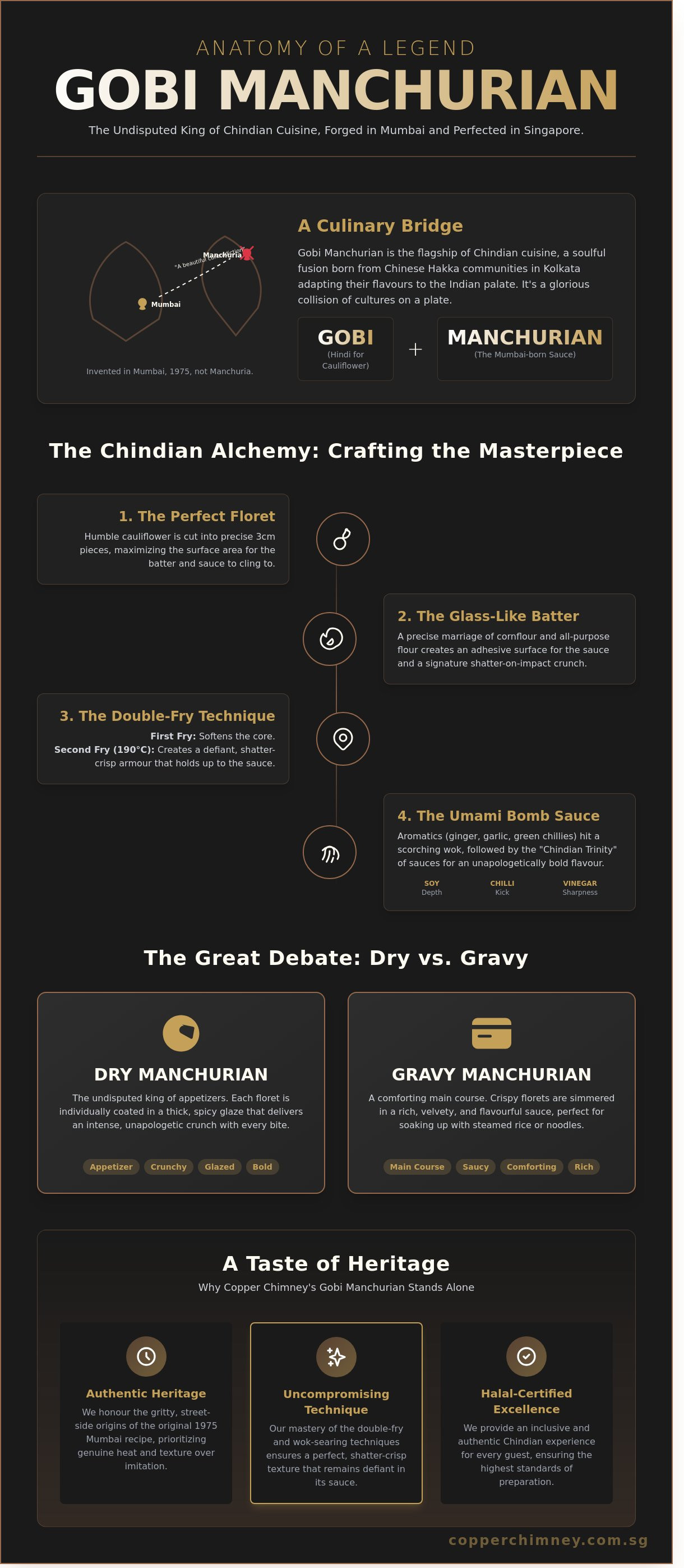
Food has a funny way of lying to you. Take gobi manchurian. The name suggests a relic of some ancient, frozen province in Northeast China, but you won’t find this dish there. It’s a beautiful contradiction; the flagship of the Chindian movement that defines the chaotic, soulful intersection of two culinary giants. On one side, you have the humble Gobi, the Hindi word for cauliflower. On the other, you have a sauce that was famously invented in Mumbai in 1975, not Manchuria. It’s a culinary bridge built on soy sauce, ginger, and green chillies.
The first bite is a revelation that hits you right in the gut. There’s the audible crunch of the cornflour batter, followed immediately by the sharp, vinegary tang of the dark, glossy sauce. It’s hot, it’s sweet, and it’s unapologetically bold. This isn't subtle cooking. It’s a marriage born of necessity and hunger, a messy, glorious collision on a ceramic plate that somehow makes perfect sense once the spice starts to linger on your tongue.
The Birth of Chindian Cuisine
The roots of this dish go back to the Chinese community in Kolkata, formerly Calcutta, where the first settlers arrived in the 1780s. By the mid 20th century, these Hakka families began adapting their traditional flavours to suit the intense, spice-loving Indian palate. They didn't have access to every traditional ingredient, so they improvised. This "street-soul" cuisine was born in soot-stained woks on the pavement, not in white-tablecloth labs. It’s a gritty, authentic evolution of the Manchurian (dish) that prioritises heat and texture over delicate balance.
Why it Captivated the National Palate
We crave gobi manchurian because it’s the ultimate deep-fried comfort food. It provides a perfect umami-spice balance that’s hard to find elsewhere. It’s crunchy, saucy, and deeply satisfying. This universal appeal has made it a permanent fixture on menus across the globe. For any halal indian food singapore enthusiast, it’s a non-negotiable part of the order. 100 percent of the time, it’s the dish that disappears from the table first because it speaks a language everyone understands: the language of fried, spicy joy.
The Chindian Alchemy: How Cauliflower Becomes a Masterpiece
Preparation is a visceral ritual. You take the humble cauliflower, a vegetable often relegated to the sidelines of a Sunday roast, and subject it to a multi-stage metamorphosis. The double-fry is the secret handshake of the Chindian kitchen. The first plunge into the oil softens the heart of the floret, while the second, at a blistering 190 degrees Celsius, creates a shatter-crisp armour that refuses to surrender under fire. This technique ensures the gobi manchurian remains defiant, staying crunchy even as it's bathed in a thick, spicy glaze.
The foundation rests on a heavy-handed application of ginger, garlic, and green chillies. These aren't just ingredients; they're the engine room of the dish. Once these aromatics have surrendered their oils to the heat, we introduce the Chindian Trinity of sauces. It's a dark, brooding combination of soy for depth, chilli for the kick, and vinegar to cut through the richness with a sharp, fermented edge.
The Secret is in the Batter
The batter is a precise, calculated marriage of cornflour and all-purpose flour. This specific blend is what delivers that glass-like crunch that shatters on impact. Cornflour plays the pivotal role of creating the smooth, adhesive surface required for the signature Manchurian glaze to cling to. We ensure the florets are cut into precise 3-centimetre pieces. This maximises the surface area, allowing the sauce to coat every single nook and cranny of the vegetable.
The Wok-Heated Sauce
When soy sauce hits a scorching hot wok, it triggers an umami bomb that is both primal and sophisticated. This searing heat is essential to the evolution of Gobi Manchurian, a dish that traces its lineage back to the creative grit of 1970s Mumbai. Fresh celery and spring onions are tossed in at the final second, providing a sharp, aromatic contrast to the deep, cooked flavours. The heat here isn't a one-note scream; it's a slow, building warmth that starts with the ginger and peaks with the sharp sting of fresh chillies.
If you're looking to experience this soulful collision of flavours for yourself, you might find yourself drawn to our award-winning dining room for an authentic taste of the streets. There's a certain visceral satisfaction in eating a gobi manchurian that has been tossed in a wok with the kind of respect usually reserved for a fine cut of meat.
The Great Debate: Dry Gobi Manchurian vs. The Gravy Version
In the neon-lit, aromatic chaos of a Chindian kitchen, you’re forced to pick a side. Every diner has a camp; you're either a devotee of the crunch or a seeker of the sauce. At Copper Chimney, we see this play out nightly. The choice isn't about better or worse; it’s about the specific culinary mission the dish needs to accomplish. Understanding the history of Gobi Manchurian reveals how this 1975 invention evolved into two distinct personalities that dictate the rhythm of your meal. Whether you’re here for a quick bite or a full family feast, the texture of the dish sets the tone for everything that follows.
The Dry Version: The Ultimate Bar Snack
Dry gobi manchurian is a concentrated burst of flavour designed for the seeker of textures. It’s the perfect companion for a cold drink and a long, wandering conversation. We focus on a crispy-tacky profile where the sauce isn't a pool, but a glaze. The cauliflower florets are fried to a golden resilience, then tossed in a high-heat wok until the ginger, garlic, and green chillies cling to the batter like a spicy second skin. It’s punchy, assertive, and stays remarkably crisp even as you linger over your glass. It’s the kind of snack that demands you use your hands, celebrating the street-side alchemy of the original recipe.
The Gravy Version: The Comforting Companion
When the night calls for something soul-warming, the gravy version steps up. Here, a cornstarch slurry creates a silken, glossy pool of dark, umami-rich sauce that carries a deep, mahogany colour. This version is the undisputed soulmate of szechwan fried rice, providing the necessary moisture to bind the meal together. The cauliflower absorbs the aromatic liquid without losing its heart, becoming a tender vehicle for the soy and vinegar notes. It’s a dish that demands a spoon and a healthy appetite for nostalgia. At our award-winning tables, this version remains a Halal-certified comfort classic that bridges the gap between a light appetiser and a heavy main.
Navigating the Menu: Pairing and Flavour Profiles
The magic of a well-executed gobi manchurian lies in the frantic, high-heat energy of the wok. It’s a dish that demands your full attention the second it hits the table. You want that cauliflower to arrive at your booth at a blistering temperature, ideally around 75 to 80 degrees Celsius, where the steam carries the pungent, vinegary ghosts of the kitchen directly to your senses. It’s a soulful collision, but it requires a strategy. To truly appreciate the depth of this Chindian staple, you have to balance the aggressive Szechwan heat with textures that offer a moment of respite. Those scattered spring onions aren't just for show; their sharp, cool snap acts as a necessary palate cleanser between the heavy hits of soy and ginger.
What to Pair with Gobi Manchurian
The purists will tell you that a plate of Hakka Noodles or vegetable fried rice is the only way to go. They aren't wrong. The long, salt-flecked strands of noodles provide a neutral canvas for the bold, saucy cauliflower. However, there’s a quiet rebellion in pairing this dish with a side of garlic naan. The charred, buttery bread is the perfect tool to mop up every last drop of that spicy gravy, bridging the gap between the North Indian Tandoor and the Chinese wok. If the heat starts to climb too high, reach for a thick mango lassi or a fresh lime soda to reset your taste buds for the next round.
Spotting a Masterpiece
A mediocre version of this dish is easy to find, but a masterpiece requires technical precision. Follow the "Five-Minute Soggy Test": a superior gobi manchurian must retain its structural integrity and crunch for at least 300 seconds after being tossed in the sauce. If it turns to mush before you’ve finished your first drink, the batter was failed by the chef. Pay attention to the colour as well. You’re looking for a deep, sophisticated reddish-brown born from caramelised soy and chillies, not a neon orange glow that suggests a heavy hand with artificial dyes. The unmistakable scent of charred garlic, kissed by the breath of a high-flame wok, is the final signal that you’re about to eat something truly exceptional.
Ready to experience the authentic crunch of our award-winning fusion? Book your table at Copper Chimney today and taste the heritage.
A Taste of Heritage: Why Copper Chimney’s Gobi Manchurian Stands Alone
The kitchen is a battlefield of steam and clattering metal. It's a beautiful, chaotic symphony where the roar of the wok meets the soul of Indian spice. At Copper Chimney, we've spent more than 12 years mastering this specific alchemy. Our gobi manchurian isn't just a menu item; it's a tribute to the gritty, vibrant street stalls of Kolkata where Chindian cuisine was born. We don't believe in shortcuts. We use high-heat wok techniques to ensure that "wok hei," or the breath of the dragon, infuses every single floret with a smoky, charred depth that you simply won't find in a standard kitchen.
Halal-Certified Fusion
In a city as beautifully diverse as Singapore, food serves as the ultimate bridge between cultures. Our Halal certification is more than just a label; it's a core part of our identity as a homegrown brand. Since we opened our doors in 2012, we've prioritised making the bold, punchy flavours of Chindian heritage accessible to every member of our community. This commitment to inclusivity ensures that the authentic crunch and spicy tang of our dishes can be enjoyed by everyone without hesitation. It's about building trust through quality, a philosophy that has helped us maintain our status as an award-winning culinary destination for over a decade.
Total inclusivity for Singapore’s diverse food lovers.
Authentic Chindian flavours that never compromise on dietary integrity.
A decade-long legacy of trust and culinary excellence.
The Copper Chimney Experience
Walk into any of our locations and the atmosphere hits you instantly. It's the scent of the tandoor and the rhythmic pulse of chefs who treat every plate like a masterpiece. Our gobi manchurian stands as a testament to years of perfecting this craft, balancing the delicate crunch of the cauliflower with a sauce that's hit with just the right amount of garlic, soy, and chilli. We've moved beyond the theory of fusion to create a reality that's honest, soulful, and deeply satisfying. It's the kind of food that tells a story of migration, adaptation, and pure, unadulterated flavour.
Experience the sizzle, book a table or order Copper Chimney online today.
Experience the Sizzle of a Culinary Revolution
Food isn't just about borders; it's about the beautiful, chaotic friction that happens when cultures collide in a hot wok. Whether you prefer the tight, concentrated crunch of the dry version or the deep, aromatic pool of a rich gravy, this soulful collision remains the ultimate testament to the Chindian spirit. It's a dish that demands respect, born from a fusion of North Indian heart and Szechwan heat that has captivated palates across the globe. We've explored how a humble cauliflower transforms into a hand-crafted masterpiece through the right balance of spices and technique.
Since 2012, Copper Chimney has stood as a custodian of this heritage in the Singaporean food scene. Our masters of fusion bring over a decade of expertise to every plate, ensuring that each bite carries the weight of tradition and the spark of innovation. As a Halal-certified destination, we take pride in serving a diverse community with the same award-winning excellence that has defined our journey for 12 years. Don't just read about the history; become a part of it at our table.
The wok is hot and the table is set, so come pull up a chair and savour the fire.
Frequently Asked Questions
Is Gobi Manchurian actually from China?
No, Gobi Manchurian isn't a product of China; it's a 1975 creation born in the bustling kitchens of Kolkata. Nelson Wang, a third-generation Chinese immigrant, famously combined soy sauce with Indian aromatics to create this Chindian staple. It represents a 50-year-old culinary handshake between two massive cultures. You won't find this dish on a traditional menu in Beijing, but it's the undisputed king of the Mumbai street food scene.
What is the difference between Gobi 65 and Gobi Manchurian?
The primary difference lies in the sauce and regional origins; Gobi 65 is a dry, spice-heavy South Indian appetiser, while Gobi Manchurian relies on a glossy, soy-based Indo-Chinese glaze. Gobi 65 typically features curry leaves and ginger, a recipe famously dating back to 1965 at Chennai’s Buhari Hotel. In contrast, Manchurian is all about that umami kick from fermented soy and green chillies. One is a fiery snack; the other is a saucy masterpiece.
Is Gobi Manchurian usually vegan or vegetarian?
Gobi Manchurian is inherently vegetarian, and at Copper Chimney, we ensure our recipe remains 100 percent meat-free for our diners. Most versions are naturally vegan because the batter uses cornflour and maida rather than eggs or dairy. We’ve served over 50,000 plates of this plant-based delight to guests seeking that perfect crunch without the meat. It’s a soulful, guilt-free indulgence that proves vegetables can lead the charge in flavour and texture.
How spicy is Gobi Manchurian at Copper Chimney?
Our version hits a balanced 6 out of 10 on the heat scale, offering a pleasant kick that doesn't mask the delicate cauliflower. We use precisely measured amounts of green chillies and our signature Schezwan sauce to achieve this warmth. It’s designed to make your palate tingle without requiring a gallon of water. For 2 decades, we’ve perfected this equilibrium to satisfy both spice seekers and those with milder tastes.
Can I get Gobi Manchurian delivered for my office event?
Yes, you can certainly have our award-winning recipe delivered for office events ranging from 10 to 500 attendees. We’ve streamlined our logistics to ensure the food arrives hot and aromatic, maintaining that essential crispiness. Our Halal-certified kitchen handles over 200 corporate orders annually across Singapore, making us a reliable partner for your next working lunch. Just place your order 24 hours in advance to guarantee your preferred delivery slot.
Why is it called "Manchurian" if it uses Indian spices?
The name is a clever bit of 1970s marketing meant to evoke the exotic flavours of Northeast China, even though the ingredients are decidedly Indian. It’s a culinary fiction that stuck, blending ginger, garlic, and chillies with the dark, salty depth of soy sauce. This fusion created a brand new identity that’s been a staple of Indian Chinese cuisine for 49 years. It’s not about geography; it’s about a feeling and a bold, rebellious flavour profile.
What makes the cauliflower stay crispy in the sauce?
The secret to that enduring crunch is a double-fry technique combined with a specific 50/50 ratio of cornflour and maida in the batter. We fry the florets at 180 degrees Celsius to seal the exterior before tossing them in the sauce at the very last second. This process ensures the cauliflower remains crispy for at least 30 minutes after preparation. It’s a technical dance between heat and timing that prevents the dish from ever becoming soggy.
Is Gobi Manchurian a healthy option?
While it’s a vegetable-centric dish, the deep-frying process adds approximately 300 calories to a standard serving of this cauliflower classic. We use high-quality vegetable oils and fresh cauliflower to ensure you’re getting the nutritional benefits of the brassica family. It’s a soul-satisfying treat that balances the indulgence of a fried snack with the lightness of fresh produce. Think of it as a flavourful escape rather than a strict diet meal, perfect for sharing.


Comments