
How to Keep Catered Food Warm and Fresh: A Connoisseur’s Guide to Event Excellence

What if the true measure of a host's excellence isn't found in the floral arrangements, but in the lingering steam rising from a perfectly held plate of Mutton Rogan Josh? We've all experienced the quiet disappointment of a buffet where the Lucknowi Mutton Biryani has cooled or the Szechwan Fried Rice has lost its signature bite. It's a common anxiety for any connoisseur of hospitality, especially when you're navigating the complexities of how to keep catered food warm and fresh without sacrificing texture or safety.
Maintaining that 'just-cooked' aroma is a delicate balance of science and art. You want your Garlic Naan to stay pillowy and your Paneer Butter Masala to remain velvety, rather than forming a dull skin before the evening is through. In this guide, you'll master the professional secrets to thermal retention and moisture control. We'll explore the essential tools, from electric chafing dishes to precise temperature logs, that ensure your spread remains a vibrant tribute to regional heritage until the very last guest is satisfied.
Key Takeaways
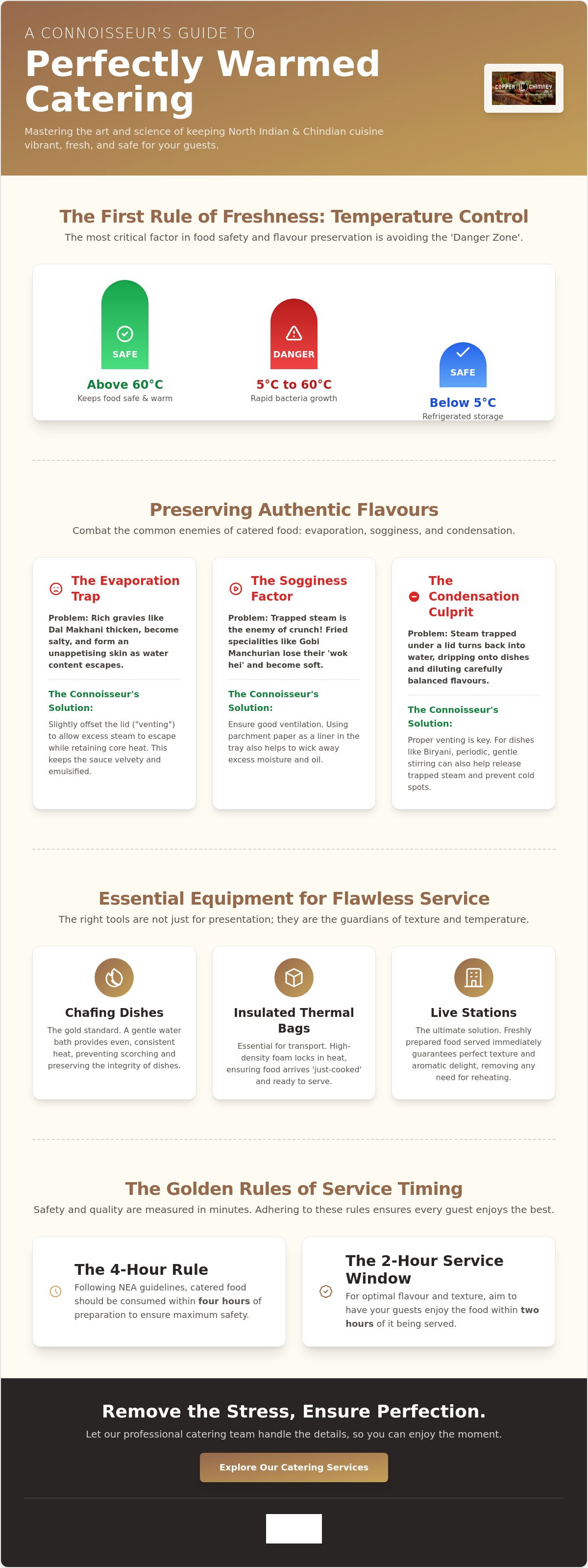
Identify the critical temperature 'danger zone' between 5°C and 60°C to protect your guests and preserve the authentic depth of your signature dishes.
Discover the essential tools and professional secrets on how to keep catered food warm and fresh, from the classic elegance of chafing dishes to high-grade thermal insulation.
Learn specialised techniques for maintaining the rich, emulsified textures of North Indian gravies and the elusive 'wok hei' found in Chindian fusion specialities.
Master the NEA 4-hour rule and the crucial two-hour service window to ensure every serving remains as safe as it is delicious.
Understand how live stations and professional buffet setups can transform your event by providing freshly prepared, aromatic food that never requires reheating.
Table of Contents
The Science of Thermal Retention: Why Catered Food Loses its Lustre
To a true lover of fine cuisine, there's a specific heartache in watching a vibrant Mutton Rogan Josh lose its steam. It isn't just a matter of temperature; it's about the vitality of the dish itself. Food safety experts and connoisseurs alike respect the "Danger Zone", that precarious window between 5°C and 60°C where bacteria flourish and the delicate nuances of spice begin to dull. Mastering how to keep catered food warm and fresh starts with understanding this thermal boundary to ensure every bite remains as safe as it is delicious.
Large catering trays act as reservoirs of latent heat. A deep vessel of Lucknowi Mutton Biryani stays warm significantly longer than an individual portion because its mass retains thermal energy; however, this depth can also lead to cold spots if the food isn't rotated. The real thief of quality is often condensation. While we frequently rely on a Chafing dish to provide consistent bottom-up warmth, the lid can inadvertently become a trap. Trapped steam reverts to water, dripping back onto the food and diluting the carefully balanced flavours of a premium catering spread.
The Evaporation Trap: Why Curries Dry Out
When a rich gravy is subjected to constant heat without a perfect seal, the water content escapes as steam. This leaves behind a sauce that is unpleasantly thickened and overly salty. You've likely seen the stubborn "skin" that forms on dairy-based delights like Dal Makhani or Paneer Butter Masala; this is a direct result of proteins drying out at the surface. To combat this, a connoisseur knows the secret of "venting". By slightly offsetting the lid, you allow just enough steam to escape to prevent condensation while retaining the core heat needed to keep the oils emulsified and the texture velvety.
The Sogginess Factor: The Physics of Fried Appetisers
Fried items present a different challenge entirely. For specialities like Szechwan Chilli Chicken or Gobi Manchurian, trapped steam is the absolute enemy of the crunch. When these items sit in a closed container, the moisture from the hot interior softens the crispy exterior, turning a delightful bite into a soft, oily mess. Maintaining the integrity of these textures is the ultimate test of how to keep catered food warm and fresh, requiring a balance between heat and ventilation. Using parchment paper as a moisture-wicking barrier at the bottom of the tray helps absorb excess oil and humidity, ensuring the "Wok Hei" remains intact from the kitchen to the guest's plate.
Essential Equipment for Maintaining Professional Food Temperatures
The transition from a bustling kitchen to a guest's plate is a journey where every degree matters. A connoisseur understands that the vessel is just as vital as the recipe itself. While the science of thermal retention provides the foundation, the right equipment acts as the guardian of flavour. To truly master how to keep catered food warm and fresh, one must look beyond simple heat and consider the delicate interplay between moisture and machinery.
The chafing dish remains the undisputed gold standard for buffet-style excellence. Its elegant silver silhouette does more than just present a dish; it uses a gentle water bath to distribute heat evenly, preventing the scorching that direct flame might cause. According to FDA food safety guidelines, maintaining a temperature of 60°C or warmer is non-negotiable for safety. For more delicate textures, like the velvety sauce of a Chicken Tikka Masala, a professional bain-marie is the preferred choice. It keeps gravies silky smooth by ensuring they never reach a boil, preserving the integrity of the spices and cream.
For the logistics of delivery, professional-grade insulated thermal bags are essential. These aren't merely padded carriers; they are designed with high-density foam that locks in heat during transit. If you’re hosting a larger gathering, opting for professional catering services ensures your Lucknowi Mutton Biryani arrives in these high-grade bags, maintaining its aromatic steam until the moment it's served.
Choosing the Right Chafing Fuel
The choice between gel and wick fuel depends entirely on your event's duration. Gel fuels offer high heat intensity, which is perfect for bringing water pans to temperature quickly, though they typically burn for only two hours. Wick fuels, by contrast, provide a lower, more consistent flame that can last up to six hours. For a standard catering tray, two burners are usually required to ensure no cold spots develop. Always place them on a heat-resistant surface and keep a damp cloth nearby for safety when managing open flames in a corporate setting.
Improvising with Household Tools
If you find yourself hosting without professional gear, your kitchen holds untapped potential. An oven set to its lowest 'warm' setting, usually around 60 to 70°C, can act as a temporary holding station. You can even transform an insulated ice box into a 'hot box' by lining it with towels and placing warm bricks or hot water bottles inside. For rice-based specialities, the 'Rice Cooker' method is a stroke of genius. Keeping your biryani on the 'keep warm' setting ensures the grains remain fluffy and separated, mimicking the gentle heat of a traditional clay pot.
Cuisine-Specific Care: Keeping Indian and Chindian Flavours Fresh
Every cuisine possesses a unique pulse, a specific rhythm of heat and moisture that defines its soul. When you're curating a menu that spans the rich, aromatic depths of North India and the fiery, high-heat energy of Chindian fusion, a "one size fits all" approach to warming simply won't suffice. Mastering how to keep catered food warm and fresh requires an appreciative eye for these culinary distinctions. You aren't just maintaining temperature; you're preserving the velvety emulsion of a Mutton Rogan Josh and the vibrant, sunset hues of a perfectly glazed Gobi Manchurian.
North Indian gravies are particularly temperamental. The delicate oils that carry the spices can easily separate if the heat is too aggressive, leaving a dish looking oily rather than rich. For Chindian specialities like Chilli Chicken or Szechwan Fried Rice, the challenge is retaining the "Wok Hei", that elusive breath of the wok. If these dishes are over-steamed in a closed tray, they lose their smoky charred edge and become unpleasantly soft. The goal is to provide enough warmth to keep the spices active without turning the vegetables into a dull, overcooked mash.
When planning your next gathering, consider how professional event catering handles these nuances. It's the difference between a meal that feels mass-produced and one that tastes like it was just whisked off the stove by a master chef.
The Bread Dilemma: Naan, Roti, and Paratha
Garlic Naan is perhaps the most difficult item to keep in its prime. Many hosts mistakenly wrap hot naan tightly in foil; this creates a steam chamber that turns the bread leathery within minutes. Instead, use a "Tortilla Warmer" approach. Place your breads in a cloth-lined basket or a tray with a clean, dry tea towel. This allows the bread to breathe while the cloth absorbs excess moisture. If your naan has spent a little too long under heat and feels dry, a very light "Quick Spritz" of water before a thirty-second covered rest can miraculously rehydrate the crumb.
Rice and Biryani: Avoiding the Clumping Effect
Lucknowi Mutton Biryani depends on the integrity of each individual grain of long-grain basmati. To prevent the rice from clumping or drying out, you should implement a strict fluffing schedule, gently turning the rice every twenty minutes to redistribute the moisture and fats. A professional trick is to place a slightly damp, clean cloth over the tray before securing the lid. This mimics the traditional "dum" cooking environment, trapping just enough humidity to keep the grains moist and aromatic without overcooking them into a porridge-like consistency.
The Golden Rules of Food Safety and Service Timing
Excellence in hospitality is a quiet achievement. While guests marvel at the rich, spiced aroma of a Dal Makhani, the true connoisseur knows that safety is the silent partner of every great meal. Mastering how to keep catered food warm and fresh requires more than just heat; it demands a strict adherence to the NEA 4-hour rule. In our local context, this means the clock starts ticking the moment the food is prepared. From that point, you have a four-hour window to ensure it's enjoyed at its peak. Any dish resting at ambient temperature for more than two hours should be moved to the fridge or discarded to maintain the highest standards of care.
Temperature monitoring is your most effective tool. A simple probe thermometer allows you to verify that your Mutton Rogan Josh stays safely above 60°C, ensuring the delicate fats remain emulsified and the flavours vibrant. For those of us who value inclusive dining, maintaining Halal integrity during the warming and serving process is paramount. It ensures that every guest, regardless of their dietary requirements, can dine with absolute confidence in the purity and quality of the spread.
If you're planning a high-stakes corporate gathering, you can book professional catering services that handle these complex timing and safety logistics for you.
Timing Your Delivery for Peak Freshness
Coordinating a 'just-in-time' arrival with your caterer is the secret to a successful buffet. You want the Lucknowi Mutton Biryani to arrive as the first guest enters, not an hour before. Once the lids are removed, you must account for the 'Buffet Burn', the rapid loss of heat and moisture that occurs during active service. If you're distributing Executive Bento Boxes, implement a 'First-In, First-Out' system. This ensures that the boxes prepared first are the first to be enjoyed, keeping the rotation smooth and the quality consistent.
Hygiene During Service
Hygiene and aesthetics are deeply intertwined. High-quality serving utensils do more than just move food; they prevent the cross-contamination that can muddle the distinct flavours of a Chilli Chicken and a Paneer Butter Masala. When hosting outdoors, the local humidity and wind-chill factors can be unpredictable. A sudden breeze can strip heat from a tray in seconds, so keeping lids secured between servings is essential to trap that precious steam and maintain the dish's original character.
Seamless Events: How Professional Catering Removes the Stress
There is a distinct point in every event where the host should transition from being a coordinator to being a guest. While understanding the mechanics of heat and moisture is invaluable, the most elegant solution to the challenge of how to keep catered food warm and fresh is often found in professional partnership. Entrusting your menu to experts allows you to focus on the tapestry of the conversation rather than the temperature of the tray. A professional setup doesn't just provide food; it provides a curated environment where every Mutton Rogan Josh and Garlic Naan is protected by industrial-grade thermal equipment and decades of logistical expertise.
Professional buffet setups are an investment in the sensory integrity of your meal. Specialists use high-grade thermal transport and heavy-duty chafing dishes that far exceed the capabilities of household tools. This ensures that the rich, emulsified sauces of your Butter Chicken remain velvety and the Lucknowi Mutton Biryani stays aromatic from the first serving to the very last. For more structured gatherings, Executive Bento Boxes and Premium Bento Boxes offer a sophisticated alternative. These individual portions are engineered for thermal retention, ensuring that the 'just-cooked' quality is sealed within every box, making them an ideal choice for corporate luncheons where timing can be unpredictable.
Live Station Catering: The Ultimate Freshness Solution
The most vibrant way to bypass the logistics of heat retention is to bring the kitchen to your guests. The sensory appeal of a Live Chaat counter with a Chaat Master or a Tandoori station is unparalleled. There is a theatrical joy in watching the sizzle of Tandoori Chicken or the assembly of fresh chaat, where the sounds and scents become part of the event's programming. Because the food is prepared in the moment, it completely eliminates the need for reheating. You can explore our Live Station Catering options to bring this level of dynamic freshness to your next premium event.
The Copper Chimney Commitment to Quality
Our approach to hospitality is rooted in a deep pride for our heritage and a commitment to culinary excellence. We utilise specialised thermal transport and professional-grade equipment to ensure that every dish, from our signature Dal Makhani to our fiery Chilli Chicken, maintains its soul. Every offering is Halal-certified, reflecting our dedication to inclusive, high-quality North Indian and Chindian excellence. We invite you to book a catering consultation with us to ensure your next national event is a masterpiece of flavour, safety, and seamless service.
Crafting a Legacy of Culinary Excellence
You've now explored the delicate science behind the thermal "danger zone" and the specific techniques required to keep regional specialities like Lucknowi Mutton Biryani at their peak. From the precise use of a water-pan chafing dish to the moisture-wicking secrets of parchment paper, the journey of how to keep catered food warm and fresh is a testament to your dedication as a host. These professional insights ensure that your guests enjoy the same vibrant textures and deep, aromatic spices that were first crafted in the kitchen.
When you're ready to elevate your next gathering without the logistical burden, our award-winning culinary team is here to act as your partner in excellence. We specialise in Halal-certified North Indian and Chindian fusion, offering everything from interactive live stations to meticulously prepared bento boxes designed for thermal retention. You can plan your next flawless event with Copper Chimney's professional catering services to ensure a seamless experience of heritage and flavour. Let your next celebration be defined by the warmth of your hospitality and the perfection of every bite.
Frequently Asked Questions
How long can catered food stay out without a heat source?
Catered food should not remain at ambient temperature for more than two hours. Once this window passes, the risk of bacterial growth increases significantly. If your event is outdoors in the humid Singapore heat, this time frame is even shorter. It's best to discard any perishables that have been sitting out without a heat source beyond this point to protect your guests and maintain high safety standards.
Is it better to keep food in the oven or a slow cooker?
The oven is generally superior for maintaining the texture of a wide variety of dishes, provided it's set to a low warm setting of about 60°C. Slow cookers are excellent for liquid-heavy items like Dal Makhani; however, they can overcook delicate grains or turn proteins mushy over time. For a connoisseur, the oven offers better control over the environment, especially when you need to prevent condensation from ruining the meal.
How do I keep fried food like Chilli Chicken crispy for a party?
Ventilation is the secret to preserving the crunch of items like Chilli Chicken or Gobi Manchurian. You should avoid covering these trays with tight-fitting lids, as the trapped steam will inevitably turn the coating soft. Instead, use a loose foil covering with small holes poked through to allow moisture to escape. Placing a layer of parchment paper at the bottom of the serving dish also helps by absorbing excess oils and humidity.
Can I reheat catered food if it arrives too early?
You can certainly reheat food if it arrives early, but you must do so with care to avoid drying out the dish. For gravies like Chicken Tikka Masala, a gentle stir over low heat on the hob is best. For rice dishes, adding a tiny splash of water before reheating in the oven helps restore moisture. Knowing how to keep catered food warm and fresh through gentle re-thermalisation ensures the flavours remain vibrant rather than scorched.
What is the best way to keep naan bread soft for guests?
Keeping Garlic Naan soft requires a breathable environment rather than a sealed one. Wrapping it tightly in foil often leads to a leathery texture. A better approach is to use a pre-heated ceramic dish lined with a thick, clean tea towel. This method retains the heat while allowing the bread to breathe, ensuring it stays pillowy and warm for your guests to enjoy alongside their meal without becoming unpleasantly tough.
How do I ensure my buffet meets food safety standards in Singapore?
Adhering to the NEA 4-hour rule is the cornerstone of food safety in Singapore. This rule dictates that food should be consumed within four hours of being cooked. You should also ensure that hot food is kept above 60°C and cold food below 5°C. Keeping a simple log of when the food was delivered and displayed helps you manage the timeline effectively and ensures a safe dining experience for everyone.
What equipment does a professional caterer use to keep food fresh?
Professionals rely on high-grade equipment like insulated food pan carriers and heavy-duty chafing dishes with consistent fuel sources. They also use specialised thermal delivery bags designed to lock in heat during transit. Using these tools is part of the professional strategy for how to keep catered food warm and fresh, ensuring that the Mutton Rogan Josh arrives at your venue at the perfect serving temperature without any loss of quality.
Should I keep the lids on the catering trays at all times?
You should keep lids on for most dishes to trap heat and moisture, especially for gravies and rice. However, you should briefly remove them for a quick stir every twenty minutes to prevent cold spots. The only exception is for fried appetisers, where keeping the lid slightly ajar prevents the steam from making the food soggy. Balancing heat retention with moisture release is the hallmark of an observant and expert host.


Comments