
Naan vs Roti: A Connoisseur’s Guide to the Key Differences

Your choice of bread is often the most critical decision on the menu, yet it is the one most diners leave to chance. The scent of charred flour and melting ghee is a beautiful greeting in any traditional kitchen, but many guests still feel a flicker of uncertainty when the basket arrives. You might wonder why a Garlic Naan feels like a decadent indulgence while a Tandoori Roti tastes like the earthy heart of a home-cooked meal. Understanding the difference between naan and roti is about more than just knowing your ingredients; it is about appreciating the centuries of heritage baked into every fold.
I agree that it can be confusing to select the right accompaniment for a complex gravy or a spiced roast. This guide will help you discover the essential differences in ingredients, texture, and tradition that define these iconic flatbreads to elevate your next dining experience. We will explore the technical shift from leavened white flour to whole-wheat simplicity and provide the confidence you need to pair your breads perfectly with everything from velvet-smooth gravies to robust, spiced meats.
Key Takeaways
Understand the fundamental difference between naan and roti, focusing on how leavening agents and flour types define their unique textures.
Discover why the intense heat of a clay tandoor is essential for naan's signature char, whereas the flat tawa creates the homely warmth of a roti.
Learn the art of pairing to ensure robust dishes like Mutton Rogan Josh or Dal Makhani are served with the most complementary bread style.
Identify which bread best suits your dietary goals by comparing the nutritional benefits of whole-wheat atta against refined white flour.
Appreciate the heritage and meticulous craft behind our tandoor-baked specialties, from the classic roti to our fragrant Garlic Naan.
Table of Contents
Naan vs Roti: The Fundamental Differences Explained
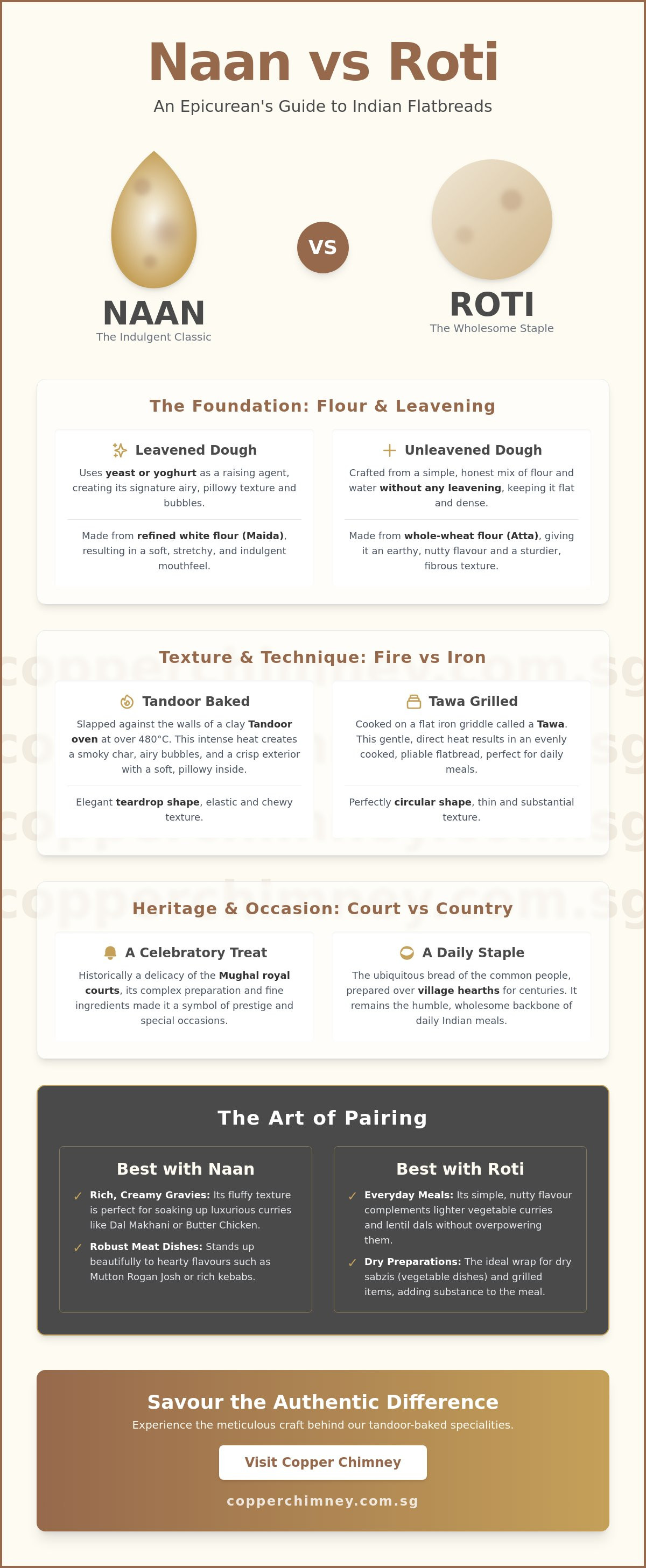
Stepping into a kitchen where fresh dough is being prepared is a sensory experience that defines the soul of North Indian cuisine. The primary difference between naan and roti lies in their structural DNA, specifically the choice of flour and the presence of leavening agents. Naan is a leavened flatbread, traditionally crafted from refined Maida flour and slapped against the scorching internal walls of a clay tandoor. This high-heat environment, combined with the dough's composition, results in a soft, pillowy crumb that is both elastic and indulgent. In contrast, Roti, often used interchangeably with Chapati, is an unleavened staple made from whole-wheat Atta. It is typically cooked on a flat iron griddle known as a tawa, resulting in a thin, pliable, and earthy disc that serves as the humble backbone of daily meals.
The Role of Leavening in Indian Breads
The alchemy of leavening transforms simple ingredients into a complex culinary masterpiece. In Naan, the addition of yeast or yoghurt allows the dough to ferment and rise, creating an airy internal structure. This leads to the characteristic bubbles and charred "pockets" that define a well-made loaf. Roti remains flat and relatively dense because it relies on a simple, honest mixture of flour and water. Understanding the technical difference between naan and roti helps one appreciate the distinct role each bread plays on the table. While Naan offers a chewy, luxurious mouthfeel that feels like a celebration, Roti provides a wholesome, nutty bite that doesn't compete with the flavours of your main dish.
Historical Origins: From Royal Courts to Village Hearths
History suggests that Naan was once a rare delicacy reserved for the royal courts of the Delhi Sultanate and the Mughal Empire. Its complex preparation required a specialised tandoor and expensive refined flour, making it a symbol of prestige and wealth. Conversely, Roti has always been the ubiquitous bread of the common people, prepared over village hearths for centuries across the Indian subcontinent. This distinction between a celebratory treat and a daily necessity persists in our modern dining culture. At Copper Chimney, we honour these distinct lineages by bringing the refined techniques of North Indian masters to our kitchens. Whether you are enjoying a casual meal at one of our locations or hosting a grand event through our catering services, understanding these historical roots adds a layer of appreciation to every bite you take.
Texture and Technique: Tandoor-Baked Naan vs Tawa-Grilled Roti
A single glance at a traditional bread basket reveals a fascinating study in geometry and culinary physics. The most immediate visual difference between naan and roti is their silhouette. Naan typically arrives in an elegant teardrop shape, a result of the gravity-defying stretch as the dough is slapped onto the vertical walls of a clay oven. Roti, however, is a testament to the rolling pin's precision, maintaining a modest, perfect circle. This visual distinction is merely the surface of a deeper technical contrast that defines how each bread feels against the palate. The Maida used in naan provides a high gluten content that results in a stretchy, elastic bite, whereas the whole-wheat Atta in roti creates a sturdier, more fibrous texture that feels substantial and grounded.
The Magic of the Tandoor Oven
The tandoor is a primitive yet perfect vessel of high-intensity heat. When a master chef reaches into the glowing depths to slap a piece of dough against the hot clay, the sensory experience is unmatched. The intense radiant heat, often exceeding 480 degrees Celsius, causes the moisture in the dough to expand rapidly, creating those iconic airy bubbles and deeply charred spots. This vertical baking method imparts a subtle smokiness and a unique char that no modern stove can replicate. Achieving the perfect balance, a crisp, golden exterior protecting a soft, pillowy heart, requires precise temperature control and years of rhythmic practice. You can witness this artistry firsthand at our locations, where the tandoor remains the beating heart of our kitchen, producing breads that are as much a visual treat as they are a culinary one.
The Simplicity of the Tawa
While the tandoor is about power, the tawa is a masterclass in subtlety. Roti is crafted from Atta, a stone-ground flour that offers a nutty, coarse profile. The dough is rolled thin and placed on a flat iron griddle. The true magic happens during the "phulka" stage, where the bread is briefly held over an open flame, causing it to puff up like a delicate balloon. This creates thin, distinct layers within the bread that are perfect for scooping up lighter stews or lentils. A final brush of ghee provides a rich finish that softens the whole-wheat texture and adds a layer of aromatic warmth. While the cooking styles are worlds apart, the Nutritional Differences between these methods are equally significant, as the tawa-grilled roti preserves the integrity of the whole grain without the need for leavening agents, making it a masterpiece of minimalist cooking.
The Art of Pairing: Which Bread Belongs with Your Curry?
Selecting the right accompaniment is more than a matter of preference; it is a fundamental part of the dining ritual. While some might suggest that any bread will do, a true connoisseur understands that the difference between naan and roti dictates the entire flow of the meal. The secret lies in the relationship between the bread's structure and the sauce's viscosity. A rich, heavy gravy demands a partner with structural integrity, while a highly spiced, aromatic dish needs a humble companion that won't compete for your attention. It is about creating a dialogue between the grain and the gravy.
Indulgent Pairings for Naan
Naan is designed for the most decadent moments of North Indian cuisine. Its leavened, pillowy crumb creates miniature craters that act as perfect vessels for luxurious, velvet-smooth sauces. When you sit down to a bowl of our signature Butter Chicken or a creamy Dal Makhani, the bread must be substantial enough to carry the weight of the cream and butter. A classic plain naan provides the ideal canvas, but many of our guests prefer the aromatic lift of Garlic Naan. If you choose the latter, ensure your main dish, like a Paneer Butter Masala, is robust enough to balance the garlic's pungency. The "nooks and crannies" of a well-baked naan are specifically evolved to hold onto these thick, tomato-based sauces, ensuring every bite is as flavourful as the last.
Wholesome Pairings for Roti
Roti represents the earthy, grounded side of the kitchen. Its thin, pliable nature makes it the superior choice for dry subzis, lentils, and lighter stews where the focus is on the ingredients rather than a thick sauce. As noted in the guide on The difference between roti and naan, the neutral flavour of whole-wheat flour is essential for balancing complex spice profiles. We recommend pairing roti with our Mutton Rogan Josh or Dal Maharaja. The bread’s simplicity allows the intricate layers of cardamom, clove, and cinnamon in the meat to take centre stage. It is also the traditional companion for home-style vegetable preparations, providing a nutty foundation that honours the heritage of regional Indian hospitality without the indulgence of a tandoor-baked treat. This pairing ensures the delicate balance of spices remains the hero of your plate.
The Daily Staple vs The Indulgent Treat: Nutritional Profiles
For the health-conscious diner, the difference between naan and roti extends far beyond the palate and deep into the science of satiety. While both breads are beloved, they serve very different roles in a balanced lifestyle. Roti is the steadfast hero of the weekday; it's a high-fibre staple that provides sustained energy without a heavy caloric load. Naan, with its enriched dough and tandoor-charred finish, is better viewed as a celebratory indulgence. It's perfect for those weekend gatherings where flavour takes precedence over macros. Choosing between them is a matter of matching your meal to your specific wellness goals.
Understanding Atta vs Maida
The nutritional divide begins with the milling process. Roti is crafted from Atta, a stone-ground whole-wheat flour that retains the essential bran and germ. This traditional method ensures that every bite is packed with minerals and complex carbohydrates. According to verified nutritional data, Roti contains approximately 9.7g of dietary fibre per 100g, which is nearly double the 4.8g found in its refined counterpart. This high fibre content results in a lower glycaemic index, helping you feel fuller for longer and preventing the energy spikes associated with processed grains.
Naan relies on Maida, or all-purpose flour, to achieve its signature stretch and airy crumb. While the refining process removes much of the grain's natural fibre, the inclusion of yoghurt and milk in the leavening process adds a unique nutritional twist. Interestingly, Naan often provides slightly more protein than Roti, roughly 10.2g compared to 7.85g per 100g. However, the presence of these dairy fats and refined sugars makes it a denser, more caloric choice. It's the ultimate treat that rewards the senses during a special meal.
Dietary Considerations and Halal Standards
In a diverse culinary landscape like Singapore, trust and transparency are as important as taste. We understand that our guests look for clear markers of quality and dietary integrity. Every batch of dough prepared in our kitchens adheres to strict Halal standards; this ensures that our heritage-rich recipes are accessible to everyone. This commitment to excellence is a cornerstone of our regional hospitality, providing peace of mind alongside world-class flavours. We take pride in being a custodian of flavour that respects every guest's individual needs.
For those following a plant-based lifestyle, the choice is often clear. While Naan traditionally uses dairy leavening, Roti is inherently vegan-friendly when requested without a brush of ghee. Whether you are looking for a wholesome daily meal or a decadent feast, you can explore our full range of dietary-conscious offerings through our corporate catering services, where tradition and modern health standards meet. Ready to experience the perfect balance of health and heritage? Book a table at our Syed Alwi location to savour our freshly prepared breads straight from the tandoor.
Savouring Tradition: The Copper Chimney Approach to Handcrafted Breads
At Copper Chimney, we view the tandoor not merely as a cooking implement, but as a sacred vessel of North Indian heritage. Every piece of dough is hand-stretched by our masters of craft, ensuring that the ancient techniques of the royal kitchens are preserved right here in Singapore. While we've explored the technical difference between naan and roti, the most profound distinction is experienced through the senses as the bread leaves the clay oven. Our dedication to authenticity means every order is prepared fresh, capturing that fleeting moment when the bread is at its peak of flavour and texture.
Our signature Garlic Naan has become a local legend among connoisseurs for a reason. We use a generous amount of fresh garlic and herbs, allowing the high heat of the tandoor to roast the aromatics directly into the dough. It is this commitment to sensory detail that makes our breads stand out, turning a simple accompaniment into the highlight of the meal. Whether you are visiting our locations for a quiet dinner or engaging our catering services for a grand celebration, you'll find that our breads are never an afterthought.
From the Tandoor to Your Table
Walking into our restaurant, the first thing you'll notice is the intoxicating aroma of charred flour and melting ghee. It’s an atmosphere that welcomes you as an invited guest into a tradition that spans centuries. A key part of this trust is our commitment to Halal-certified excellence. For our Singaporean diners, this certification is a definitive seal of quality, ensuring that every ingredient in our Naan and Roti meets the highest dietary standards. We invite you to book a table at our Syed Alwi restaurant to witness the rhythmic slapping of dough against clay and enjoy an authentic feast where the bread is as vital as the curry.
Catering for Excellence: Breads that Travel
Providing high-end culinary experiences for corporate events and weddings requires a specialised understanding of how food behaves over time. We take immense pride in selecting and packaging our breads so they arrive with their integrity intact. While Naan is best enjoyed seconds after it leaves the heat, our whole-wheat Roti is remarkably resilient. It maintains its soft, pliable texture beautifully in buffet setups; this makes it a reliable choice for large gatherings. Our team is always available to consult on the perfect bread-to-curry ratio, ensuring your guests have exactly what they need to scoop up every drop of our Mutton Rogan Josh or Dal Makhani. We don't just deliver food; we deliver a masterfully paced culinary journey.
Elevate Your Next Indian Dining Experience
Mastering the difference between naan and roti allows you to navigate any menu with the confidence of a true epicurean. You now understand how the pillowy, leavened stretch of a tandoor-baked naan provides the perfect structural partner for rich gravies; meanwhile, the nutty, whole-wheat simplicity of a tawa-grilled roti offers a wholesome, daily alternative. Choosing the right bread is the final step in harmonising the complex spices of your meal. It's a subtle art that transforms a simple dinner into a memorable feast.
Since 2012, Copper Chimney has served as a bridge between cultures, offering Halal-certified North Indian and Chindian fusion to the Singaporean community. Whether you're craving our award-winning Butter Chicken or our legendary Garlic Naan, our commitment to heritage ensures every bite is authentic. We invite you to bring these professional flavours into your own home. Order your favourite handcrafted Indian breads from Copper Chimney today and savour the results of over a decade of culinary excellence. We can't wait to be part of your next meal.
Frequently Asked Questions
Is naan or roti better for weight loss?
Roti is generally the superior choice for weight loss because it is made from whole-wheat flour and contains nearly double the fibre of naan. The primary difference between naan and roti in a nutritional sense is the flour type, with roti offering 9.7g of fibre per 100g to help maintain satiety. Naan is made from refined flour and often contains added fats, making it a more caloric choice for daily consumption.
Can I make naan at home without a tandoor oven?
You can certainly achieve a respectable home-made naan using a heavy iron skillet or a very hot oven broiler. While you won't get the exact vertical-heat smokiness of a clay tandoor, a cast-iron pan can replicate the charred spots. Simply place the dough on a hot pan and cover it to trap steam, then finish it under the grill for that signature pillowy bubble and soft crumb.
Why is naan usually teardrop-shaped?
The iconic teardrop shape is a direct result of the traditional tandoor baking process. As the chef slaps the dough onto the curved, vertical walls of the clay oven, gravity causes the lower half to stretch downwards before the heat sets the structure. This creates the elongated form that has become a visual hallmark of the dish, distinguishing it from the perfectly rolled circles of a traditional roti.
Does roti contain gluten?
Yes, traditional roti contains gluten as it is made from whole-wheat flour, or Atta. Gluten is the essential protein that provides the dough with its elasticity and allows it to be rolled thin without tearing. If you have a gluten intolerance, you would need to look for specific regional variations made from alternative grains like millet or chickpea flour, which offer a different texture and flavour profile entirely.
What is the difference between roti and chapati?
While many use these terms interchangeably, the distinction is often clearer than the difference between naan and roti. Essentially, "roti" is a broad category of unleavened flatbreads, whereas "chapati" refers specifically to the thin, hand-rolled version cooked on a tawa. All chapatis are rotis, but not all rotis, such as the thicker tandoori roti or roomali roti, can be classified as chapatis in a technical sense.
Why is butter often added to these breads after cooking?
Butter or ghee is brushed onto the breads to preserve their softness and enhance their sensory profile. Because these breads are cooked at such high temperatures, they can dry out and become brittle quite quickly. A light glaze of fat creates a protective barrier that keeps the crumb pliable while adding a rich, nutty aroma that perfectly complements the charred flour and complex spices of your curry.
Which bread is best for a Halal-certified corporate lunch?
Roti is often the most practical choice for corporate catering because it retains its texture and softness for longer periods in a buffet setting. For a prestigious team lunch, we recommend a mix of both to cater to different preferences. At Copper Chimney, our entire menu is Halal-certified, ensuring your corporate events meet all dietary standards without compromising on the authentic, high-end culinary excellence we have delivered since 2012.
How long do naan and roti stay fresh after cooking?
These breads are best enjoyed within ten to fifteen minutes of leaving the heat. Naan, in particular, can become chewy as it cools due to the refined flour and leavening agents. Roti tends to stay soft for a bit longer if kept in an insulated container. To revive them at home, a quick splash of water and a few seconds on a hot pan usually restores their pliability and fresh-baked scent.


Comments