
The Best Chindian Food to Try in 2026: A Connoisseur’s Guide to Indo-Chinese Fusion
- Copper Chimney

- May 21
- 13 min read
What if the most evocative taste of South Asia actually begins in the intense, smoky breath of a seasoned wok? For many, the true soul of regional dining isn't found in a traditional tandoor, but in the vibrant, spicy alchemy of Indo-Chinese fusion. You likely already know that singular craving for a dish that's simultaneously familiar and thrillingly exotic. It's a balance of pungent garlic, fresh ginger, and the refined heat of green chillies. To help you find the best Chindian food to try in 2026, we've curated a guide that ensures every bite captures the nostalgic essence of this storied heritage.
In this guide, you'll learn to distinguish between the subtle textures of Hakka style and the bold, layered heat of Szechwan preparations. We'll explore the sophisticated artistry behind iconic staples like Gobi Manchurian and Chilli Chicken, while highlighting how 2026 trends are shifting toward complex, smoky flavour profiles. From the history of the migrant communities who pioneered these techniques to a definitive list of must-order, Halal-certified delicacies, you're about to embark on a refined culinary journey that turns a simple meal into a prestigious cultural celebration.
Key Takeaways
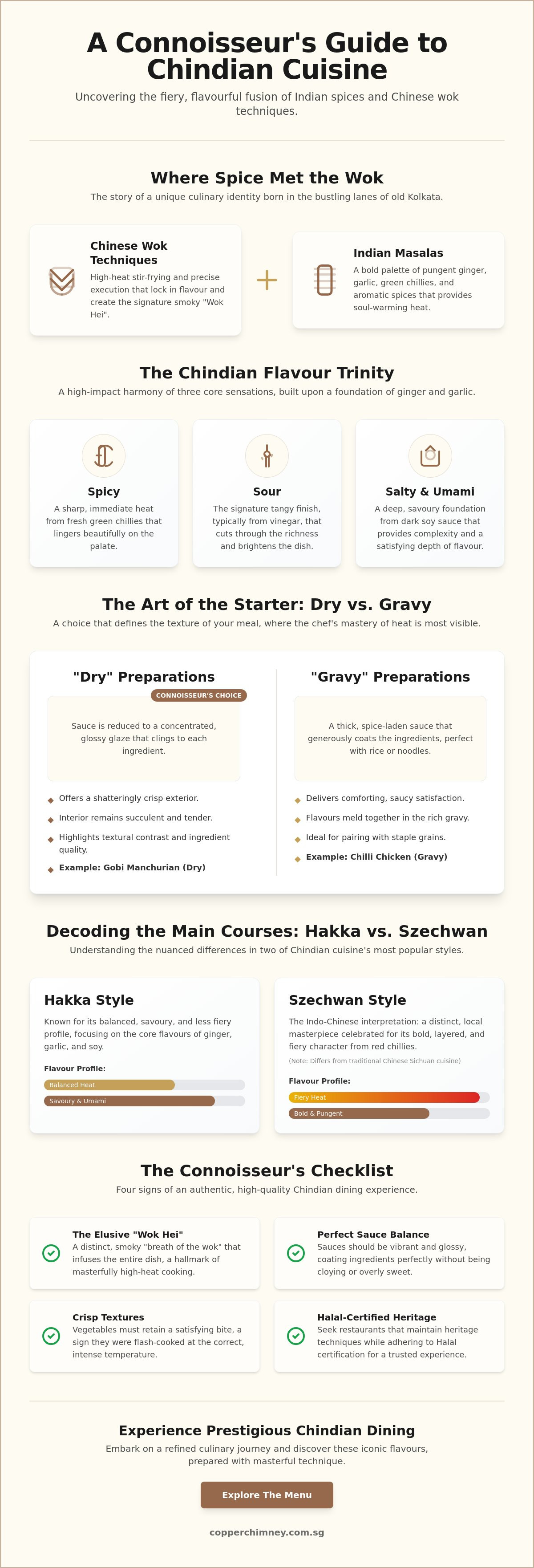
Discover how the vibrant streets of old Kolkata birthed this unique fusion, marrying traditional Chinese wok techniques with the bold, aromatic masalas of India.
Learn to navigate any menu by identifying the best Chindian food to try, including the essential textural differences between "Dry" and "Gravy" appetisers like Gobi Manchurian.
Uncover the nuanced distinctions between Szechwan and Hakka styles, understanding that the fiery Szechwan of Indo-Chinese kitchens is a distinct, local masterpiece.
Master the connoisseur’s checklist for authenticity by looking for the elusive "Wok Hei" and a perfect balance of savoury sauces that are never cloying or overly sweet.
Find confidence in seeking out Halal-certified dining options that maintain the heritage and high-heat techniques required for a truly prestigious fusion experience.
Table of Contents
What is Chindian Food? The Origins of a Global Flavour Phenomenon
Chindian food is a culinary love letter written in the intense, searing heat of a seasoned wok. It isn't merely a subset of regional cooking; it is a distinct and fiery identity that was born in the bustling, narrow lanes of old Kolkata. When you're seeking the best Chindian food to try, you aren't just looking for a simple fusion meal. You're looking for that specific, intoxicating moment where "wok hei", the smoky breath of the pan, collides with the pungent, earthy aroma of fresh ginger and crushed garlic. It's a sensory experience that defines modern dining in 2026, offering a level of comfort and excitement that few other cuisines can match.
This culinary marriage is built on a foundation of Chinese stir-fry techniques and bold Indian masalas. The result is a menu that feels both familiar and thrillingly exotic. It's a style of cooking that prioritises high-heat execution, ensuring that vegetables retain a crisp bite while meats remain succulent under a coat of vibrant, spicy sauce. The appeal lies in this duality: the precision of the East meeting the soul-warming heat of the Indian subcontinent.
The Kolkata Connection: Where Spice Met the Wok
The story of this fusion begins with the Hakka Chinese community who settled in India during the late 18th century. As they established themselves in the ports of Bengal, their traditional recipes began to adapt to local palates. Indian Chinese cuisine evolved as these immigrant cooks swapped mild greens for fiery green chillies and light broths for thick, spice-laden gravies. What started as humble street-side stalls in the Tangra district has matured into a sophisticated dining tradition. It's a journey from the roadside to the tablecloth, where the rhythmic clatter of a wok is now a hallmark of prestigious culinary excellence.
The Chindian Flavour Profile: Umami, Heat, and Tang
This fusion is defined by what connoisseurs call the "Chindian Trinity": spicy, sour, and salty. Unlike traditional Cantonese food which prizes the natural, subtle flavour of ingredients, Chindian food is about high-intensity impact. The foundation is almost always a punchy ginger-garlic paste, followed by dark soy sauce for deep umami and vinegar for that signature tang. Green chillies provide a sharp, immediate heat that lingers beautifully on the palate. When searching for the best Chindian food to try, look for that specific balance where the sauce coats the ingredients without drowning them. It should be vibrant, glossy, and undeniably bold, much like the iconic Chilli Chicken or Gobi Manchurian that have become global favourites.
The Best Chindian Starters: A Sizzling Introduction
The ritual of an authentic Indo-Chinese meal begins with a choice that defines the texture of your evening: dry or gravy. While many diners are accustomed to the saucy comfort of a main course, the true connoisseur often leans towards "dry" preparations for their starters. These dishes are tossed in a white-hot wok until the sauce reduces to a concentrated, glossy glaze that clings to the ingredients. If you're searching for the best Chindian food to try, the appetiser section is where the chef's mastery of high-heat timing is most visible. You can explore these meticulously prepared starters at the Copper Chimney shop, where each recipe honours these traditional textures.
Achieving the perfect Chindian starter requires a delicate balance of contrasts. The exterior must offer a shatteringly crisp bite, while the interior remains succulent and tender. This textural harmony is only possible when fresh aromatics like ginger, garlic, and celery are flash-fried at the very start of the process. The sharp sizzle of these ingredients hitting the oil is a siren song for anyone who appreciates the depth of fusion cooking. It's this initial wok-toss that infuses the dish with a complex, smoky foundation before the signature sauces are even introduced.
Gobi Manchurian: The Vegetarian Masterpiece
Gobi Manchurian is perhaps the most iconic representative of the Chindian movement. It features florets of cauliflower that are lightly battered and deep-fried to a golden hue before being tossed in a dark, savoury Manchurian sauce. This specific sauce is a fragrant blend of finely chopped ginger, garlic, and fresh coriander, providing an earthy depth that balances the tang of soy and vinegar. It's a dish that highlights the incredible versatility of vegetarian ingredients in a fusion context. Gobi Manchurian serves as the ultimate gateway dish for fusion beginners, offering a perfect introduction to the spicy and salty flavour profiles of the East.
Chilli Chicken: The Spicy Standard
No exploration of the best Chindian food to try is complete without the definitive Chilli Chicken. This dish relies on a vibrant combination of slit green chillies and crisp bell peppers to deliver a fresh, layered heat that builds gradually on the palate. To ensure the meat remains incredibly moist despite the intense heat of the wok, chefs utilise a "velveting" technique, coating the chicken in a light starch barrier before cooking. While the gravy version is a delight with fried rice, the "Dry Chilli Chicken" variant is the preferred choice for those seeking a punchy, concentrated snack to enjoy with a cold beverage. It's a masterclass in how simple ingredients can be transformed through precise technique and heritage-driven flavours. For those planning a gathering, these starters are also available through our corporate catering services, bringing a touch of culinary prestige to any event.
Main Courses: Szechwan vs. Hakka Styles
When you move from the crisp textures of starters to the heart of the meal, the stylistic divide in Indo-Chinese cuisine becomes beautifully apparent. To truly understand the best Chindian food to try, one must appreciate the distinction between Szechwan and Hakka preparations. These aren't merely names on a menu; they represent two entirely different sensory experiences. While Hakka focuses on the delicate balance of fresh ingredients, Szechwan is an unashamed celebration of bold, pungent heat. It's a culinary duality that has defined the Chindian food in Singapore scene, offering diners a choice between subtle elegance and fiery intensity.
It's vital to note that "Szechwan" in the Chindian lexicon is a unique Indian interpretation. It bears little resemblance to the numbing peppercorn-heavy dishes of China's Sichuan province. Instead, the Indo-Chinese version is a vibrant, garlic-forward creation that uses a paste of soaked dry red chillies to achieve its signature crimson hue. Visually, the two styles couldn't be more different. A Szechwan dish arrives at the table in a brilliant, fiery red, while Hakka preparations favour the natural, muted colours of stir-fried vegetables and golden noodles. Both are essential pillars of the fusion experience, but they cater to very different cravings.
Szechwan Fried Rice and Noodles: The Bold Choice
For those who crave intensity, Szechwan Fried Rice is the definitive main course. The base is a pungent sauce crafted from a blend of celery, ginger, and a generous amount of garlic, all heightened by the sharp kick of red chillies. A fascinating technical departure in the best Chindian food to try is the use of long-grain basmati rice. Unlike the short-grain varieties found in traditional Chinese cooking, basmati provides a fragrant, fluffy texture that holds the spicy Szechwan oils perfectly. For the ultimate indulgence, many connoisseurs opt for the "Triple Schezwan" concept. This is a prestigious ensemble where rice, noodles, and a bowl of spicy gravy are served together, creating a layered meal that is as filling as it is flavourful.
Hakka Noodles: The Delicate Balance
Hakka Noodles represent the more refined, vegetable-forward side of the fusion spectrum. The secret to a perfect plate lies in the stir-frying technique. The noodles must remain "al dente" and distinct, never clumping together. This dish is a vibrant garden of textures, featuring thinly sliced cabbage, matchstick carrots, and fresh spring onions that provide a satisfying crunch. Rather than being dominated by a heavy sauce, Hakka noodles are seasoned subtly with white pepper and a touch of light soy. This allows the natural sweetness of the vegetables and the smoky essence of the wok to shine through. It's a sophisticated choice that cleanses the palate, making it an excellent companion to bolder, saucier side dishes.
Identifying Authentic Chindian Flavours: A Connoisseur’s Checklist
Recognising the best Chindian food to try requires more than just a hungry appetite; it demands an eye for detail and a palate tuned to the nuances of high-heat cooking. The most critical marker of authenticity is "Wok Hei", or the breath of the wok. This isn't a flavour you can pour from a bottle. It's the elusive, smoky essence that occurs when fresh ingredients are flash-seared in an intensely hot wok. If your fried rice lacks that subtle charred aroma, it hasn't truly met the wok. This signature smokiness is the foundation upon which all other fusion flavours are built.
Another telltale sign of quality lies in the sauce. Authentic Indo-Chinese preparations should never be cloying, overly sweet, or syrupy. Instead, you're looking for a savoury depth where the salt of the soy and the tang of the vinegar are in perfect equilibrium. This balance is only achievable when a chef uses hand-chopped aromatics. Pre-made ginger-garlic pastes often have a metallic aftertaste that masks the freshness of the dish. In the Singaporean market, look for Halal certification as a definitive seal of quality and inclusivity. It ensures that these prestigious flavours are accessible to everyone without compromising on the strict standards of preparation that the cuisine demands.
The Texture Test: Crispy, Saucy, and Fresh
When your order arrives, perform a quick visual and tactile assessment. Dry dishes, such as the Chilli Chicken we discussed earlier, should have a light, non-greasy coating that adheres perfectly to the meat. There shouldn't be a pool of oil at the bottom of the plate. For gravy-based items, the consistency is key. It should be thick enough to coat the back of a spoon with a glossy sheen, never appearing gloopy or translucent from too much cornstarch. Most importantly, look for the colours. Vegetables should be vibrant and crisp, indicating they were tossed into the wok at the final, fleeting moment to maintain their structural integrity.
The Spice Spectrum: More Than Just Heat
There's a common misconception that Indo-Chinese food is simply about maximum heat. In reality, the best Chindian food to try offers a sophisticated layering of spice. You should experience an initial, sharp kick from fresh green chillies, followed by the slow, lingering warmth of cracked black pepper. The ginger and garlic should provide a pungent, aromatic base that supports the heat rather than being drowned by it. Authentic fusion prioritises flavour complexity over a singular, painful "burn". If you're ready to experience this level of culinary precision, you can reserve a table at our Syed Alwi location to taste the difference for yourself.
Experiencing the Best Chindian Food Nationally with Copper Chimney
Copper Chimney serves as the definitive bridge between the historical roots of Tangra and the modern culinary expectations of 2026. Finding the best Chindian food to try shouldn't be a matter of chance; it should be a deliberate choice to dine where heritage is respected. By adhering to authentic Kolkata-style techniques, every dish reflects a legacy of high-heat mastery and precision. Whether you're enjoying a quiet individual meal or utilising our corporate catering services for a prestigious team event, the experience remains consistently professional and deeply personal.
The atmosphere in our dining rooms is designed to make you feel like an invited guest. We strike a balance between the warmth of traditional regional hospitality and the polished service of a high-end establishment. It's an environment where the rhythmic sounds of the kitchen serve as a backdrop to meaningful conversations. This commitment to excellence extends to our dietary standards, providing a reliable and inclusive space for those seeking Halal-certified fusion without compromising on the complexity of the "Chindian Trinity" of flavours we've explored.
A Menu Crafted by Masters
Our selection is anchored by signature preparations that have earned Copper Chimney its reputation as a custodian of tradition. From the fiery, garlic-laden Szechwan Fried Rice to the perfectly glazed Gobi Manchurian, every recipe is a testament to our craft. We use only high-quality, Halal-certified ingredients, ensuring that the integrity of the dish is never lost in the fusion. You can explore the nuances of our craft and find your nearest branch by visiting our full menu and locations across the country. Each site offers a unique window into this vibrant culinary world, maintained with the same level of expertise that has garnered industry recognition over the years.
Bringing the Fusion Home
The connoisseur's journey doesn't have to end at the restaurant door. We understand that the craving for authentic Indo-Chinese flavours can strike at any time, which is why we've refined our delivery and takeaway options. Our Executive and Premium Bento Boxes offer a curated taste of the East, perfectly packaged for a sophisticated lunch at home or a productive team dinner at the office. These options ensure that even on your busiest days, you don't have to settle for anything less than authentic quality.
However, to truly appreciate the elusive "Wok Hei" and the sensory details we've discussed, we encourage you to book a table for an evening of discovery. From your first curious bite of a crispy starter to the final, spicy grain of rice, you'll find that Chindian food is more than just a meal. It's a storied tradition that we are proud to share with you. You've moved from curiosity to connoisseur; now, it's time to let the flavours speak for themselves in a setting that honours their origin.
Step Into the Future of Fusion Dining
Your journey through the vibrant world of Indo-Chinese fusion has revealed a cuisine defined by its technical brilliance and storied heritage. You've learned that identifying the best Chindian food to try in 2026 requires looking past the surface to find the smoky "Wok Hei" and the precise balance of a hand-crafted sauce. Whether you prefer the fiery, garlic-rich notes of a Szechwan main or the crisp, vegetable-forward elegance of a Hakka stir-fry, the key is finding a kitchen that honours these Kolkata-born traditions with integrity.
Copper Chimney stands as a custodian of these flavours, offering award-winning North Indian and Chindian fusion that has earned its place as a local institution. With our Halal-certified Indo-Chinese excellence, we provide a reliable bridge between cultures for every guest. From national delivery and premium event catering to a warm, personal dining experience, we invite you to taste the result of decades of culinary mastery. It's time to move beyond the menu and experience the authentic soul of the wok.
Explore the authentic Chindian menu at Copper Chimney and book your table today. We look forward to welcoming you into our story and helping you discover your next favourite dish.
Frequently Asked Questions
What is the most popular Chindian dish for beginners?
Chilli Chicken and Gobi Manchurian are the most accessible entry points for those exploring this fusion. These dishes perfectly encapsulate the signature trinity of spicy, sour, and salty flavours without being overwhelming. For many, they represent the best Chindian food to try because they offer a familiar texture with an exotic, aromatic twist. They're typically available in both dry and gravy versions to suit your personal preference.
Is Chindian food always spicy?
Chindian food is celebrated for its bold heat, but it isn't always intensely spicy. The cuisine focuses on a layered spice profile where the pungency of garlic and ginger balances the sharp kick of green chillies. You can often request milder versions of classics like Hakka Noodles or Veggie Fried Rice. The goal is to achieve a sophisticated complexity rather than a singular, painful burn on the palate.
What is the difference between Chindian and traditional Chinese food?
The primary difference lies in the aromatics and the intensity of the seasoning. While traditional Chinese food often prizes the natural flavours of the ingredients, Chindian food uses generous amounts of ginger, garlic, and green chillies. You'll also find the use of Indian spices and long-grain basmati rice, which are rare in traditional Cantonese or Sichuan cooking. It's a unique identity born from regional Indian influences.
Is Chindian food in Singapore Halal-certified?
Many leading establishments in Singapore, including Copper Chimney, are proud to be Halal-certified. This certification serves as a crucial trust marker for our diverse audience, ensuring that our prestigious fusion offerings are inclusive and accessible. It guarantees that every dish, from our Szechwan Fried Rice to our Chilli Chicken, meets strict dietary standards while maintaining the authentic, high-heat soul of the original recipes.
What are Hakka noodles made of?
Hakka noodles are typically made from unleavened wheat flour, resulting in a firm and smooth texture that holds up well in a high-heat wok. They are boiled until just tender and then flash-fried with a variety of crisp vegetables like cabbage and carrots. This specific noodle type is designed to remain distinct and "al dente," allowing the subtle seasoning of white pepper and light soy to shine through.
Can I find vegetarian options in Chindian cuisine?
Vegetarian diners will find a wealth of options, as Chindian cuisine is remarkably plant-forward. Iconic dishes like Gobi Manchurian, Paneer Chilli, and Szechwan Veggie Noodles are staples of the menu rather than afterthoughts. These dishes use the same intense wok techniques and bold sauce bases as their meat-based counterparts. It's widely considered some of the best Chindian food to try for its creative use of textures.
Why is it called "Manchurian" if it is from India?
The name "Manchurian" is a creative culinary term coined in India, rather than a reference to the Manchuria region of China. It was originally developed to describe a specific style of sauce made with sautéed ginger, garlic, and green chillies in a soy base. Today, it represents a beloved category of fusion cooking that has become a prestigious symbol of the Indo-Chinese culinary marriage born in Kolkata.
What does "Wok Hei" mean in the context of Chindian cooking?
"Wok Hei" translates to the "breath of the wok" and refers to the complex, smoky charred flavour produced by flash-searing ingredients at extreme temperatures. It is an essential marker of authenticity in Chindian cooking, indicating that the food was prepared with professional mastery. This elusive essence cannot be replicated with domestic equipment; it requires the intense heat of a commercial burner and a well-seasoned wok.


Comments