
The Connoisseur’s Guide to Chicken Tikka Masala: History, Craft, and the Perfect Pairing

Most diners sitting down for a feast in Singapore believe they're tasting an ancient recipe from the heart of Delhi, but the true story of chicken tikka masala is far more complex and cosmopolitan. You likely appreciate the smoky, charred edges of the tandoor-fired meat and that velvety, spiced gravy, yet you might find yourself wondering if it's really any different from its famous cousin, Butter Chicken. It's a common confusion that even seasoned foodies face when browsing a menu at a local eatery.
In this guide, I'll help you navigate these culinary nuances, showing you exactly how to spot a professionally crafted version that respects its heritage while meeting the strict Halal-certified standards we value in our local food scene. Since Copper Chimney first established its presence in 2012, we've refined the art of the Tandoor to ensure every bite tells a story of craft and tradition. You'll discover the dish's contested history, the sensory hallmarks of an award-winning recipe, and the precise side pairings to elevate your next meal into a true connoisseur's experience.
Key Takeaways
Explore the captivating history of this global favourite, unravelling the legendary tales that link its origins to both Indian heritage and a rainy Glasgow evening.
Discover the culinary secrets behind a masterpiece, focusing on the precise yoghurt marinades and the non-negotiable smoky char of a traditional clay Tandoor.
Learn to distinguish your curries by identifying the bold, earthy flavour profile of chicken tikka masala compared to its sweeter cousin, Butter Chicken.
Enhance your next meal with connoisseur-level pairing advice, ensuring your choice of Basmati rice and tandoori breads perfectly complements the robust masala sauce.
Understand the commitment to authenticity that makes our award-winning, Halal-certified preparation a standout experience within the vibrant Singapore food scene.
Table of Contents The Tale of Two Origins: Is Chicken Tikka Masala Truly Indian? The Anatomy of a Masterpiece: From Tandoor to Table Chicken Tikka Masala vs. Butter Chicken: A Connoisseur’s Comparison The Art of the Perfect Pairing: Elevating Your Dining Experience The Copper Chimney Signature: Why Our Tikka Masala Captivates Singapore
The Tale of Two Origins: Is Chicken Tikka Masala Truly Indian?
The first encounter with a bowl of chicken tikka masala is often a sensory revelation. You're greeted by the sight of succulent, hand-crafted chicken chunks, charred to perfection in a traditional Tandoor, then submerged in a velvety, aromatic tomato sauce. This dish is more than just a menu staple; it's a complex tapestry of spices and history. While its popularity is undisputed, its exact birthplace remains a subject of spirited debate among food historians and connoisseurs alike. For a comprehensive overview of chicken tikka masala and its global impact, one can see how it has bridged the gap between Eastern tradition and Western palates.
The most famous origin story takes us to Glasgow in 1971. Legend has it that a bus driver visited the Shish Mahal restaurant and complained that his chicken tikka was too dry. The chef, Ali Ahmed Aslam, supposedly improvised by tossing in a tin of condensed tomato soup and a dash of spices. This "British" version of the dish gained such momentum that in 2001, British Foreign Secretary Robin Cook famously declared it a British national dish. He argued that it perfectly illustrated the way Britain absorbs and adapts external influences.
However, the "Tikka" itself has undeniable Mughal roots. The word refers to small bits or pieces of meat, a culinary tradition that dates back to the Mughal Empire's reign in India from 1526. Ancient clay-oven cooking techniques provided the foundation for the smoky, tender meat that defines the dish. While the sauce might have evolved to suit European preferences, the soul of the meal remains rooted in the spice-rich heritage of Northern India.
The Glasgow Myth vs. The Delhi Reality
The claim that the dish was invented in Scotland in the 1970s often overlooks the parallel evolution of North Indian cuisine. During the mid-20th century, specifically around 1948 in New Delhi, the creators of Butter Chicken were already experimenting with creamy, tomato-based gravies to preserve the moisture of Tandoori meats. This evolution mirrors the development of Shahi Paneer, suggesting that the "masala" element was already a part of the Indian culinary lexicon long before it reached British shores. Chicken tikka masala stands as a masterclass in culinary adaptation and global fusion.
A Symbol of Multicultural Flavours
In Singapore, this dish represents the vibrant migration of flavours from the Punjab region to our local shores. It remains the most requested dish in Indian restaurants across the island, favoured for its balanced heat and comforting richness. At Copper Chimney, we understand that authenticity is vital in a world saturated with "instant" curry pastes. Our award-winning chefs ensure every serving is 100% Halal-certified and prepared with the same respect for tradition that you would find in a premier Delhi kitchen. Whether you are dining at our Syed Alwi location or enjoying a quiet night in, the depth of flavour in a properly prepared masala is unmistakable. It's a reminder that while a dish can travel across oceans, its heart remains tied to the aromatic spices of its ancestors.
The Anatomy of a Masterpiece: From Tandoor to Table
When a steaming bowl of chicken tikka masala arrives at your table, it's the culmination of a multi-stage culinary ritual. The first thing you'll notice is the visual impact. The sauce boasts a vibrant orange hue, glowing under the restaurant lights, while the aromatic steam carries hints of charred meat and toasted spices. It's a sensory invitation that promises depth and complexity. This isn't just a curry; it's a carefully constructed layering of textures and temperatures that begins long before the first flame is lit.
The Craft of the Tikka
Success begins with the protein. While home cooks often reach for chicken breast, true connoisseurs know that chicken thighs are superior for this dish. Thigh meat contains approximately 5% to 9% fat, which is essential for surviving the intense environment of the oven without drying out. The meat undergoes a transformation through a yoghurt-based marinade infused with lemon juice and a precise blend of Kashmiri chillies and turmeric. The lactic acid in the yoghurt gently breaks down the muscle fibres over a 12 to 24-hour period. This chemical process tenderises the chicken while creating a protective coating that locks in moisture.
The Tandoor is the second, non-negotiable element of the craft. These clay ovens reach temperatures often exceeding 400 degrees Celsius. This extreme heat creates the signature "chargrilled" profile, where the edges of the chicken caramelise and blacken slightly. This smoky char provides a bitter counterpoint to the rich sauce, a feat that's nearly impossible to replicate in a standard domestic kitchen. If you're looking to experience this authentic preparation, you might consider a visit to book a table at our Syed Alwi location and see our Tandoor masters in action.
The Alchemy of the Sauce
The "masala" or sauce is where the aromatic narrative unfolds. It starts with the "Holy Trinity" of Indian aromatics: onions, ginger, and garlic. These are sautéed patiently until they reach a deep golden perfection. Unlike generic "curry powder" blends, a professional kitchen builds flavour through individual notes. Cumin provides earthiness, coriander adds a citrusy lift, and garam masala introduces warmth at the very end of the process. While many enthusiasts follow a classic chicken tikka masala recipe to understand the basics, the restaurant secret lies in the balance of acidity and fat.
The base relies on vine-ripened tomatoes for a sharp tang, which is then tempered by the finishing touch. A splash of heavy cream or a smooth cashew paste creates that signature velvety texture that coats the back of a spoon. This final addition harmonises the spices, resulting in a dish that's rich but never heavy. The result is a masterpiece of balance, where the smoky, robust tikka pieces are enveloped in a sauce that's both piquant and smooth.
Chicken Tikka Masala vs. Butter Chicken: A Connoisseur’s Comparison
It's a scene played out nightly in dining rooms from Little India to the bustling stretches of North Canal Road. A guest peruses the menu, their eyes darting between two legendary orange-hued gravies. While they might look similar to the uninitiated, chicken tikka masala and Butter Chicken (Murgh Makhani) offer vastly different sensory journeys. One is a bold, spirited explorer; the other is a refined, velvety diplomat.
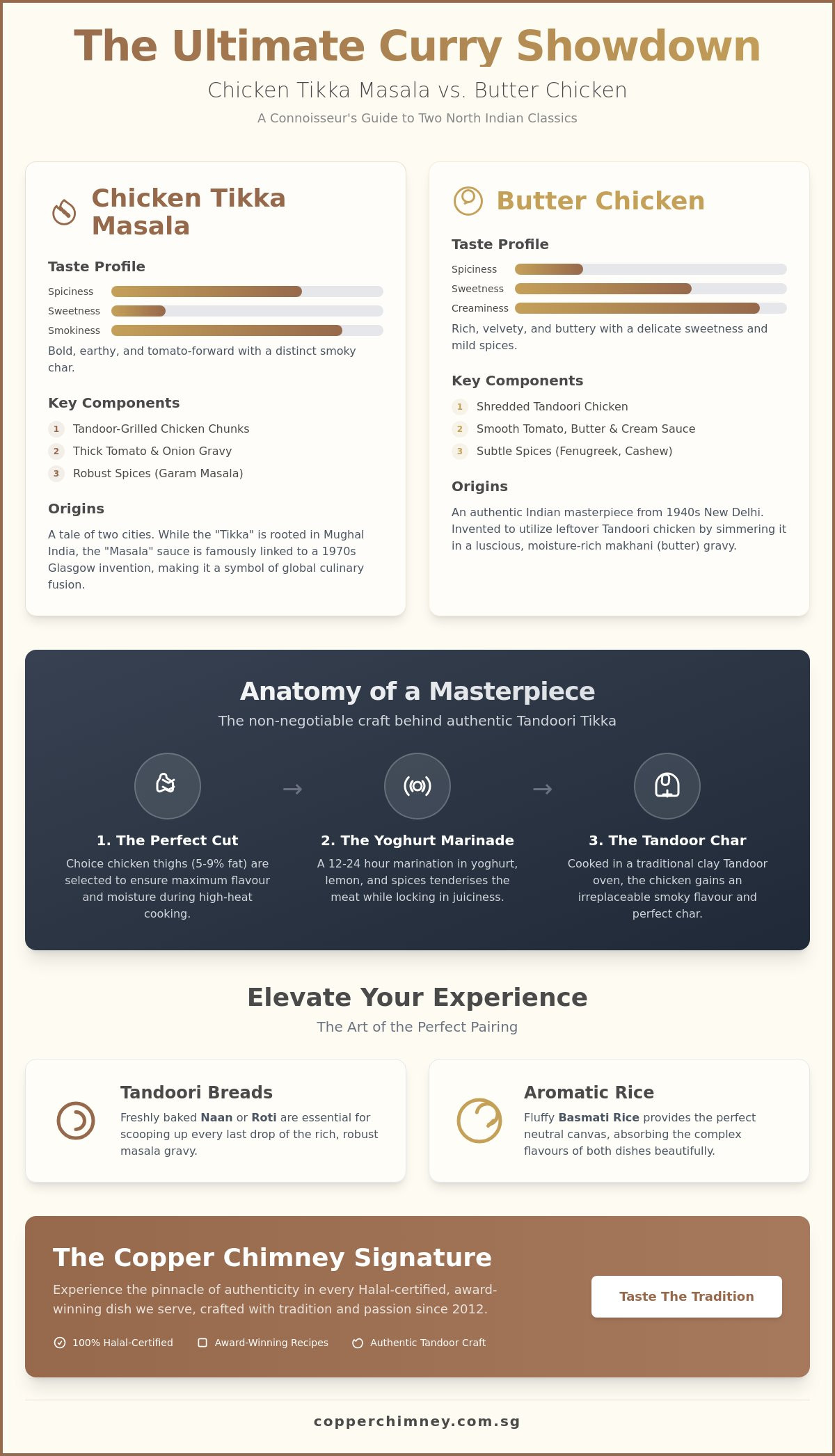
The primary distinction lies in their flavour profiles. Butter Chicken is a celebration of dairy and indulgence. Its sauce is strained to a silk-like consistency, sweetened slightly with honey or a touch of sugar, and enriched with copious amounts of butter and cream. In contrast, chicken tikka masala is a more robust, rustic affair. It leans into the earthy depth of cumin, coriander, and garam masala, all balanced by the sharp acidity of a concentrated tomato and onion base.
The heat level also sets them apart. Butter Chicken stays in the mild lane, focusing on the fragrance of dried fenugreek leaves, known as kasuri methi. CTM isn't afraid to bite. You'll often find a lingering warmth from fresh ginger and slit green chillies that cuts through the richness of the char-grilled poultry.
Which Should You Order?
Order the chicken tikka masala if you're craving a savoury, spice-forward experience that demands a fluffy piece of Garlic Naan to scoop up the textured gravy. It's the definitive choice for the palate that appreciates a complex, tangy kick. If you're seeking a mild, buttery indulgence that feels like a warm embrace, the Murgh Makhani is your best bet. It's particularly popular with those who prefer a velvety finish without the sharp sting of spice. For a deeper look at these regional specialities, you might enjoy reading A Connoisseur’s Guide to Authentic Indian Food in Singapore (2026).
The Visual and Textural Hallmarks
A true connoisseur identifies these dishes before the first bite. CTM reveals its character through visible aromatics. Look for the tiny fragments of sautéed onions, ginger juliennes, and perhaps a few diced bell peppers. The mouthfeel is substantial and slightly coarse, providing a satisfying weight on the tongue.
Butter Chicken: Glossy, uniform, and perfectly smooth. It should coat the back of a spoon with a reflective sheen.
Chicken Tikka Masala: Chunky and vibrant. The sauce clings to the meat in thick, spice-laden clusters.
We appreciate both at Copper Chimney because they cater to different moods. One provides a bold wake-up call to the taste buds, while the other offers a refined, comforting elegance. Whether you're celebrating a milestone or enjoying a quiet Tuesday dinner, choosing between them is less about quality and more about your personal culinary North Star for the evening.
The Art of the Perfect Pairing: Elevating Your Dining Experience
A bowl of chicken tikka masala is a culinary masterpiece, but even a masterpiece needs the right frame to truly shine. The smoky char from the Tandoor oven, where the chicken is first seared at temperatures exceeding 300 degrees Celsius, creates a robust profile that demands specific accompaniments. To enjoy this dish like a true connoisseur, you've got to consider how textures and temperatures interact on your plate. It's about finding that delicate balance between the heat of the spices and the cooling elements that refresh your palate.
The Ultimate Bread Selection
The soft, pillowy texture of hand-stretched bread is the most traditional way to enjoy the thick, luscious gravy. Garlic Naan remains the quintessential partner for chicken tikka masala. Its buttery surface and pungent aromatics cut through the richness of the tomato-based sauce beautifully. You can dive deeper into the history of this pairing in The Connoisseur’s Guide to the Perfect Garlic Naan. If you're looking for something a bit more rustic, Tandoori Roti offers a wonderful whole-wheat alternative. It's lighter and provides a toasted, earthy contrast to the vibrant creaminess of the masala.
Rice and Refreshments
While bread is fantastic for scooping, long-grain Basmati rice serves as an elegant sponge for every drop of flavour. Jeera Rice, tempered with toasted cumin seeds, provides a subtle aromatic base that doesn't compete with the main dish. The individual grains should be distinct and fluffy, releasing a gentle fragrance of spice as you eat. Between bites, a spoonful of cool Raita or a crisp garden salad acts as a vital palate cleanser. These refreshing additions reset your taste buds, allowing you to experience the full complexity of the chicken tikka masala with every single mouthful. To finish the meal, a chilled Mango Lassi provides a velvety sweetness that gracefully balances the lingering heat.
In Singapore’s diverse culinary landscape, excellence is defined by both taste and inclusivity. Since opening our doors in 2012, Copper Chimney has remained strictly Halal-certified. This ensures that our award-winning recipes are prepared to the highest standards, making the dining experience accessible to everyone in our community. We take immense pride in being a custodian of these traditions, ensuring that the heritage of North Indian cuisine is preserved in every serving. You can experience these authentic, hand-crafted flavours for yourself by visiting our Singapore restaurant locations today.
The Copper Chimney Signature: Why Our Tikka Masala Captivates Singapore
At Copper Chimney, we believe the soul of a great chicken tikka masala lies in the fire. We don't believe in shortcuts; our chefs rely on the traditional Tandoor method to achieve that unmistakable charred edge. This ancient clay oven technique ensures every piece of poultry remains succulent while absorbing the deep, earthy smokiness that a standard stove simply can't replicate. It's this commitment to authenticity that has defined our presence in Singapore since we first established our roots at Syed Alwi Road in 2012.
The fire is our heart. By roasting the marinated chicken at temperatures exceeding 300 degrees Celsius, we lock in moisture and create those beautiful, blackened "leopard spots" that signify true craft. Our Halal-certified kitchen serves as a bridge for Singapore's diverse community, offering an award-winning North Indian experience that respects dietary requirements without ever compromising on the robust, punchy flavours of the subcontinent.
Award-Winning Flavours
Our heritage is baked into every batch of masala we produce. We avoid the convenience of pre-packaged spice mixes, choosing instead to hand-pick and grind our spices fresh to ensure maximum aromatic impact. This meticulous care results in a sauce that's vibrant, complex, and layered with the warmth of cumin, coriander, and our secret blend of garam masala. If you'd like to bring these tastes into your own kitchen, view our full menu and shop online to see how we bring the restaurant experience to your doorstep.
Catering for Your Special Moments
A well-prepared chicken tikka masala often becomes the centrepiece of a memorable gathering. We've successfully translated this classic dish for large-scale events, ensuring the quality remains consistent whether we're serving a small family dinner or a corporate function for 500 guests. From boardroom luncheons to grand wedding banquets, our team handles the logistics so you can focus on your guests.
Customised menus tailored to corporate dietary needs.
Professional setup that maintains the optimal temperature of every curry.
Full Halal certification for inclusive community hosting.
You can enquire about our Halal Indian catering services to elevate your next special occasion. We bring the same warmth of Indian hospitality to your venue that you'd find in our dining rooms, ensuring every guest feels like an invited friend. We invite you to visit our locations to witness the sizzle of the Tandoor and the aromatic steam of a fresh curry. It's more than just a meal; it's a sensory journey we've been perfected over the last decade.
Savour the Legacy of the Tandoor
Understanding the rich tapestry of chicken tikka masala reveals why this dish remains a global icon. You've explored its complex origins and the meticulous craft required to balance smoky, charcoal-kissed poultry with a velvety, spiced gravy. It's more than just a meal; it's a testament to centuries of culinary evolution and the precise art of North Indian spice blending. At Copper Chimney, we take our role as custodians of this tradition seriously. Our kitchen is MUIS Halal-certified, ensuring our award-winning North Indian and Chindian fusion is accessible to everyone in Singapore's vibrant community. We're proud to be featured in "The Ultimate Guide to Authentic Indian Food in Singapore," a recognition that reflects our commitment to quality. Whether you're a lifelong devotee or a curious newcomer, the perfect pairing of buttery naan and aromatic tikka awaits. Every bite tells a story of heritage and passion that we're eager to share. Book a table at our Little India location and taste the legend yourself. We look forward to seeing you soon.
Frequently Asked Questions
Is Chicken Tikka Masala very spicy?
Chicken tikka masala is typically a mild to medium dish that prioritises rich, aromatic flavours over intense heat. While the recipe includes spices like garam masala and cumin, the generous addition of cream and tomato puree mellows the profile significantly. It's a perfect choice for those who enjoy a complex depth of flavour without the stinging bite found in a vindaloo or phall.
What is the difference between Chicken Tikka and Chicken Tikka Masala?
The primary difference lies in the presentation and the presence of a rich, velvety sauce. Chicken tikka refers to succulent boneless pieces of poultry that are marinated in yogurt and spices before being charred in a traditional clay tandoor. When these smoky, hand-crafted pieces are simmered in a luscious tomato and cream gravy, it becomes the iconic chicken tikka masala that diners adore.
Is Chicken Tikka Masala Halal in Singapore?
Yes, our chicken tikka masala is strictly Halal-certified, reflecting our commitment to the diverse culinary needs of the Singaporean community. We ensure that every ingredient and process meets the rigorous standards set by MUIS. This certification allows all our guests to dine with absolute confidence while enjoying the authentic, award-winning flavours of our heritage recipes.
Can I eat Chicken Tikka Masala if I am on a gluten-free diet?
You can usually enjoy this dish on a gluten-free diet because the sauce traditionally relies on tomatoes, yogurt, and ground spices for its thick consistency. It's important to ask your server if any thickening agents or hidden additives contain wheat. To keep your entire meal gluten-free, we recommend pairing your curry with fragrant basmati rice rather than wheat-based breads like naan or paratha.
What is the best way to reheat Chicken Tikka Masala at home?
Reheating your curry on the stovetop over a gentle, low flame is the most effective way to maintain the silky texture of the sauce. Add a small splash of water or single cream to the pan to replenish any moisture lost during refrigeration. Don't use high microwave settings; the intense heat can cause the dairy to split and the tandoor-grilled chicken to become unpleasantly rubbery.
Why is the sauce in Chicken Tikka Masala orange?
The vibrant orange hue is a natural result of combining deep red tomatoes and kashmiri chilli powder with white cream or yogurt. Turmeric also plays a vital role, lending its golden pigment to the base during the initial sautéing of aromatics. When these ingredients emulsify over the heat, they create the warm, sunset-coloured glow that has become a visual signature of this beloved dish.
How many calories are typically in a serving of Chicken Tikka Masala?
A standard 300g serving of this dish contains approximately 450 to 580 calories, depending on the specific ratio of cream and butter used in the recipe. About 30g of protein is provided by the chicken, while the fat content typically accounts for 60 percent of the total caloric value. You can manage your caloric intake by opting for smaller portions of rice and skipping the additional butter glaze on your side dishes.

Comments