
The Rich History of Chindian Food: A Connoisseur’s Journey of Flavour and Fusion

The sizzle of a wok in a bustling Kolkata alleyway isn't just a sound; it's the echo of a 250-year-old culinary conversation between two of the world's most vibrant civilisations. While many of us have a deep-seated love for the fiery, umami-rich kick of a well-made Chilli Chicken or the comforting aroma of Szechwan Fried Rice, we often overlook the incredible journey these flavours took to reach our plates. You might already know that this fusion is a staple of urban dining, but understanding the true history of Chindian food reveals a story of survival, adaptation, and eventual gastronomic triumph.
In this article, you'll discover the fascinating 18th-century origins of this cuisine, tracing its evolution from the sugar mills of the first Chinese settlers to its current status as a sophisticated pillar of international gastronomy. We'll demystify the differences between traditional Chinese techniques and their bold Indian adaptations, ensuring you have the confidence to choose the perfect Halal-certified options for your next event. From the legendary Gobi Manchurian to the aromatic depth of Garlic Naan, we are embarking on a connoisseur’s journey through a heritage that is as professional in its execution as it is personal in its story.
Key Takeaways
Trace the 18th-century origins of the history of Chindian food, from the arrival of silk traders to the vibrant culinary hubs of regional India.
Discover the technical secrets behind "Wok Hei" and how it harmonises with the "Holy Trinity" of Indian aromatics—ginger, garlic, and green chillies.
Learn to distinguish between traditional Chinese techniques and the bold, spice-forward profiles of iconic dishes like Gobi Manchurian and Chilli Chicken.
Understand why this versatile fusion has become a premier choice for sophisticated events, ranging from corporate team lunches to high tea buffet catering.
Gain the confidence to select authentic, Halal-certified Chindian options that offer a nostalgic yet refined dining experience for multi-generational gatherings.
Table of Contents
The Birth of a Culinary Hybrid: Origins of the Chindian Movement
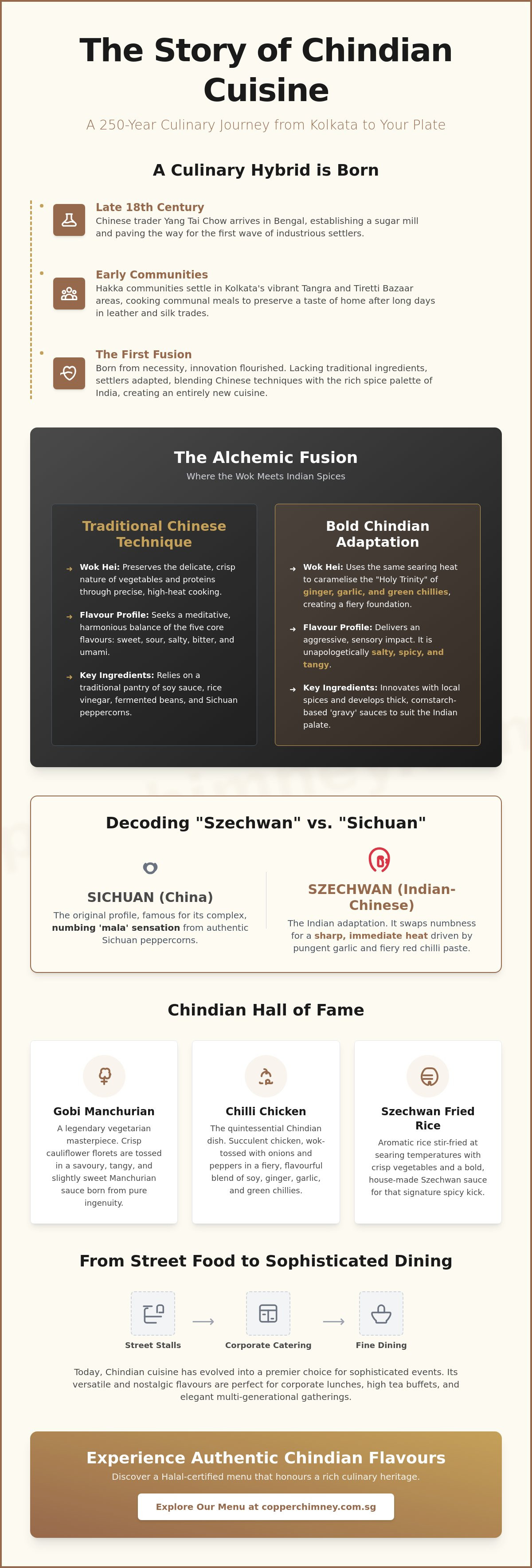
To understand the soul of a dish, one must first look at the hands that created it. Chindian food isn't merely a menu category; it's a vibrant, living dialogue between the high-heat precision of Chinese wok techniques and the complex, aromatic spice palettes of India. The history of Chindian food is a narrative of migration and ingenuity that began in the late 18th century. It started with the arrival of Yang Tai Chow, a trader who established a sugar mill in Bengal, paving the way for a small but industrious community of Chinese immigrants to settle in regional hubs like Kolkata.
Initially, these flavours were confined to private communal kitchens where workers gathered after long days in the leather and silk industries. These early settlers weren't professional chefs; they were carpenters, tanners, and traders who cooked to preserve a taste of home. However, as they began to share their meals with local neighbours, the rigid boundaries of traditional recipes started to soften. By the time the first public Indian Chinese cuisine eateries appeared, a new culinary hybrid had already taken root, transforming survivalist cooking into a celebrated art form.
The Hakka Influence and Early Trade
The Hakka-speaking community played a pivotal role in this evolution. Settling primarily in the Tangra and Tiretti Bazaar areas, they established a unique social fabric centred around their trade. Street-side stalls soon emerged to feed the growing workforce, offering quick, nourishing bowls that were the precursors to modern restaurant staples. These stalls were sensory landmarks, defined by the rhythmic clang of metal spatulas and the pungent scent of fermented beans mingling with the local air.
Adaptation: The Mother of Invention
Innovation was born from necessity. Early immigrants found themselves in a land rich with spices but devoid of their traditional pantry staples. This lack of ingredients forced a brilliant kind of culinary alchemy. When Sichuan peppercorns weren't available, they turned to local dried red chillies for heat. They paired soy sauce with pungent Indian green chillies for the first time, creating a sharp, salty, and spicy profile that felt entirely new. Perhaps most significantly, they developed the "gravy" culture. To satisfy the local preference for saucy dishes that could be enjoyed with rice or bread, they thickened their stir-fries with corn starch, giving birth to the luscious, coat-the-spoon textures we now associate with premium corporate catering and fine dining alike.
The Alchemic Fusion: How Indian Spices Met the Wok
If you have ever stood near a professional kitchen during service, you'll know the sound of the wok. It is a rhythmic, metallic roar. In the history of Chindian food, the technical concept of "Wok Hei"—literally translated as the "breath of the wok"—underwent a dramatic transformation. While traditional Chinese cuisine often uses high heat to preserve the delicate, crisp nature of vegetables, the Chindian approach uses that same searing temperature to caramelise a bold "Holy Trinity": ginger, garlic, and green chillies. This combination creates a foundation of fire that defines every stir-fry and gravy dish.
The contrast between these two worlds is striking. Traditional dishes often seek a meditative balance of five flavours, yet Chindian food prioritises a more aggressive, sensory impact. It is unapologetically salty, spicy, and tangy. To achieve this, chefs rely on cornstarch-thickened sauces that provide a signature velvety texture. This ensures that the sauce doesn't just sit on the plate; it clings to every morsel of protein, creating a luxurious mouthfeel that is particularly satisfying when paired with a side of Szechwan Fried Rice.
The Szechwan vs. Sichuan Distinction
In the culinary lexicon of the subcontinent, the spelling "Szechwan" serves as a vital marker. It distinguishes the Indian-Chinese flavour profile from the numbing, peppercorn-heavy Sichuan dishes of China. The Indian version leans heavily into pungent garlic and fiery red chilli paste, creating a sharp, immediate heat. Szechwan sauce is a pungent, chilli-heavy condiment that differs from its numbing Chinese ancestor by prioritising sharp heat and deep garlic notes.
The Umami of the Subcontinent
The true magic happens when fermented soy sauce meets the earthy, toasted notes of ground cumin and coriander. This marriage of ingredients creates a deep umami profile that feels both familiar and exotic to the Indian palate. To cut through the richness of deep-fried textures, a sharp splash of synthetic vinegar is often added, providing a necessary tang that brightens the entire dish. While MSG was once the primary source of this savoury depth, modern fusion cooking has evolved. Many contemporary chefs now achieve that same addictive quality through high-quality natural extracts and refined fermentation techniques, ensuring a sophisticated dining experience that respects modern health consciousness.
Beyond the Bay of Bengal: The Chindian Journey to National Popularity
While the history of Chindian food began within the intimate enclaves of Bengal, its journey didn't stop at regional borders. It migrated west and south, shedding its status as an immigrant curiosity to become a cornerstone of the national dining landscape. Today, it's hard to find a major city that doesn't boast its own interpretation of this fusion. It has become the default choice for multi-generational family gatherings, offering a shared language of flavour that appeals to the traditional palate of grandparents and the adventurous tastes of their grandchildren alike. For a deeper look at how this movement has shaped regional gastronomy in a global hub, you can explore our guide on Chindian Food in Singapore.
This evolution from humble street-side woks to sophisticated dining rooms marks a significant shift in our culinary perception. It is no longer merely a "quick fix" meal; it is a refined experience that demands professional execution and premium ingredients. The transition into high-end settings has allowed chefs to experiment with textures and aromatics, ensuring that the nostalgia of the dish remains while the quality of the ingredients is elevated to meet modern expectations.
A Cuisine for a Multicultural Palate
There is something inherently "local" about the way these two cultures meet on a plate. The fusion feels natural because it mirrors the multicultural fabric of our society. For many, the scent of Szechwan Fried Rice is a powerful trigger for nostalgia, evoking memories of first dates or celebratory Sunday lunches. This comfort factor has allowed the cuisine to transition seamlessly into the world of professional corporate catering, where it serves as a reliable crowd-pleaser that bridges cultural gaps through familiar, bold flavours.
The Rise of Halal-Certified Fusion
Making this cuisine truly national required more than just popularity; it required inclusivity. The rise of Halal-certified fusion has been a critical chapter in the history of Chindian food. Creating Halal-compliant dishes involves significant technical skill, especially when replicating the deep, fermented umami of traditional sauces without restricted ingredients. As a Halal-certified establishment, we take immense pride in ensuring that these sophisticated flavours are accessible to the whole nation. This certification is a vital trust marker, particularly for large-scale corporate events and team dinners where maintaining high dietary standards is essential for fostering community.
The Hall of Fame: Decoding Iconic Chindian Dishes
To truly appreciate the history of Chindian food, one must look past the historical archives and focus on the culinary icons that have stood the test of time. These dishes are the anchors of the movement, representing a perfect marriage of technical precision and bold seasoning. Whether you are dining in a refined establishment or enjoying a curated meal at home, these staples offer a sensory experience that is both nostalgic and exhilarating. They aren't just items on a menu; they are the result of decades of refinement by chefs who mastered the art of the fusion wok.
The Manchurian Mystery
Gobi Manchurian is perhaps the most famous enigma of this fusion genre. Legend suggests the style was born from a specific demand for something "different" from traditional fare, leading to a technique that is now a global favourite. The "Manchurian" style involves battering ingredients—most notably cauliflower—deep-frying them to a golden crisp, and then tossing them in a glossy, dark sauce dominated by soy, ginger, and garlic. It is a masterclass in texture and umami.
As a connoisseur, you'll know that the choice between "Dry" and "Gravy" versions defines the meal's character. The Dry Gobi Manchurian serves as a quintessential appetiser, where the focus remains on the crunch and the punchy aromatics. In contrast, the Gravy version is a soul-warming main course, where the florets are bathed in a thick, velvety sauce designed to be mopped up with Garlic Naan. The first bite of a perfectly crisp floret, giving way to a tender centre and a burst of savoury heat, is a hallmark of culinary excellence.
Wok-Fried Favourites
No journey through this cuisine is complete without the high-heat drama of Szechwan Fried Rice and Hakka Noodles. The aromatic profile of Szechwan Fried Rice is a symphony of smoky wok breath and pungent red chilli, where every grain of rice is toasted to perfection. It is a dish that demands a professional hand to ensure the heat is aggressive enough to sear but controlled enough to preserve the delicate aromatics of the garlic and spring onions.
Similarly, authentic Hakka Noodles require a specific "bite" or al dente texture to be considered authentic. These thin strands are stir-fried with a medley of crunchy vegetables, ensuring that the freshness of the produce isn't lost in the intense heat of the wok. When executed correctly, the balance of heat, salt, and crunch in dishes like Chilli Chicken creates a meal that is as satisfying as it is sophisticated. If you are ready to taste these icons for yourself, you can book a table at our Syed Alwi location to experience the craft of our chefs firsthand.
The Modern Chindian Experience: From Street Food to Sophisticated Dining
The contemporary culinary landscape has seen a remarkable transformation in how we perceive the history of Chindian food. What began in the humble, smoke-filled kitchens of Tangra has ascended into the polished dining rooms of the world's most cosmopolitan cities. Modern chefs are no longer content with simple stir-fries; they are refining these legacy recipes with premium ingredients and sophisticated plating techniques. This transition has turned what was once a quick street-side snack into a prestigious centrepiece for high-end event catering. It's a cuisine that acts as the ultimate "bridge," offering enough familiarity to be comforting yet enough spice to be exciting, making it the perfect choice for diverse groups who can't quite agree on a single flavour profile.
Chindian Food in Corporate Culture
In the fast-paced corporate sector, the demand for versatile, high-quality meals has led to a surge in bento boxes and mini-buffets featuring these fusion delights. Executive Bento Boxes and Premium Bento Boxes have become trending choices for team lunches because they offer a complete, balanced meal that travels exceptionally well. The logistical benefits are clear. The dishes maintain their integrity and texture during transport, and the universal appeal of a well-made Szechwan Fried Rice ensures no guest leaves hungry. Leading Indian catering services have fully embraced this fusion, recognising that Halal-certified Chindian options provide a safe, inclusive, and delicious solution for large-scale professional gatherings.
The Future of the Fusion
The history of Chindian food continues to be written with every new variation that emerges from the wok. The culinary world is witnessing the emergence of new fusion variations like Paneer Manchurian or Lamb Szechwan, proving that the spirit of innovation is as strong today as it was in the 18th century. At Copper Chimney, we see ourselves as custodians of this tradition. Our role is to preserve the "authentic" fusion taste—that specific balance of heat and umami—while modernising the presentation for a new generation of connoisseurs. As you explore our curated menu, you aren't just choosing a meal; you're participating in a centuries-old story of cultural exchange that remains as vibrant and delicious as ever.
Savouring the Legacy of Fusion
The journey from the 18th-century silk trade ports to the modern banquet hall is a testament to the enduring appeal of cultural dialogue. We've explored how the history of Chindian food was forged through necessity and ingenuity, resulting in the alchemic marriage of the high-heat wok and the aromatic Indian spice box. This heritage has transformed iconic dishes like Chilli Chicken and Gobi Manchurian from simple street-side innovations into sophisticated staples of the national dining scene.
At Copper Chimney, we take immense pride in our role as custodians of this vibrant tradition. Since 2012, we have remained strictly Halal-certified, ensuring our award-winning North Indian and Chindian fusion is accessible to everyone. Whether you are planning a grand corporate event with our nationwide catering services or simply seeking a nostalgic meal with family, our kitchen remains dedicated to the technical precision and bold flavours that define this unique genre. Experience the authentic flavours of Chindian history at Copper Chimney today and discover why this culinary bridge continues to captivate palates across the nation. We look forward to welcoming you to our table for a meal that is as professional in its craft as it is personal in its story.
Frequently Asked Questions
What is the difference between authentic Chinese food and Chindian food?
Chindian food is defined by its aggressive use of Indian aromatics like ginger, garlic, and green chillies, whereas traditional Chinese food often seeks a subtle balance of five flavours. The "gravy" culture, where cornstarch thickens sauces into a luscious consistency, is a distinct Chindian trait designed to be enjoyed with rice or naan. It's a departure from the lighter stir-fries found in various regional Chinese cuisines.
Who invented Gobi Manchurian and where did it come from?
Gobi Manchurian was famously invented by Nelson Wang at the Cricket Club of India in Mumbai in 1975. When a customer asked for something off-menu, Wang experimented by sautéing traditional Indian ingredients like ginger, garlic, and green chillies with soy sauce instead of garam masala. This sparked a revolution in the history of Chindian food, leading to the battered, deep-fried cauliflower dish we adore today.
Why is Chindian food so popular in India and Singapore?
The popularity of this fusion in India and Singapore stems from its ability to act as a culinary bridge between two major Asian cultures. It offers the comforting, bold heat that local palates crave, combined with the exciting, high-heat techniques of the wok. This makes it a reliable staple for multi-generational family gatherings and corporate team lunches where diverse tastes need to be satisfied simultaneously.
Is Chindian food always spicy, or are there mild options?
Chindian cuisine isn't always spicy, as many dishes can be tailored to a milder palate by focusing on umami and aromatic garlic rather than raw chilli heat. While Szechwan Fried Rice is known for its fiery kick, other options like Hakka Noodles can be prepared with a gentle balance of soy and stir-fried vegetables. This versatility ensures there's a dish for everyone, from heat-seekers to those preferring subtle, savoury notes.
What are the essential ingredients for an authentic Chindian dish?
The essential ingredients for an authentic Chindian dish include the "Holy Trinity" of ginger, garlic, and green chillies, combined with fermented soy sauce and vinegar. Cornstarch is another critical component, used to create the velvety, coat-the-spoon texture that defines the gravy versions of these dishes. These staples work together to produce the signature salty, spicy, and tangy profile that connoisseurs expect.
Can Chindian food be Halal-certified?
Yes, Chindian food can certainly be Halal-certified, which is a vital trust marker for multicultural societies. Establishing a Halal-certified kitchen requires replacing traditional restricted ingredients with compliant alternatives that don't sacrifice the deep, fermented umami flavours. Copper Chimney has been Halal-certified since 2012, ensuring that our sophisticated fusion offerings are inclusive and accessible for all nationwide events.
What is the significance of the "Hakka" name in fusion noodles?
The "Hakka" name in fusion noodles pays homage to the Hakka-speaking Chinese community that settled in Kolkata during the 18th century. These early immigrants were the true pioneers who adapted their traditional recipes to suit local Indian tastes, laying the foundation for the history of Chindian food. Today, Hakka Noodles represent that legacy, characterised by thin strands and a perfect al dente bite.
How did Szechwan sauce get its name in Indian-Chinese cuisine?
In the context of this fusion, Szechwan sauce got its name as an Indian interpretation of the bold flavours from China's Sichuan province. However, the Indian version replaces the numbing sensation of Sichuan peppercorns with a sharp, immediate heat from red chilli paste and a heavy dose of pungent garlic. This creates a distinct flavour profile that is synonymous with fiery staples like Szechwan Fried Rice.

Comments