
The Ultimate Indian Fusion Food Experience: A Connoisseur’s Guide to Singaporean Flavours
- Copper Chimney

- May 10
- 12 min read
The most unforgettable meals aren't found in the safety of tradition, but at the daring intersection where two distinct culinary worlds collide. You've likely felt that familiar hesitation when browsing a menu; the worry that a fusion dish might be a mere gimmick rather than a genuine masterpiece. It's a valid concern in a city like Singapore, where 60% of residents eat out at least three times a week and demand nothing less than excellence. This guide will transform your understanding of the Indian fusion food experience, moving beyond confusing labels to explore the authentic, Halal-certified depths of Chindian heritage.
We'll dive into the sizzling history of Hakka influences, master the art of ordering a perfectly balanced meal, and show you how to bring these award-winning flavours to your next corporate event through professional catering. From the aromatic heat of Szechwan Fried Rice to the comforting richness of hand-crafted Garlic Naan, you'll discover how we bridge the gap between the Tandoor and the wok. Prepare to embark on a sensory journey that celebrates the vibrant, modern palate of our city while staying true to the soulful traditions of Indian hospitality.
Key Takeaways
Trace the fascinating heritage of Chindian cuisine from its origins in Kolkata to its prestigious place in Singapore's diverse culinary landscape.
Gain the confidence to curate an authentic Indian fusion food experience by understanding the essential balance between aromatic spices and the signature "Wok Hei" of Chinese cooking.
Learn why Halal certification is a vital hallmark of quality and inclusivity for discerning diners seeking a reliable fusion partner in the city.
Master a food writer's strategy for ordering a balanced meal, ensuring every course from crispy starters to rich mains provides a seamless transition of flavours.
Explore how to translate these sophisticated flavours into memorable events through versatile catering options like live chaat counters and premium bento boxes.
Table of Contents
The Evolution of the Indian Fusion Food Experience in Singapore
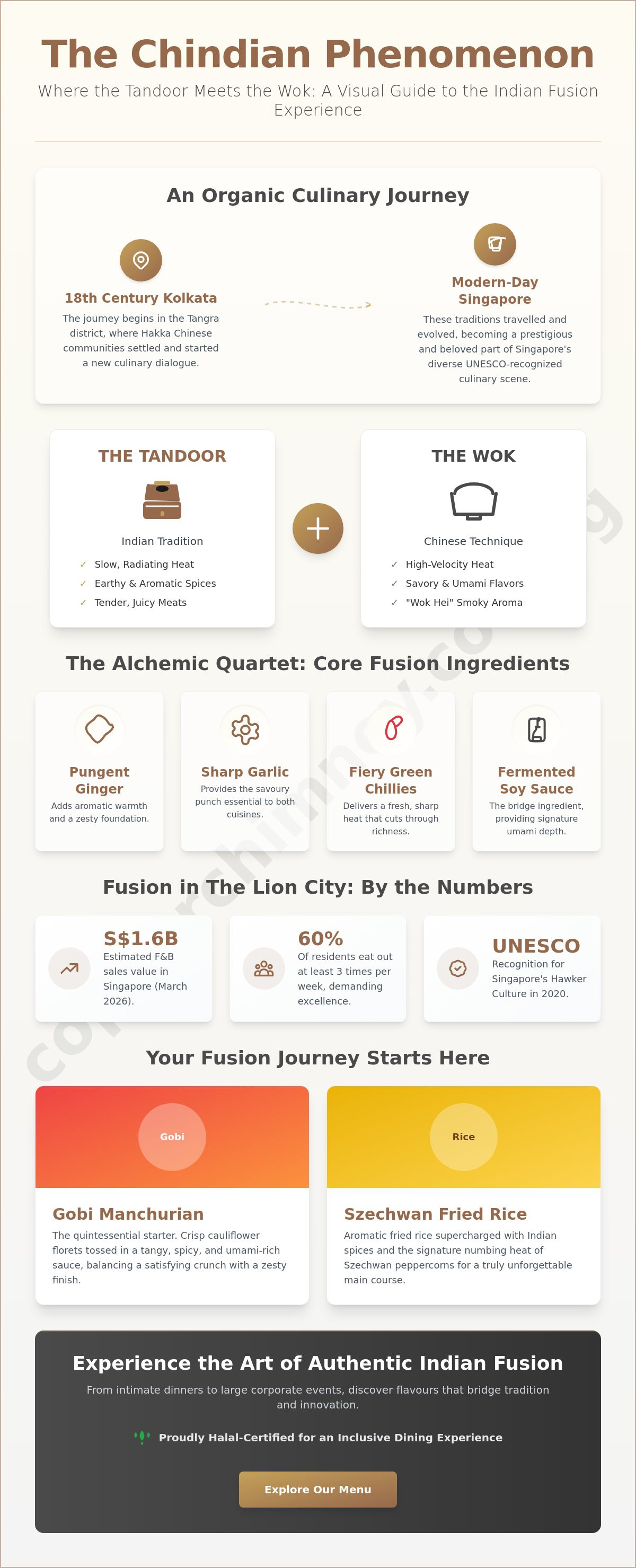
To understand the modern Indian fusion food experience, we must look back to the 18th century in the bustling Tangra district of Kolkata. It wasn't born in a laboratory or a trend-focused kitchen; it emerged from the Hakka Chinese community who adapted their wok-fired techniques to the local aromatics of West Bengal. This wasn't a forced experiment, but an organic survival of flavour that eventually travelled across the seas. As these traditions reached our shores, they became an integral part of Indian Singaporean cuisine, refined by a city that thrives on multicultural dialogue.
As of March 2026, the total sales value of F&B services in Singapore reached an estimated S$1.6 billion, a testament to our city's enduring love for diverse dining. Within this thriving market, the contemporary Indian fusion food experience is shaped by historical spice routes that once connected the East with the West. When you taste a dish that balances the heat of a Szechwan peppercorn with the earthy depth of cumin, you're experiencing a dialogue that's centuries old. This evolution reflects our national identity, where diverse influences don't just sit side-by-side but actively enhance one another.
Beyond Modernism: Understanding Authentic Fusion
While "Modern Indian" dining often leans on European techniques like sous-vide or molecular gastronomy, heritage fusion remains grounded in cultural storytelling. It's the difference between a gimmick and a legacy. A true connoisseur knows that an authentic Indian food experience doesn't always mean sticking to one region; it means respecting the "soul" of the spices. We ensure the pungent punch of garlic and ginger remains the protagonist, even when introduced to the high-heat textures of a Chinese wok.
The Sensory Appeal of the Fusion Palate
The magic happens in the "umami" explosion that occurs when fermented soy sauce meets the complex warmth of garam masala. Visually, it's a striking theatre of colours; the vibrant, fiery reds of a Szechwan-inspired sauce contrast beautifully against the creamy, sunset oranges of a traditional Tandoori marinade. Every bite offers a texture play between the crispness of a wok-seared vegetable and the tender pull of clay-oven roasted meat. Fusion is the balanced marriage of contrasting culinary philosophies that prioritises harmony over chaos.
The Chindian Phenomenon: Where the Tandoor Meets the Wok
The term "Chindian" might sound like a modern portmanteau, but it represents a deep-rooted culinary subculture born in the late 1700s. It originated within the Chinese community of Kolkata, where traditional Hakka cooking techniques were adapted to suit the vibrant, spice-heavy preferences of the Indian palate. This isn't just a casual blend of ingredients; it's the heart of the Indian fusion food experience. This cultural exchange is a cornerstone of our local dining scene, which was celebrated globally when Singapore’s hawker culture was inscribed on the UNESCO Intangible Cultural Heritage list in 2020. Chindian cuisine thrives in this multicultural urban context, offering a flavour profile that feels both nostalgic and refreshingly novel.
The alchemy of Chindian food relies on a specific quartet of ingredients: pungent ginger, sharp garlic, fiery green chillies, and fermented soy sauce. These elements provide a bridge between the earthy, aromatic spices of North India and the savoury, umami-rich notes of Chinese cuisine. While traditional Indian cooking often relies on the slow, radiating heat of the Tandoor, Chindian food introduces the high-velocity energy of the wok. This combination allows for a complexity of flavour that has made it a staple for food connoisseurs across the island.
Signature Chindian Dishes You Must Try
If you're beginning your fusion journey, Gobi Manchurian is the quintessential starter. It features crisp cauliflower florets tossed in a tangy, spicy sauce that balances a satisfying crunch with a zesty finish. For those seeking more heat, our Szechwan Fried Rice uses Indian spices to elevate a Chinese classic, creating a dish that's aromatic and deeply satisfying. Chilli Chicken remains a masterclass in texture; it's spicy, savoury, and succulent, representing the perfect marriage of two culinary worlds. These dishes are hand-crafted to ensure every bite delivers a punch of authentic flavour.
The Art of the Wok in Indian Cooking
The secret to high-quality Chindian food lies in "Wok Hei", or the breath of the wok. This high-heat technique sears the ingredients instantly, caramelising the soy sauce and infusing the dish with a subtle smokiness without losing the complexity of the spices. Exploring Chindian food in Singapore reveals a sophisticated debate among enthusiasts regarding "dry" versus "gravy" preparations. A dry Manchurian is perfect as a sizzling appetiser, while the gravy version provides a rich, spicy sauce that coats every grain of rice. If you're ready to taste this heritage for yourself, you can reserve your seat for an evening of sizzling, award-winning flavours.
The Connoisseur’s Criteria: What Defines Premium Indian Fusion?
Identifying a truly premium Indian fusion food experience requires more than just an adventurous spirit. It demands an appreciation for technical precision and cultural respect. A master chef ensures that fusion never descends into "confusion" on the plate. Instead, every ingredient serves a specific purpose. The foundation of any great dish lies in ingredient integrity. This means using premium meats and hand-ground spices rather than pre-packaged alternatives. It's this commitment to quality that defines an award-winning kitchen. Consistency is the final hallmark. Whether you visit on a busy Friday or a quiet Tuesday, the Gobi Manchurian should always possess that signature snap and zest.
As of February 2026, data shows that 60% of Singaporeans eat out at least three times a week. In such a vibrant and active dining scene, the ability to deliver high-quality flavours consistently is what separates a local favourite from a fleeting trend. We take pride in being a custodian of these flavours, ensuring that the heritage of the Tandoor is never overshadowed by the novelty of the wok.
The Importance of Halal-Certified Fusion
In our multicultural city, inclusivity is a necessity rather than a preference. Choosing a Halal-certified establishment ensures that the Indian food Singapore locals and visitors adore is accessible to the entire community. Maintaining these standards within a complex fusion menu requires immense rigour. It involves strict sourcing of ingredients and dedicated preparation protocols. For a connoisseur, this certification serves as a vital trust marker. It signals a restaurant's respect for its diverse audience and its unwavering commitment to culinary transparency.
Texture and Temperature: The Hidden Markers of Quality
Texture and temperature are the silent indicators of a chef's skill. Consider the sensory contrast between a sizzling platter of Tandoori Chicken and a crisp, saucy Chilli Chicken. One relies on the dry, radiating heat of clay; the other thrives on the rapid, high-velocity sear of a wok. Proper temperature management is vital because it dictates how volatile aromatic oils are released from the spices. If the heat is too low, the spices remain muted; too high, and they turn bitter. Premium fusion is defined by the clarity of individual flavours within a complex dish.
Curating Your Fusion Journey: How to Order Like a Food Writer
Ordering a meal should feel like composing a symphony. In a city where restaurants account for 38% of all F&B establishments as of February 2026, standing out requires more than just a menu; it requires a strategy. To truly master the Indian fusion food experience, you must approach the table with the eye of a connoisseur, looking for balance, contrast, and a logical progression of flavours. It's not about choosing the most popular dishes at random, but about understanding how the cooling properties of a traditional yogurt-based side can temper the bold, wok-seared intensity of a fusion main.
Step 1: Start with a "Crunch". Select appetisers that awaken the palate. A plate of Gobi Manchurian provides that essential textural contrast, offering a zesty, crisp introduction before the heavier courses arrive.
Step 2: Balance the Mains. Pair a rich, gravy-based North Indian classic with a dry or spicy Chindian staple. This creates a "flavour bridge" that keeps the palate engaged without becoming overwhelmed.
Step 3: Choose Your Breads Wisely. Garlic Naan is the universal companion here. Its charred, buttery edges are perfect for scooping up complex fusion sauces.
Step 4: Don’t Overlook the Sides. A simple raita or a sharp pickle isn't an afterthought. These elements are functional, cutting through the richness of the meats and spices.
Step 5: The Sweet Conclusion. Finish with a traditional dessert to ground the experience, providing a gentle, sugary bookend to a meal defined by heat and spice.
The Perfect Pairing: Butter Chicken and Szechwan Rice
The secret to a successful fusion feast lies in the contrast between the mild and the wild. The velvety, tomato-based creaminess of Butter Chicken perfectly offsets the aggressive, peppercorn-led heat of Szechwan Fried Rice. When shared communally, these dishes allow diners to toggle between comfort and adventure. It's a pairing that highlights the best of both worlds, ensuring the meal feels cohesive rather than fragmented.
Navigating the Spice Levels
Communication is the final ingredient in a perfect meal. When speaking with our "Chaat Master" or your server, distinguish between "chilli heat" and "spice depth". Chilli heat provides that immediate sting, while spice depth refers to the layered aromatics of cumin, cardamom, and clove. If you're ready to put these tips into practice, you can reserve your table today and let our team guide you through a hand-crafted culinary narrative.
Copper Chimney: Elevating the Fusion Experience for Every Occasion
Establishing a legacy in Singapore's competitive culinary scene requires more than just good food; it demands a deep commitment to heritage. Copper Chimney has built this reputation by serving as a custodian of the Chindian speciality, a craft we've perfected over more than a decade of excellence. We don't simply offer a menu; we provide a curated Indian fusion food experience that reflects our pride in traditional hospitality. Whether you're dining at our Syed Alwi location or hosting a private celebration, our award-winning standards ensure every dish is a masterpiece of flavour. We bridge the gap between the Tandoor and the wok, ensuring that the soul of every spice is preserved in our hand-crafted creations.
Our service extends beyond the restaurant floor, meeting the needs of a city that values both quality and convenience. We've transformed the way diners approach sophisticated event catering, bringing the same level of aromatic precision to corporate boardrooms and wedding halls alike. By focusing on the logistics of flavour, we ensure that the heat and texture of our fusion dishes remain intact, regardless of the venue size. This dedication to excellence has made us a reliable partner for those seeking a prestigious dining option that caters to the diverse dietary requirements of our national audience.
Fusion Catering: Bringing the Experience to You
Serving high-quality fusion at scale is a delicate art that we've mastered through years of expertise. For corporate events, our Executive and Premium Bento Boxes offer a polished, Halal-certified solution that doesn't sacrifice taste for portability. If you're looking for a sense of theatre, our Live Station Catering features a Chaat Master who can create vibrant, customised snacks right before your guests' eyes. These mini-buffet and high tea options allow for a versatile dining narrative, ensuring that every corporate lunch or team dinner is as memorable as a sit-down feast.
An Invitation to the Table
We invite you to experience the warmth of Indian hospitality paired with the technical brilliance of Chindian cooking. As a recognised name in the Singaporean food scene, we take our role as flavour custodians seriously, ensuring that every Chilli Chicken and Garlic Naan meets our exacting standards. Our polished, professional service is designed to lead you from curiosity to craving, providing a steady and reassuring rhythm to your meal. Book your next Indian fusion food experience with us today and let us share our passion for craft with you.
Embrace the Future of Heritage Flavours
Mastering the art of fusion is about more than just combining ingredients; it's about respecting the cultural lineages that brought the Tandoor and the wok together in the first place. You've explored how the Chindian phenomenon evolved from the streets of Kolkata to become a celebrated part of Singapore's culinary identity, where the smoky depth of clay-oven roasting meets the high-heat intensity of the wok. By following a food writer's strategy for balance, you can ensure every meal is a harmonious narrative of spice and texture rather than a collection of random dishes.
With over a decade of excellence in Singapore, Copper Chimney remains a dedicated custodian of these vibrant traditions. Our award-winning North Indian and Chindian menu is fully Halal-certified by MUIS, providing a trusted and inclusive destination for every diner. Whether you're seeking an intimate dinner or professional event services, we invite you to discover the definitive Indian fusion food experience through our hand-crafted specialities. Book your table or enquire about catering for your next Indian fusion experience and let us welcome you to our table. Your journey into the heart of Singaporean flavour is just beginning.
Frequently Asked Questions
What exactly is "Chindian" food and how did it originate?
Chindian food is the unique marriage of Chinese cooking techniques with bold Indian spices. It originated in the late 18th century within the Hakka Chinese community of Kolkata, West Bengal. These immigrants adapted their traditional stir-frying methods to include local aromatics like ginger, garlic, and green chillies. This organic cultural exchange created a flavour profile that has become a beloved staple of the modern Indian fusion food experience across Singapore.
Is Indian fusion food always spicy?
Not all fusion dishes are designed to be fiery; instead, the focus is on a harmonious balance of flavours. While some items like Chilli Chicken offer a spirited kick, others prioritise the "umami" depth of soy sauce and the aromatic warmth of cumin. You can always customise your spice level by speaking with our team, ensuring the meal provides a pleasant depth of flavour without overwhelming your palate with pure heat.
Can I find vegetarian options in an Indian fusion menu?
Vegetarian diners will find a wealth of options, as plant-based ingredients are central to many fusion specialities. Dishes like Gobi Manchurian, where cauliflower florets are transformed into crisp, tangy bites, are often the highlight of the meal. You can also enjoy Paneer Tikka Masala or vegetable-led Hakka noodles. These options ensure that everyone can participate in a premium Indian fusion food experience regardless of their dietary preferences.
Why is Halal certification important for Indian fusion restaurants in Singapore?
Halal certification is a vital trust marker in Singapore's multicultural society, ensuring that high-quality fusion is accessible to all. Since 60% of Singaporeans eat out frequently as of February 2026, providing a MUIS Halal-certified menu allows diverse groups to dine together without hesitation. It guarantees that every ingredient, from the premium meats to the complex sauces, meets rigorous standards of cleanliness and ethical sourcing, which is a hallmark of our decade-long presence.
What are the must-order fusion dishes for a first-timer?
For a quintessential introduction, you should start with Gobi Manchurian for its addictive crunch. Follow this with Chilli Chicken, which perfectly demonstrates the succulent results of wok-searing marinated meat in a spicy, savoury sauce. Pairing these with Szechwan Fried Rice provides a complete narrative of the Chindian style. These dishes are hand-crafted to represent the most iconic elements of our award-winning menu and are perfect for sharing with guests.
How does Indian fusion catering differ from traditional Indian catering?
Fusion catering introduces a sense of theatre and variety that goes beyond traditional buffet lines. While traditional catering might focus on slow-cooked curries, fusion events often feature Live Stations where a master chef creates sizzling dishes like Hakka noodles on-site. This adds an interactive element to corporate events or weddings. We also offer Premium Bento Boxes, which provide a sophisticated way to enjoy these complex flavours in a convenient, individual format.
Can Indian fusion food be healthy?
Fusion food can be a nutritious choice when it prioritises fresh ingredients and mindful cooking techniques. The high-heat wok-searing method used in Chindian cuisine often requires less oil than traditional deep-frying, preserving the crisp texture and nutrients of the vegetables. Additionally, spices like turmeric and ginger are known for their wellness benefits. By choosing lean proteins and vegetable-heavy sides, you can enjoy a meal that is both indulgent and balanced.
What makes Copper Chimney’s fusion experience unique compared to others?
What sets us apart is our established heritage as a custodian of authentic Chindian flavours in Singapore for over 10 years. Unlike generic fusion that can feel gimmicky, our menu is built on a deep understanding of the historical "Wok Hei" and Tandoor traditions. We are an award-winning establishment that balances high-end culinary excellence with the warmth of traditional hospitality, making every guest feel like part of our storied culinary journey.


Comments