
A Connoisseur’s Guide to Authentic North Indian Cuisine in Singapore (2026)

Did you know that 85% of Singaporean firms now prioritise Halal-certified vendors to ensure every guest feels truly welcome at the table? It's a telling statistic that reflects our city's beautiful diversity, yet finding authentic North Indian cuisine Singapore foodies can truly swear by remains a delightful challenge. You've likely felt that familiar disappointment when a dish promised regional depth but delivered only a generic, one-size-fits-all spice profile. We all crave that genuine warmth of traditional Indian hospitality, where the sizzle of the Tandoor tells a story of heritage rather than just a quick meal.
You deserve a dining experience that respects the intricate history of these flavours, from the aromatic spices of Lucknow to the bold, wok-fired energy of Chindian fusion. This guide will help you identify the hallmark dishes that prove a kitchen's true mastery and explore the fascinating origins of Indian-Chinese specialties like Gobi Manchurian. We'll also look at how to secure a reliable, Halal-certified partner for your next event, ensuring your guests enjoy award-winning excellence. Let's embark on a sensory journey through the very best of North Indian culinary craft in 2026.
Key Takeaways
Learn how the geography of Punjab and Kashmir shapes the regional spices used in a masterfully crafted North Indian menu.
Discover why Butter Chicken and slow-braised Mutton Rogan Josh are the ultimate benchmarks for authentic North Indian cuisine Singapore foodies love.
Trace the heritage of the Hakka community to see how Indian-Chinese fusion became an essential part of the modern culinary landscape.
Spot the signs of a premier dining experience, starting with the trust provided by Halal certification and the warmth of genuine hospitality.
Explore how to bring these rich flavours to your next corporate event with seamless catering solutions like live stations and executive bento boxes.
Table of Contents
The Essence of Authentic North Indian Cuisine: More Than Just Spice
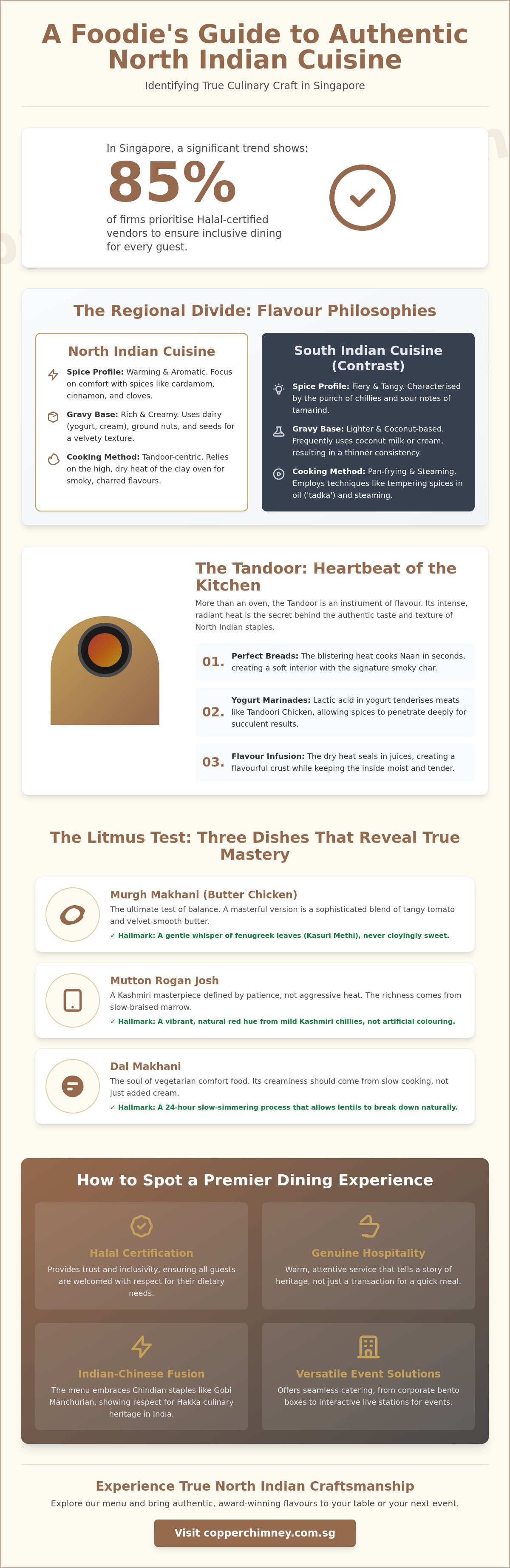
To the uninitiated, Indian food is often reduced to the singular, generic label of 'curry', but a true connoisseur knows that the subcontinent's culinary map is as vast as its geography. Authenticity in this context is deeply rooted in the rugged terrains of Punjab, the serene valleys of Kashmir, and the regal courts of Lucknow. Each region contributes a distinct philosophy to the plate. While Southern dishes often lean on the fiery punch of chillies and the tang of tamarind, authentic North Indian cuisine Singapore enthusiasts seek out focuses on warming spices, rich textures, and the unmistakable scent of charcoal. It's a cuisine of patience, where legumes are slow-simmered for hours and meats are tenderised until they yield at the slightest touch of a fork.
The texture of a dish is just as vital as its taste. You'll notice a preference for creamy, velvet-like gravies derived from dairy, ground nuts, and seeds rather than coconut milk. Dishes like Dal Makhani or Paneer Butter Masala exemplify this indulgence, relying on slow-cooking to achieve a natural thickness. Beyond the pot, 'Kadhai' cooking plays a pivotal role. Using a thick-bottomed, wok-like vessel, chefs toss vibrant bell peppers and aromatics over high heat to create dishes that are sizzling and structurally distinct, offering a wonderful contrast to the softer, braised elements of a traditional spread. To truly appreciate the foundations, one might ask What is North Indian cuisine? at its core; it's a marriage of nomadic tradition and imperial refinement.
The Geometry of Flavour: Understanding the Spice Palette
North Indian spices are designed to comfort rather than combust. You'll find a heavy reliance on 'warming' aromatics like green cardamom, cinnamon, and cloves, which provide a fragrant depth that lingers on the palate. Unlike other regional styles, Garam Masala is treated with reverence, usually sprinkled as a finishing touch to preserve its volatile oils rather than being boiled away. The aromatic foundation of almost every North Indian masterpiece begins with the finely balanced sauté of the ginger, garlic, and onion trinity. This base provides the structural integrity for every layer of flavour that follows.
The Tandoor: The Heartbeat of the North Indian Kitchen
The clay Tandoor oven is where the magic of the North truly happens. Maintaining a consistent, blistering temperature is essential; it's this radiant heat that allows a Garlic Naan to puff up instantly while developing those charred, smoky bubbles we all crave. Science plays a role here too, particularly in the tandoori marinade. We use yogurt as a natural tenderiser because its lactic acid gently breaks down meat fibres, allowing spices to penetrate deep into the Tandoori Chicken. A master chef knows the fine line between an authentic char, which adds a bitter-sweet complexity, and overcooked meat that has lost its succulent interior. If you're eager to witness this craft in person, you can find our artisans at work across our various locations in Singapore.
The Pillars of a North Indian Menu: Signature Specialities
If you're hunting for authentic North Indian cuisine Singapore serves up, the menu's foundational dishes act as a reliable compass for quality. Every kitchen has its litmus test, and for the North, it's undoubtedly the Murgh Makhani, or Butter Chicken. A truly authentic version avoids cloying sweetness; instead, it offers a sophisticated balance of tangy tomato, velvet-smooth butter, and a gentle whisper of dried fenugreek leaves. It's a dish that demands respect for its heritage and a refusal to take shortcuts with the base gravy.
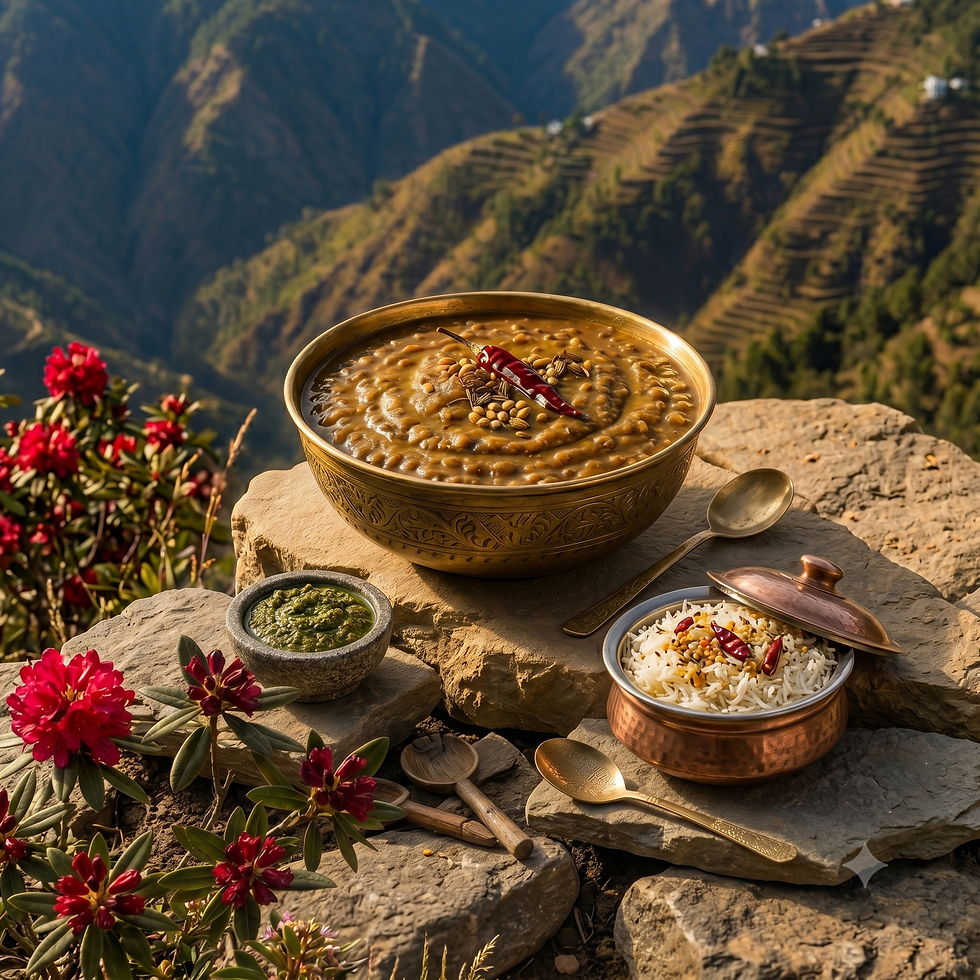
Equally telling is the Mutton Rogan Josh. This Kashmiri masterpiece isn't about aggressive heat. It relies on the vibrant hue and mild fruitiness of Kashmiri chillies, paired with slow-braised patience that coaxes the marrow's richness into the sauce. For the vegetarian guest, Dal Makhani provides a similar revelation. We believe 24-hour slow-cooking is non-negotiable here. This overnight simmer on low heat allows the black lentils and kidney beans to break down into a naturally creamy consistency that no amount of added cream can replicate. It honours the region's love for dairy, much like our Paneer Butter Masala, which uses hand-crafted cottage cheese to soak up a rich, aromatic gravy.
The menu's elegance often culminates in the Lucknowi Mutton Biryani. Unlike the spicier, more robust varieties found in other parts of India, this style celebrates 'Dum' cooking, where the pot is sealed with dough to trap every aromatic vapour. It results in rice that's fragrant, light, and deeply infused with the essence of the meat. To understand the full breadth of these traditions, you might explore The Essence of North Indian Flavours, which delves into how these regional techniques evolved over centuries.
The Art of the Gravy: From Creamy Makhani to Robust Bhuna
The secret to a memorable North Indian meal lies in the architecture of its sauces. While the Makhani style is prized for its silkiness, the Bhuna style offers a rugged, intense alternative where spices are fried with meat in their own juices until they form a thick, dark coating. This signature mouthfeel often comes from a meticulously reduced base of vine-ripened tomatoes and cashew paste. You can discover our full range of signature dishes to see these contrasting textures in action.
Tandoori Delights: Beyond the Chicken Tikka
A premier kitchen treats the Tandoor as a stage where smoke and spice perform together. The Chicken Tikka Masala should carry a distinct smoky char that cuts through its spiced tomato coating, proving it spent time in the clay oven rather than a standard pan. Vegetarian connoisseurs shouldn't feel left out either; Tandoori Gobi transforms humble cauliflower into a smoky, spiced delight. That signature 'sizzle' when a platter arrives isn't just for show; it's the audible hallmark of freshness and high-heat mastery. If you're feeling inspired to taste these pillars for yourself, perhaps book a table at our Syed Alwi home to experience it first-hand.
Exploring the Chindian Connection: Why Indian-Chinese Fusion is a Staple
While many seek out authentic North Indian cuisine Singapore for the smoky Tandoor and the velvet gravies, a true connoisseur knows the story isn't complete without acknowledging the "Chindian" connection. This vibrant fusion was born in the bustling streets of Kolkata, where the Hakka Chinese community began adapting their culinary techniques to suit the local Indian palate. It's a beautiful marriage of heritage; imagine the deep, earthy notes of cumin and turmeric meeting the high-heat intensity of a wok and the savoury depth of soy sauce. This culinary style has evolved over decades to become a staple of the Indian dining experience, bridging two distinct worlds with remarkable ease. It represents a shared history that is as much about cultural adaptation as it is about flavour. You can read our connoisseur’s guide to Chindian Food in Singapore to dive deeper into this ultimate flavour fusion.
Starters That Spark Conversation: Gobi Manchurian and Chilli Chicken
The 'Manchurian' sauce is perhaps the most addictive element of this genre, offering a masterclass in balance by hitting notes of sweet, sour, and spicy all at once. Whether it's the crispy Gobi Manchurian or the succulent Chilli Chicken, the goal is always to achieve that elusive 'wok hei', or the breath of the wok. This high-temperature searing ensures the ingredients remain tender while the exterior develops a smoky, caramelised glaze that clings to every bite. These starters are more than just appetisers; they are conversation starters that invite guests to explore a different side of the Indian culinary landscape, proving that authenticity can also be found in evolution.
Mainstays of the Fusion Table: Szechwan Fried Rice
Don't mistake our Szechwan Fried Rice for its traditional Sichuan cousin. In the Chindian world, 'Szechwan' refers to a punchy, garlic-heavy sauce powered by fiery dried red chillies rather than the numbing Sichuan peppercorn. This bold profile makes it an incredible companion to traditional North Indian curries, as the spice level complements the richness of a slow-cooked Mutton Rogan Josh. The grain-for-grain separation of the rice provides a textured canvas for the rich gravies we discussed in previous sections, creating a meal that feels both complete and adventurous. When exploring authentic North Indian cuisine Singapore, you'll find that these fusion mainstays provide a unique contrast to traditional breads. Because Chindian cooking traditionally relies on specific soy and vinegar blends, Halal-certified Chindian food is a rare and precious find in Singapore's diverse dining landscape.
How to Identify a Premier North Indian Dining Experience
Finding authentic North Indian cuisine Singapore foodies can truly trust involves more than just reading a menu. It’s about the atmosphere that greets you at the door. A premier experience should feel like a bridge between two worlds, where the storied traditions of Indian hospitality meet the polished efficiency of the Singaporean dining scene. You’ll know you’ve found the right place when the staff doesn’t just take your order but guides you through the spice levels and regional origins of each dish. To find a setting that balances this warmth with professional excellence, you can view our locations across Singapore and see how we bring this vision to life.
The Halal Trust Marker: Beyond Compliance
In our diverse city, inclusivity is a hallmark of quality. A 2024 report by corporate event planners revealed that 85% of Singaporean firms prioritise Halal-certified vendors to ensure every guest can dine with peace of mind. This certification is more than just a regulatory checkbox; it’s a commitment to community. Maintaining the integrity of North Indian flavours while adhering to strict Halal standards requires a deep respect for ingredients. It builds a foundation of trust that allows families and corporate teams to focus on the conversation rather than the ingredients list. When a restaurant takes this step, it shows they value the comfort of every guest who walks through their doors.
A Feast for the Senses: Ambiance and Presentation
Your eyes should feast long before the first plate arrives. Authentic establishments often use copper tableware, which isn't just a nod to tradition but a functional choice that keeps curries at the ideal temperature. Open kitchen concepts allow you to hear the rhythmic slapping of dough against the Tandoor walls, creating a sensory connection to the craft. For a touch of street-food theatre, a Live Chaat Counter managed by a dedicated Chaat Master is a definitive sign of an establishment that honours its roots. These masters expertly assemble snacks like Pani Puri with a precision that’s mesmerising to watch. For those looking to explore the wider landscape of these sensory delights, The Soul of the Spice: A Guide to Little India Restaurants offers a deeper look into the heart of the scene. If you’re ready to experience this level of detail yourself, why not reserve a table at our Syed Alwi flagship and see the difference for yourself?
Beyond the Restaurant: Authentic North Indian Flavours for Events
While enjoying a meal at our flagship is a sensory delight, bringing authentic North Indian cuisine Singapore guests will remember to a private venue requires its own unique mastery. The logistics of catering are often the silent hero of a successful event. We understand that a Garlic Naan is only at its best when it's warm and pliable, which is why we prioritise specialised transport and serving techniques to keep our breads fresh. Maintaining the precise temperature of a rich Dal Makhani or a Mutton Rogan Josh is essential to preserving the velvet-like texture we’ve discussed in earlier sections. It’s this attention to detail that ensures the transition from restaurant kitchen to event hall doesn't dilute the heritage of the dish. To see how we manage these complexities, you can enquire about our catering services for your next gathering.
Corporate Catering: Elevating the Working Lunch
The modern professional landscape demands more than just sustenance; it requires a culinary experience that respects the diverse backgrounds of every team member. We've seen a significant rise in the popularity of Executive Bento Boxes as a sophisticated alternative to the traditional buffet line. These individual meals allow for a curated selection of favourites, like Paneer Butter Masala and aromatic Biryani, served in a polished format that suits the boardroom environment. Because our kitchen is Halal-certified, it provides a seamless solution for multi-cultural Singaporean firms where inclusivity is a top priority. For a deeper look at navigating these options, A Guide to Indian Catering Services in Singapore offers expert advice on planning Halal events in 2026.
Live Stations: The Ultimate Event Showstopper
If you want to truly captivate your guests, nothing compares to the theatre of a live station. Bringing a dedicated Chaat Master to your celebration transforms a simple meal into an interactive performance. Watching the assembly of hand-crafted Pani Puri or the sizzling preparation of starters adds a layer of engagement that a standard buffet simply can't match. Whether you're opting for a Mini Buffet for an intimate home gathering or an expansive High Tea spread for a corporate milestone, the presence of live culinary craft elevates the entire atmosphere. It’s about more than just food; it’s about sharing the story of authentic North Indian cuisine Singapore through every crackle of the Tandoor and every spice-laden aroma. You can book an appointment for event planning to start customising your bespoke menu today.
Savour the Art of True North Indian Dining
The culinary landscape of Singapore is vast, but finding a meal that captures the true soul of Punjab or the refined courts of Lucknow is a rare delight. We've explored how the smoky kiss of the Tandoor and the bold evolution of Chindian fusion define the very best of authentic North Indian cuisine Singapore has to offer. Authenticity isn't just about the spice; it's about a commitment to tradition, quality, and the inclusive warmth of Halal-certified hospitality.
When you plan your next family gathering or high-stakes corporate event, remember that heritage is best experienced firsthand. Since 2012, we've remained Halal-certified to ensure every guest feels welcome, earning the trust of corporate planners across the city with our award-winning North Indian and Chindian fusion. Whether you're craving the velvet richness of a slow-cooked gravy or the sizzling energy of a live station, the perfect bite is waiting for you.
Experience the authentic flavours of North India. Book your table at Copper Chimney today. We look forward to welcoming you to our table for a meal that stays with you long after the last plate is cleared.
Frequently Asked Questions
What makes North Indian food 'authentic' compared to other regions?
Authenticity is defined by the regional reliance on wheat-based breads and the smoky depth of the clay Tandoor oven. While Southern regions often favour rice and coconut, the North focuses on cream, ghee, and warming spices like cardamom. To find authentic North Indian cuisine Singapore diners should look for menus featuring slow-braised meats and hand-crafted breads that carry a distinct, charcoal-fired aroma.
Is all North Indian food in Singapore Halal-certified?
Not all North Indian establishments in Singapore carry Halal certification. It's vital to look for the official MUIS logo if you require a Halal-compliant meal for your family or guests. We've been Halal-certified since 2012, which allows us to serve our diverse community with confidence. This ensures our award-winning flavours are accessible to everyone, including corporate groups and multi-cultural families seeking a reliable dining partner.
What are the must-order dishes for a first-time visitor to a North Indian restaurant?
A first-time visitor should start with the classic trio: Butter Chicken, Garlic Naan, and Tandoori Chicken. These dishes showcase the essential techniques of the North, from the velvet-smooth tomato gravy to the smoky char of the Tandoor. If you're feeling adventurous, add a plate of Gobi Manchurian to experience the vibrant world of Chindian fusion. This combination provides a perfect introduction to the region's rich culinary diversity.
How does Chindian food differ from traditional Chinese cuisine?
Chindian cuisine replaces traditional Chinese aromatics like ginger and spring onion with punchy Indian spices such as cumin, turmeric, and dried red chillies. While it uses Chinese wok-toss techniques and soy sauce, the flavour profile is much bolder and spicier than traditional Cantonese or Hokkien dishes. It's a unique culinary evolution that originated in Kolkata's Hakka community and has found a permanent home in the authentic North Indian cuisine Singapore scene.
Can I find vegetarian options in authentic North Indian cuisine?
Authentic North Indian menus are remarkably inclusive, often featuring a spread where up to 60% of the dishes are vegetarian. Staples like Dal Makhani and Paneer Butter Masala provide a rich, protein-packed experience that doesn't feel like a compromise. From earthy slow-cooked lentils to hand-crafted cottage cheese, these dishes honour the agricultural heritage of the Punjab region. It's an ideal choice for groups with varied dietary preferences.
What is the best way to cater North Indian food for a corporate event?
The most efficient approach for corporate events is choosing Executive Bento Boxes or Live Stations. Bento boxes offer a tidy, individualised meal that maintains the integrity of the spices and textures during transport. If you want to impress your team, a Live Chaat Counter with a dedicated Chaat Master adds an element of theatre. This engages guests and turns a standard working lunch into a memorable social experience.
What is the difference between Butter Chicken and Chicken Tikka Masala?
The primary difference lies in the texture and spice level of the gravy. Butter Chicken, or Murgh Makhani, is prized for its silky, tomato-and-cream consistency and mild, buttery sweetness. In contrast, Chicken Tikka Masala features a thicker, more robust sauce with a visible onion-tomato base and often includes sautéed bell peppers. While both use tandoori-grilled chicken, the Tikka Masala offers a more textured and spicy bite for the palate.
How do I ensure the Garlic Naan stays soft during delivery or catering?
Keeping Garlic Naan soft requires immediate insulation in foil or specialised thermal containers to trap the residual steam. During delivery, we ensure our breads are packed carefully to prevent them from becoming tough or chewy. If you're enjoying them at home later, a quick 30-second sear on a hot pan will revive that fresh-from-the-Tandoor texture. This method works much better than a microwave, which can often make bread rubbery.

Comments