
Creamy Butter Chicken vs Tikka Masala: A Connoisseur’s Guide to the Ultimate Curry Debate

What if the two most celebrated dishes on the menu, though appearing identical in their vibrant orange hues, are actually worlds apart in character and history? It's a common dilemma at the dinner table, where you might find yourself hesitating between the creamy butter chicken vs tikka masala, unsure if you're craving a velvet-smooth indulgence or a bold, tangy kick. We've all been there, perhaps ordering one only to be disappointed by a spice level that didn't quite suit your palate or confusing a rich creaminess with heavy acidity. It's often difficult to explain the difference to others when both look so invitingly similar.
You'll soon discover that these curries are far from interchangeable. This guide promises to reveal the nuanced differences in flavour, history, and preparation between these two icons to help you find your perfect match. We'll explore the smoky depths of the tandoor and the meticulous layering of spices; this journey ensures you appreciate the craft behind each sauce and know exactly which dish better suits your cravings.
Key Takeaways
Learn why these orange-hued curries share a foundation of tomato and cream yet offer entirely different sensory experiences.
Uncover the "Makhani" philosophy of Old Delhi to understand how butter transforms a simple sauce into a velvet-smooth masterpiece.
Explore the bold British-Indian history of Chicken Tikka Masala and its signature robust, tangy spice profile.
Settle the creamy butter chicken vs tikka masala debate by matching your personal taste to the specific textures and flavour palettes of each dish.
Identify the hallmarks of quality, from authentic tandoor techniques to Halal-certified standards, that define a truly prestigious curry.
Table of Contents
The Great Orange Curry Debate: Butter Chicken vs Tikka Masala
Step into any prestigious Indian restaurant, and you'll likely witness a familiar scene at the next table: diners leaning in to inspect two steaming bowls, both radiating a sunset-orange glow. This visual deception is the starting point of the creamy butter chicken vs tikka masala debate. For the uninitiated, they look almost identical. For the connoisseur, this is merely the canvas before the masterpiece is revealed. Both dishes share a foundational DNA; they rely on succulent pieces of tandoor-fired chicken bathed in a rich sauce of tomatoes and cream. However, the soul of each dish resides in how those ingredients are balanced.
The connoisseur’s first rule is simple: don't assume that sweetness and spice are mutually exclusive. A great curry can be both indulgent and complex. It's no wonder that in 2026, these two remain the most ordered Indian dishes globally. They represent the ultimate comfort food, providing a reliable bridge between traditional regional hospitality and international culinary excellence. Whether you're dining in or looking for premium corporate catering, these classics never fail to impress.
The Visual Similarities
The iconic orange hue isn't an accident. It's a chemical romance between the acidity of tomatoes and the earthy warmth of turmeric. When you whisk in heavy cream or a dollop of thick yoghurt, that deep red softens into the characteristic velvet-like sheen we've come to adore. Even the finishing touches, like a delicate swirl of cream or a scattering of fresh coriander, often mirror each other, making it nearly impossible to tell them apart until the first spoonful hits your palate.
A Tale of Two Kitchens
While they look like siblings, their birthplaces are thousands of miles apart. To understand the history of butter chicken, one must look to the 1950s in Old Delhi, where it was created to rescue tandoori chicken from drying out. In contrast, Chicken Tikka Masala is widely considered a British-Indian evolution, perhaps born in a busy Glasgow kitchen. In the modern culinary world, the authenticity debate has taken a backseat to the flavour profile itself. Whether a dish is a traditional heritage recipe or a brilliant fusion, the true test lies in the complexity of its spice layering and the quality of the ingredients used.
Butter Chicken: The Velvet Soul of Old Delhi
In the mid-20th century, specifically the 1950s, a culinary revolution occurred in the heart of Old Delhi. Kundan Lal Gujral, the legendary chef, sought a way to revive tandoori chicken that had lost its moisture while sitting on display. By folding these pieces into a rich, buttery tomato gravy, he inadvertently created a masterpiece. This was the birth of the "Makhani" philosophy, where butter is far more than a simple ingredient; it is the very soul and texture of the dish. It creates an emulsified, weightless richness that coats the palate without the heavy, oily finish found in lesser preparations.
The secret to its intoxicating scent lies in Kasuri Methi, or dried fenugreek leaves. When crushed between the palms and sprinkled over the simmering sauce, these leaves release a subtle, floral aroma that provides an essential counterpoint to the dairy. Unlike its more aggressive cousins, this dish prioritises balance over bite. It celebrates a mild, slightly sweet finish that makes it accessible to every palate, from the curious novice to the seasoned critic. If you're craving this specific balance of smoke and cream, you can order our signature Butter Chicken for a genuine taste of this Old Delhi heritage.
The Butter Chicken Sauce Profile
The hallmark of a truly sophisticated sauce is its silk-smooth consistency. To achieve this, tomatoes must be pureed and meticulously strained to ensure no seeds or skins remain to disrupt the velvet feel. The ratio of cream to tomato is a delicate dance; it should result in a mellow, rounded acidity rather than a sharp tang. A subtle addition of honey or sugar is often employed, not to create dessert-like sweetness, but to enhance the natural sugars found in high-quality dairy and ripe tomatoes.
The Chicken in Murgh Makhani
Many home versions miss a critical element: the smoky "char." The chicken must be marinated in a thick blend of yoghurt and traditional spices before meeting the intense, dry heat of the tandoor oven. This process creates slightly burnt, caramelised edges on the meat. This char is vital because it cuts through the richness of the creamy butter chicken vs tikka masala comparison, providing a deep, earthy depth that prevents the sauce from feeling one-dimensional. Murgh Makhani stands undisputed as the pinnacle of North Indian comfort food, offering a warm, nostalgic embrace in every single spoonful.
Chicken Tikka Masala: The Bold British-Indian Sensation
While Butter Chicken was born in the bustling heart of Old Delhi, Chicken Tikka Masala tells a story of global fusion, most famously linked to the rainy streets of Glasgow in the 1970s. It represents a bold, British-Indian sensation that captures the adventurous spirit of the United Kingdom’s curry culture. Unlike its Delhi cousin, which leans into velvet luxury, Tikka Masala is defined by its "Masala"—a robust and complex spice blend that provides a more assertive punch. It's a dish that prizes character and depth over pure smoothness.
One of the most striking differences in the creamy butter chicken vs tikka masala debate is the tang factor. While the former aims for a mellow, rounded acidity, Tikka Masala leans heavily into the bright, sharp notes of tomatoes and onions. This creates a savoury depth that is often missing in milder preparations. You'll also notice a difference in the texture of the sauce; whereas Butter Chicken is meticulously strained for silkiness, a true Tikka Masala often retains a slightly chunkier, more rustic gravy that feels substantial and grounded on the tongue.
Layering the Spice
The complexity of this dish comes from the deliberate layering of earthy spices. Cumin, coriander, and garam masala form the aromatic backbone, but it's the addition of finely chopped onions that provides the savoury foundation. This onion-tomato base allows the spices to cling to the meat more effectively. In terms of heat, Tikka Masala typically sits higher on the Scoville scale than Butter Chicken. It isn't necessarily "blow-your-head-off" spicy, but it offers a gentle, lingering warmth that stimulates the palate rather than soothing it.
The "Tikka" Element
The word "Tikka" literally refers to chunks or bits of meat. Unlike the whole pieces often found in traditional curries, these chunks are marinated in a pungent, spice-forward blend of yoghurt, ginger, and garlic. When comparing creamy butter chicken vs tikka masala, the preparation of the meat is crucial. The tikka chunks are skewered and blasted in the tandoor to achieve a deep, smoky char. This intense smokiness is essential because the acidity of the tomato-onion sauce acts as a perfect foil to the charred exterior of the chicken. The vibrant acidity of the sauce balances the intense tandoori smoke, creating a harmonious balance that has made it a global favourite.
Head-to-Head Comparison: Finding Your Perfect Match
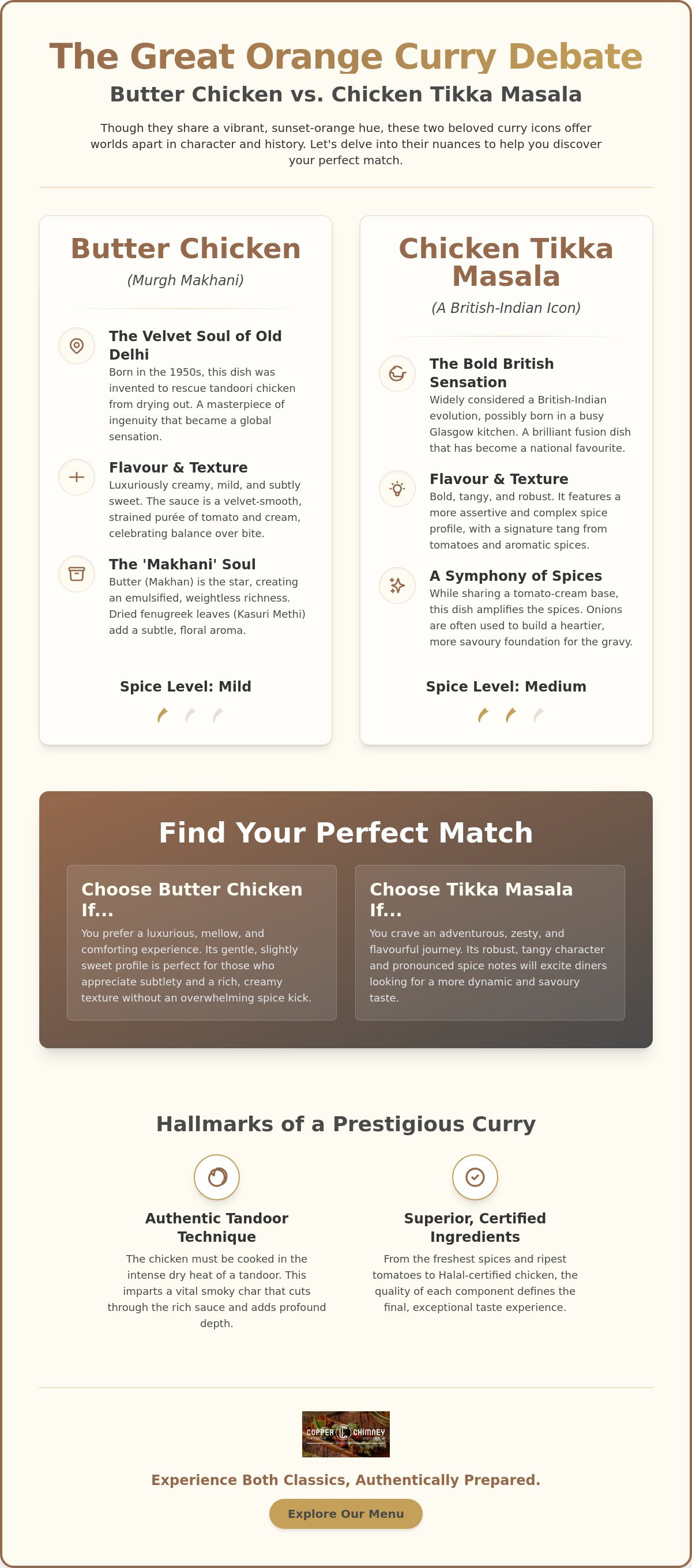
Choosing your champion in the creamy butter chicken vs tikka masala showdown is rarely a matter of quality; it's a reflection of your personal palate's desire at that exact moment. While both offer a comforting embrace, they speak different culinary languages. One is a whisper of velvet luxury, while the other is a bold statement of spice and tang. Understanding these nuances ensures that your next order is a triumph rather than a toss-up. If you’re ready to settle the debate for yourself, we invite you to book a table at our Syed Alwi location to experience both side-by-side.
For the "chilli-shy" diner, the choice is clear. Butter Chicken prioritises a gentle, slightly sweet finish that lingers softly on the tongue. Conversely, the "spice-seeker" will find a more rewarding experience in the robust heat of Tikka Masala. It provides a tingling warmth that stimulates the taste buds without overwhelming the subtle notes of the marinated chicken. This distinction is the cornerstone of finding your perfect match at the dinner table.
Side-by-Side Sensory Breakdown
The aromatic profiles of these two dishes offer the first clue to their character. Fenugreek, or Kasuri Methi, provides that floral, almost nostalgic scent that defines the soul of Old Delhi in a Butter Chicken. In contrast, Cumin and coriander offer a grounded, earthy profile that anchors the British-Indian classic. You can even see the difference in the bowl; the golden-orange hue of a buttery sauce suggests its mild nature, while the deep-reddish orange of a Masala hints at the vibrant acidity within. The palate feel is equally distinct, as one coats the tongue in a rich film of dairy while the other sends a savoury tingle across the taste buds.
The Connoisseur’s Pairing Guide
To truly appreciate these gravies, you must choose the correct vessel. The bold, chunky nature of Tikka Masala requires a bread with enough structure and flavour to stand up to the sauce. This is why Garlic Naan acts as the perfect scoop for these rich gravies; the charred garlic and soft dough provide a savoury counterpoint to the tangy tomato base. It’s the essential companion for a robust meal.
Butter Chicken, however, often finds its best partner in Saffron Rice or a simple, fragrant Basmati. The light, fluffy grains absorb the velvet-smooth sauce without competing with its delicate floral notes. While a plain naan is always a respectable choice, rice allows the "Makhani" texture to shine as the undisputed star of the plate. Whether you prefer the crunch of a tandoor-baked bread or the soft fluff of premium rice, the right pairing elevates a simple meal into a sophisticated culinary journey.
Experience Both Classics at Copper Chimney
At Copper Chimney, we don't merely serve these dishes; we act as custodians of their storied heritage. Our kitchen is a place of rhythmic precision, where authentic North Indian techniques meet a modern commitment to inclusivity. While the world continues the debate of creamy butter chicken vs tikka masala, our chefs focus on the technical mastery of the tandoor. This ensures every piece of chicken carries that essential smoky char before it ever meets the sauce. We believe that the soul of a great curry lies in this initial fire, providing a depth of flavour that distinguishes our offerings from the rest.
Our signature Butter Chicken is a recipe honed for maximum nostalgia, designed to transport you back to the bustling streets of Old Delhi with every velvety spoonful. It's an exercise in restraint and luxury, prioritising a silk-smooth texture that coats the palate. For those who prefer a more assertive experience, our Tikka Masala is perfectly balanced for the local palate. It offers a bold, aromatic profile that celebrates the tang of tomatoes and the warmth of hand-ground spices, ensuring a meal that is both comforting and exhilarating.
A Commitment to Authenticity
We maintain traditional spice-grinding methods for our masalas, refusing to take shortcuts that might compromise the integrity of the dish. This dedication to craft is paired with our strict Halal-certified standards, ensuring a truly inclusive dining experience for all our guests. Whether you're a long-standing regular or a first-time visitor, we invite you to explore our various locations across the island for a sit-down feast that honours these culinary traditions.
Beyond the Curry Bowl
Our passion for flavour extends far beyond the restaurant floor. These two classics are frequently the stars of our catering services, providing a touch of prestigious hospitality to national events and corporate gatherings alike. For those busy afternoons when you simply cannot choose between the two, our Executive Bento Boxes and Premium Bento Boxes offer a convenient way to enjoy a curated selection of our finest dishes. We invite you to reserve a table at our Syed Alwi restaurant today. Conduct your own taste test and discover which of these iconic gravies truly speaks to your soul.
Embark on Your Own Culinary Journey
The debate of creamy butter chicken vs tikka masala isn't about finding a definitive winner; it's about discovering which profile resonates with your mood at this very moment. Whether you're drawn to the velvet-smooth nostalgia of Old Delhi or the bold, tangy character of a Glasgow-born classic, you now have the connoisseur’s eye to choose with confidence. You understand that while one offers a floral, buttery embrace, the other provides a robust, spice-forward awakening for the palate.
At Copper Chimney, we've been perfecting these specific techniques since 2012, offering award-winning hospitality that bridges cultures through the power of flavour. Our kitchen remains committed to Halal-certified North Indian excellence, ensuring every guest feels like an invited friend rather than just a customer. Our signature tandoor-fired preparation brings out the smoky depth in every piece of chicken, providing that essential char that defines a truly authentic curry experience.
Book your table at Copper Chimney to experience these authentic flavours today. We look forward to welcoming you to the table to conduct your own delicious investigation.
Frequently Asked Questions
Is Butter Chicken or Tikka Masala spicier?
Chicken Tikka Masala typically sits higher on the heat spectrum. While Butter Chicken prioritises a mild, slightly sweet finish that is perfect for those who prefer a gentle meal, Tikka Masala uses a more robust spice blend. It offers a lingering warmth that stimulates the palate without being overwhelming. If you're sensitive to chilli, the buttery "Makhani" style is always the safer, more indulgent choice.
Can I get a Halal-certified version of these dishes in Singapore?
Yes, you certainly can. At Copper Chimney, we've provided Halal-certified North Indian excellence since 2012. We understand the importance of inclusive dining, which is why our entire menu, from our tandoori starters to our signature curries, meets strict Halal standards. This allows every guest to enjoy our heritage recipes with total peace of mind while experiencing the warmth of traditional regional hospitality.
Which dish is more authentic to traditional Indian cuisine?
Butter Chicken holds the title for traditional Indian heritage. It was famously created in the 1950s in Old Delhi to revive tandoori chicken. In contrast, Chicken Tikka Masala is widely regarded as a brilliant British-Indian fusion. While both are now staples of the global Indian culinary map, Butter Chicken is the one you would find in the historic kitchens of Northern India.
What is the best bread to eat with Chicken Tikka Masala?
Garlic Naan is the undisputed champion for this pairing. Its charred, tandoor-baked edges and savoury garlic notes provide the perfect structural support for a bold, tangy sauce. The bread acts as a functional scoop, allowing you to capture the rustic texture and spice-forward "masala" without the bread becoming lost in the richness of the gravy. It's a combination that connoisseurs rarely overlook.
Why is Butter Chicken sometimes called Murgh Makhani?
The name is a literal translation of the dish’s sensory soul. "Murgh" translates to chicken, while "Makhani" refers to the buttery, velvet-smooth sauce that defines the recipe. Using the term Murgh Makhani often signals a more traditional preparation that adheres to the original Old Delhi philosophy of using strained tomatoes and high-quality dairy to create a weightless, emulsified richness on the palate.
Is there a dairy-free version of these creamy curries?
These specific classics rely fundamentally on butter and cream to achieve their iconic "Makhani" and "Masala" textures. While we don't offer a dairy-free version of these particular dishes, our menu is designed to be diverse. We recommend checking our other regional specialties if you have specific dietary requirements, as many of our vegetable-based dishes celebrate vibrant flavours without relying on heavy dairy components.
Can I order these dishes for large corporate events?
Absolutely. We've built a prestigious reputation for corporate catering and team lunches in Singapore. Whether you require a live station with a Chaat Master or convenient premium bento boxes for an executive meeting, our most popular curries can be scaled for any event size. We ensure that the quality of the tandoor-fired chicken remains consistent, whether we're serving a table of two or a buffet for hundreds.
What is the main difference in the sauce ingredients?
The primary distinction in the creamy butter chicken vs tikka masala debate lies in the base aromatics. Butter Chicken relies on a simple, elegant blend of strained tomatoes, cream, and floral Kasuri Methi. Tikka Masala, however, introduces finely chopped onions and a more complex layering of earthy spices like cumin and coriander. This addition of onion creates a more savoury, textured richness compared to the silk-smooth finish of a traditional Butter Chicken.


Comments