
Searching for the Best Dal Makhani in Singapore? A Connoisseur’s Guide (2026)
- Copper Chimney

- Jun 12
- 12 min read
A true Dal Makhani isn't just a side dish; it's a twenty-four-hour labour of love that defines the very soul of North Indian cuisine. If you've ever felt underwhelmed by a thin, overly commercialised lentil stew that lacks that signature depth, you aren't alone. Finding the best dal makhani in Singapore often feels like a quest for a culinary ghost, especially when you're seeking that perfect balance of smoky charcoal notes and a velvety, buttery finish in a refined, Halal-certified setting.
We understand that for a connoisseur, the texture must be impeccable and the spice profile must whisper of tradition rather than just heat. This guide will pull back the curtain on the slow-cooking secrets that separate a premium, national-standard dal from a standard eatery version. You'll discover the sensory markers of excellence and receive a reliable recommendation for a meal that transports you straight to the heart of old-world hospitality, ensuring your next dining experience is nothing short of extraordinary.
Key Takeaways
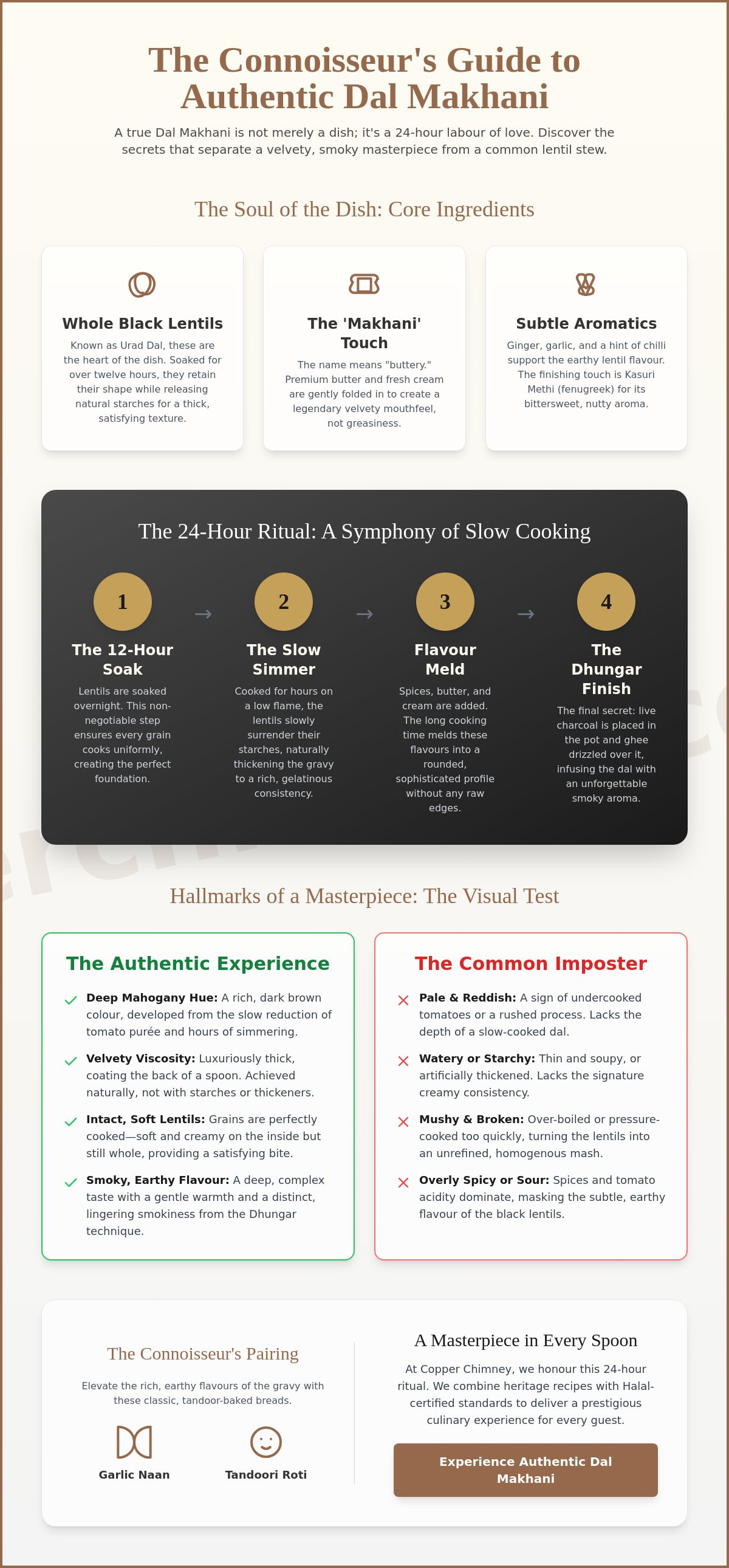
Learn why the 24-hour slow-cooking ritual on a low flame is the non-negotiable secret to achieving a naturally thick, smoky texture.
Discover how to identify the best dal makhani in Singapore by checking for its deep mahogany hue and perfectly intact yet soft lentils.
Understand the critical role of premium butter and whole black lentils in creating the signature "makhani" silkiness that defines authentic North Indian comfort.
Master the art of pairing your meal with Garlic Naan or Tandoori Roti to elevate the rich, earthy flavours of the gravy.
Explore how Copper Chimney combines traditional heritage with Halal-certified standards to deliver a prestigious culinary experience for every guest.
Table of Contents
The Essence of North Indian Comfort: What Defines the Best Dal Makhani?
To understand why Dal Makhani is revered as the crown jewel of North Indian vegetarian cuisine, one must look past its simple appearance. It isn't just a dish; it's a centuries-old story of the Punjab region, where the slow-simmering pots of the village dhaba became a symbol of communal warmth. Finding the best dal makhani in Singapore requires an appreciation for this heritage, as the soul of the recipe lies in the humble whole black lentil, known as Urad Dal, and a touch of red kidney beans, or Rajma. These ingredients provide the structural integrity that prevents the dish from becoming a mere mash, ensuring every spoonful offers a sophisticated, layered experience.
The Secret of the Black Urad Dal
The whole black lentil is unique for its ability to retain its shape despite hours of intense heat. A connoisseur knows that a proper soak, usually lasting at least twelve hours, is non-negotiable to ensure every grain cooks uniformly. As the dal boils, it releases natural starches that create a thick, gelatinous base. This earthy foundation gives the dish its characteristic "bite", offering a satisfying resistance that distinguishes a premium version from a mass-produced, watery substitute. It's this specific texture that creates the perfect canvas for the dairy to follow.
Balancing the "Makhni" Gravy
The term "Makhani" translates to "buttery", but achieving that legendary silkiness is a delicate act of balance. The gravy's rich mahogany colour comes from a precise reduction of tomato purée, which must be cooked until its raw acidity vanishes. High-quality butter and fresh cream are then folded in, not to make the dish greasy, but to create a velvety mouthfeel that lingers on the palate. A final sprinkle of kasuri methi, or dried fenugreek leaves, adds a bittersweet, nutty aroma that completes the sensory journey.
Subtlety is the hallmark of culinary expertise. While ginger, garlic, and green chillies are essential, they shouldn't shout. They act as a supporting cast, enhancing the deep, roasted flavour of the lentils rather than masking them with overbearing heat. When you're hunting for the best dal makhani in Singapore, look for that gentle warmth that comforts the throat without scorching the tongue. This sophisticated restraint, combined with a lingering, velvety finish, marks a truly authentic masterpiece that honours its rustic roots while fitting perfectly into a fine-dining setting.
The 24-Hour Ritual: Why Slow-Cooking is Non-Negotiable
While many modern kitchens attempt to rush the process, a connoisseur knows that true excellence cannot be hurried. The traditional preparation involves an overnight simmer over a low coal fire, or bhatti, which allows the lentils to surrender their starch slowly. This is a fundamental part of the history of Dal Makhani, where the glowing embers of the village oven provided a steady, gentle heat that no modern gas stove can truly replicate. If you're searching for the best dal makhani in Singapore, you must look for a kitchen that respects this twenty-four-hour ritual.
This prolonged exposure to heat does more than just cook the ingredients; it initiates a complex chemical transformation. As the hours pass, the spices lose their raw edge and meld into the dairy, creating a flavour profile that is remarkably rounded. It's a well-known secret among food writers that this dish often peaks on its second day, as the resting period allows the earthy notes of the Urad Dal to fully permeate the creamy base. The result is a depth of flavour that feels intentional and deeply rooted in tradition.
The Art of the Slow Simmer
The "low and slow" method isn't just about heat; it's about transformation. As the Urad Dal simmers for hours, the outer skins soften while the interiors dissolve, creating a naturally thick, gelatinous gravy. This process releases amylose from the lentils, acting as a natural thickener that provides a rich creaminess without relying solely on heavy dairy. It requires constant, mindful stirring to ensure the base doesn't scorch, resulting in a perfectly homogeneous texture that coats the back of a spoon with velvety viscosity.
Infusing the Dhungar (Smoky) Flavour
The final, most critical step in an authentic preparation is the dhungar technique. This involves placing a piece of red-hot charcoal into a small metal bowl resting atop the dal, drizzling it with a spoonful of ghee, and immediately sealing the pot. The resulting plume of smoke is trapped, infusing the lentils with a deep, woody aroma that mimics the rustic charm of outdoor cooking. The dhungar process is the definitive hallmark of authentic North Indian preparation, transforming a simple lentil stew into a smoky masterpiece.
When you experience this level of dedication, you'll understand why a quick-fix version simply cannot compete. If you're ready to taste the result of such patience, you might consider making a reservation to experience it first-hand.
Identifying the Hallmarks of a Premium Dal Makhani
The moment the bowl arrives at your table, the true assessment begins. For those seeking the best dal makhani in Singapore, the first indicator of quality is strictly visual. A premium version should never be a bright, artificial red; instead, it should boast a deep, rich mahogany hue. This colour tells a story of patience, indicating that the tomatoes have been properly reduced and the lentils have melded perfectly with the dairy over many hours. It's a sophisticated shade that promises depth before you even lift your spoon.
Consistency is the next non-negotiable factor. When you dip your spoon into the bowl, the gravy should be thick and substantial enough to coat the silver with a velvety layer. It shouldn't be runny or watery, nor should it be a stiff, unyielding paste. A masterfully prepared dal strikes a delicate balance where the lentils are soft enough to melt against the roof of your mouth, yet they remain visually intact and distinct within the sauce. If the lentils have turned into an indistinguishable mush, the dish has lost its soul.
The Visual and Aromatic Standards
Take a moment to observe the surface of the dish. A common mistake in lesser kitchens is a visible layer of oil or separated fat floating on top, which suggests poor technique. In a superior preparation, the butter and cream are perfectly emulsified into the gravy, creating an invitingly glossy finish that catches the light. The aroma should be equally compelling. You'll first notice the sweet, lactic scent of real butter, followed by the earthy depth of the black lentils. A hint of smoky dried fenugreek should provide a sophisticated top note, inviting you to linger over the fragrance.
The Taste Profile of Excellence
The taste itself is a study in balance and restraint. While the dish is undeniably rich, a connoisseur looks for the subtle acidity of tomatoes to cut through the dairy, ensuring the palate doesn't feel overwhelmed. This acidity, combined with the slow-cooked lentils, creates a profound sense of umami that is deeply savoury. The heat level should remain mild to medium; excessive chilli is a distraction that masks the delicate sweetness of the cream and the roasted notes of the lentils. Every element should work in harmony, leaving a lingering, buttery finish that makes each subsequent bite as rewarding as the first.
The Connoisseur’s Pairing Guide: Beyond the Bowl
The velvet texture of a slow-cooked dal is a masterpiece on its own, but a true connoisseur knows that the experience is only as good as its accompaniments. When you've finally tracked down the best dal makhani in Singapore, your next decision is what to use to scoop up that rich, mahogany gravy. The choice between a soft, pillowy bread and a fragrant bowl of rice can change the entire dynamic of the meal, turning a simple dinner into a curated feast.
For many, Garlic Naan is the quintessential partner. The slightly charred edges from the tandoor and the pungent aroma of roasted garlic provide a sharp, smoky contrast to the creamy lentils. If you're looking for pure indulgence, a Butter Naan adds an extra layer of silkiness that melts into the sauce. However, if you prefer something that lets the earthy flavour of the lentils take centre stage, a crisp Tandoori Roti offers a lighter, whole-wheat alternative that provides a satisfying crunch without the heaviness of refined flour. While stuffed kulchas are tempting, they can often be too dense when paired with a dish that is already so decadent.
Choosing the Right Indian Bread
The interaction between the bread and the gravy is a sensory highlight. The pockets of air in a well-made Garlic Naan act like a sponge, soaking up the buttery goodness of the dal. This combination of soft dough and gelatinous lentils creates a harmonious mouthfeel that is hard to beat. For those who enjoy a more rustic approach, the firm texture of a Tandoori Roti allows you to appreciate the individual grains of the Urad Dal more clearly, providing a balanced bite that feels wholesome and authentic.
Refreshing the Palate
Rice is another elegant option for those who enjoy a lighter meal. A simple Jeera Rice, with its nutty cumin notes, or a bowl of Saffron Basmati, adds a floral lightness that balances the dish's weight. But perhaps the most overlooked element is the role of acidity. To truly appreciate the best dal makhani in Singapore, you need a palate cleanser. Sirka Piaz, or onions pickled in vinegar, offers a sharp, tangy bite that cuts through the richness of the cream. A quick squeeze of fresh lime over the dal can also brighten the earthy profile of the lentils instantly. For a deeper dive into these traditions, explore our Ultimate Guide to Authentic Indian Food in Singapore.
Ready to experiment with these perfect pairings? You can order your favourite combinations online and enjoy a sophisticated Indian meal in the comfort of your own home.
A Masterpiece in Every Spoon: The Copper Chimney Experience
At Copper Chimney, we don't just follow recipes; we guard traditions. By adhering to the twenty-four-hour slow-cooking ritual we've discussed, our chefs ensure that every serving captures the smoky depth and creamy finish that enthusiasts expect. When you seek the best dal makhani in Singapore, you're looking for a dish that bridges the gap between old-world heritage and modern dietary standards. It's a promise kept through patience and the selection of premium whole black lentils, simmered until they reach a state of absolute perfection.
Our commitment to inclusivity is reflected in our Halal certification, a standard that ensures our prestigious North Indian flavours are accessible to Singapore's diverse national audience. This certification is more than just a label; it's a seal of quality that builds trust within our community. Whether you're a long-time fan of regional classics or a newcomer to the world of North Indian and Chindian fusion, our version of this iconic dish is designed to trigger an immediate sensory response, leaving you with a sense of warmth and genuine hospitality.
Our Commitment to Culinary Heritage
Consistency is the hallmark of a master craft. In our kitchens, traditional tandoors and high-quality dairy are used to maintain the exact flavour profile that has made our dal a must-try for connoisseurs. Every batch is monitored to ensure the mahogany hue is deep and the texture is impeccably velvety. For those hosting corporate events or family celebrations, our Halal-certified catering services bring this signature masterpiece directly to your venue, ensuring your guests experience the same level of excellence found in our restaurants.
Experience it Your Way
We understand that the perfect meal depends on the setting. To enjoy the dish at its peak temperature, where the smoky aroma is most potent, we invite you to book a table at one of our national locations. The atmosphere is sophisticated yet welcoming, designed to make you feel like an invited guest in a grand home. If you prefer a quiet night in, the convenience of ordering online allows you to bring the best dal makhani in Singapore straight to your doorstep. From our tandoors to your table, the journey of flavour is steady, reassuring, and always extraordinary.
Experience the Authenticity of a 24-Hour Masterpiece
The journey to finding the best dal makhani in Singapore leads back to a single, non-negotiable truth: true excellence requires time. As we've explored, the deep mahogany hue and velvety texture are the results of a patient twenty-four-hour ritual that no modern shortcut can replicate. By identifying these sensory markers and choosing the perfect bread pairings, you elevate a simple dinner into a sophisticated celebration of North Indian heritage.
At Copper Chimney, we take immense pride in being a custodian of these traditions. Our Halal-certified North Indian excellence ensures that every guest enjoys a sensory-driven recipe that is both professional and deeply personal. Whether you are seeking a refined meal at our locations or require trusted catering for national corporate events, our commitment to quality remains steady and reassuring. We invite you to move beyond curiosity and experience the smoky, buttery depth that defines our signature dish.
Taste the richest Dal Makhani in Singapore, order online or book your table today. We look forward to welcoming you to a culinary experience where every spoonful tells a story of passion and craft.
Frequently Asked Questions
Is Dal Makhani healthy compared to other lentil dishes?
Dal Makhani is a highly nutritious choice that offers a significant amount of protein and fibre from whole black lentils. While it is richer than a simple yellow dal due to the addition of butter and cream, it remains a wholesome, plant-based protein source. It's a satisfying option for those seeking a substantial meal that provides sustained energy without the need for processed ingredients.
What is the difference between Dal Makhani and Dal Tadka?
The primary distinction lies in the type of lentils used and the complexity of the cooking process. Dal Makhani features whole black lentils and kidney beans slow-cooked for hours to achieve a creamy, thick consistency. In contrast, Dal Tadka typically uses yellow split lentils that cook quickly and are finished with a "tadka" of spices tempered in hot oil or ghee just before serving.
Is the Dal Makhani at Copper Chimney Halal-certified?
Yes, our Dal Makhani is fully Halal-certified to ensure it meets the highest dietary standards for all our guests. We take great pride in maintaining this certification across our locations, as it serves as a vital trust marker for Singapore's diverse community. This allows everyone to enjoy our prestigious North Indian flavours with complete peace of mind, whether dining in or ordering for a corporate event.
Can Dal Makhani be made vegan?
Dal Makhani can be adapted for a vegan diet by replacing traditional dairy with plant-based substitutes like coconut cream or cashew paste. While these alternatives provide a similar thickness, they do alter the traditional flavour profile slightly. Most kitchens aiming to provide the best dal makhani in Singapore stick to the classic use of real butter and fresh cream to preserve the dish's historical authenticity and rich mouthfeel.
Why is Dal Makhani often more expensive than other dals?
The cost is a direct reflection of the artisanal labour and high-quality ingredients involved in its creation. Authentic versions require a twenty-four-hour slow-cooking ritual that consumes significant time and energy. When combined with the use of premium whole black lentils and fresh dairy, this process ensures a level of depth and silkiness that simpler, faster-cooking lentil dishes simply cannot achieve.
What are the best side dishes to order with Dal Makhani?
Garlic Naan and Jeera Rice are the quintessential pairings that help balance the richness of the gravy. The smoky, charred notes of tandoor-baked bread provide a wonderful contrast to the creamy lentils, while aromatic cumin rice offers a lighter base. Adding a side of Sirka Piaz, or pickled onions, is also recommended to provide a sharp acidity that refreshes the palate between every decadent bite.
How long does Dal Makhani stay fresh for delivery?
Dal Makhani is one of the most resilient dishes for delivery because its thick, gelatinous base retains heat exceptionally well. When stored in proper insulated packaging, it stays fresh and delicious for several hours. Many connoisseurs actually find that the earthy flavours of the best dal makhani in Singapore deepen during transit, making it an ideal choice for a premium home dining experience or office catering.
Does Dal Makhani contain a lot of spice?
No, this dish is traditionally prepared with a mild to medium spice profile that focuses on fragrance rather than intense heat. The goal is to allow the natural, roasted notes of the lentils and the sweetness of the cream to shine through. While aromatics like ginger, garlic, and dried fenugreek are essential, they are used with sophisticated restraint to create a comforting and rounded flavour profile.


Comments