
The Connoisseur’s Guide to the Best Indian Buffet in Singapore (2026)

Updated: May 4
The most lavish spread often hides the most mediocre flavours; it’s a truth every seasoned diner in the Lion City knows too well. You've likely stood before a vast array of silver chafing dishes only to find the Tandoori chicken dry or the vegetarian options uninspired. Finding a truly exceptional indian buffet singapore requires looking beyond the sheer number of dishes to the craftsmanship behind the Tandoor. We understand the frustration of seeking a Halal-certified space that offers both the nostalgia of North Indian classics and the punchy excitement of Szechwan fusion without sacrificing elegance.
By January 2026, the demand for high-quality, Halal-certified dining has reached a new peak, yet the search for consistency remains. In this guide, you’ll discover how to identify a buffet that prioritises authenticity and innovation over mere volume. We’ll walk you through the essential markers of a sophisticated dining experience, from the aroma of hand-crafted spices to the reliability of award-winning service. Whether you’re planning a corporate lunch or a family celebration, you’ll learn how to choose a venue that transforms a simple meal into a prestigious culinary journey.
Key Takeaways
Learn why communal dining remains at the heart of our food culture, evolving from humble banana leaf traditions into the sophisticated, multi-regional feasts we celebrate today.
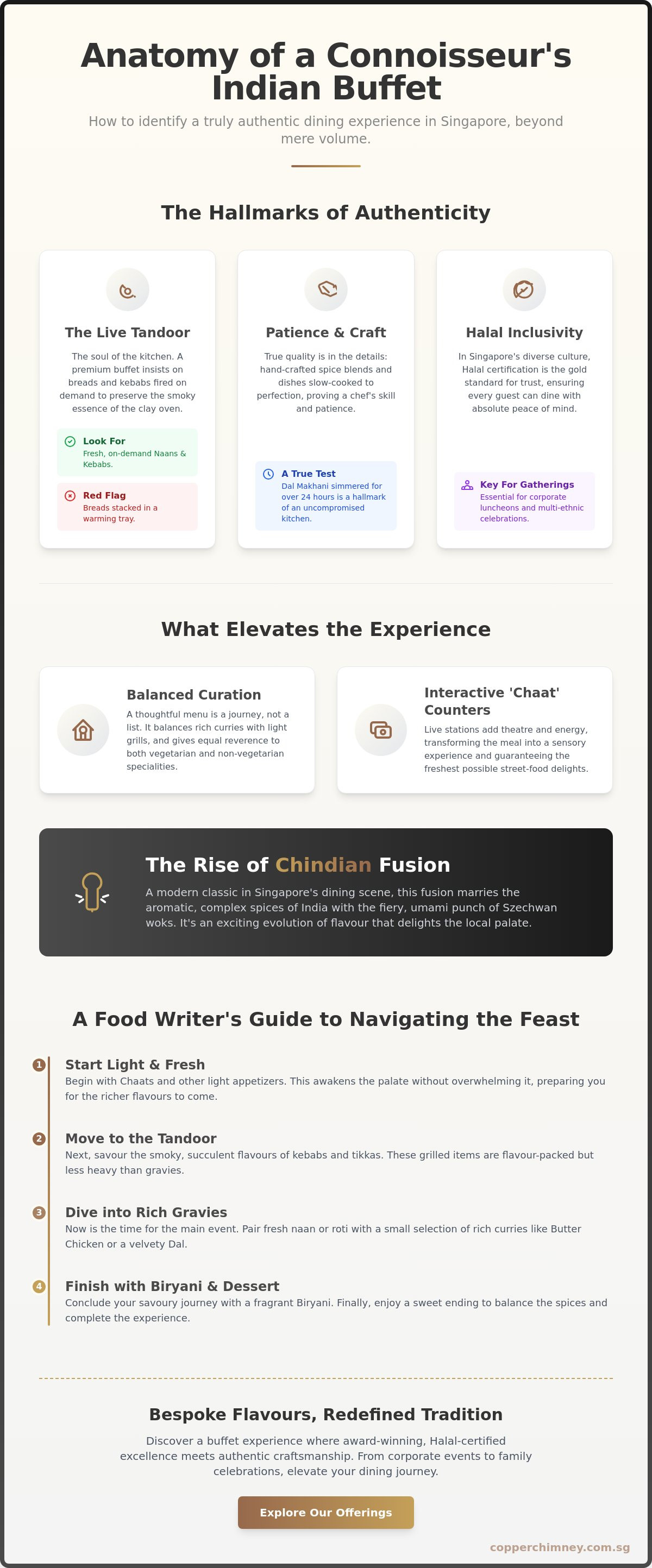
Master the art of identifying a truly authentic Indian buffet in Singapore by looking for essential markers like hand-crafted tandoori meats and fresh, on-demand breads.
Explore the aromatic world of Chindian cuisine, discovering how the spicy fusion of Szechwan and Indian flavours has become a modern classic in the local dining scene.
Discover a food writer’s strategic approach to navigating a heavy spread, ensuring you savour every bite from light chaats to rich gravies without experiencing palate fatigue.
Uncover how award-winning Halal-certified excellence can be brought to your own events through premium catering services that redefine traditional hospitality.
Table of Contents Beyond the Spread: Why the Indian Buffet is a Singaporean Dining Institution The Anatomy of an Authentic Halal Indian Buffet From Tandoors to Woks: The Rise of Chindian Fusion Buffets A Food Writer’s Guide to Navigating the Perfect Buffet Experience Bespoke Flavours: How Copper Chimney Redefines the Buffet Tradition
Beyond the Spread: Why the Indian Buffet is a Singaporean Dining Institution
In Singapore, the act of eating is a revered social ritual that binds the community together. The communal table serves as the heart of this culture, where business deals are finalised and multi-generational families reconnect over shared platters. This tradition has undergone a remarkable transformation over the decades. While the humble banana leaf meal remains a nostalgic staple, the modern Indian buffet in Singapore scene has blossomed into a sophisticated showcase of multi-regional excellence. It's a culinary map that now spans from the rugged, spice-laden frontiers of the North to the coconut-infused coastal regions of the South.
The history of Indian Singaporean cuisine highlights a constant evolution of flavours, and the buffet format is the ultimate expression of this diversity. It provides a unique platform to explore the vast geography of spices without the commitment of a single a la carte choice. However, the primary challenge for any prestigious kitchen is maintaining gourmet standards within a high-volume environment. In 2026, the distinction between a standard spread and a connoisseur's choice lies in the details. The best establishments ensure that every batch of hand-crafted curry or aromatic biryani retains its individual character, avoiding the muted flavours often associated with mass catering.
The Allure of Variety in Indian Gastronomy
The joy of a well-executed spread lies in the seamless transition from the crunch of sizzling street food to the velvet-smooth richness of North Indian gravies. It's an opportunity to discover lesser-known regional specialities that might otherwise be overlooked. For the discerning diner, the connoisseur approach to buffet dining is a curated tasting journey where each selection is chosen to complement the last, rather than a race to fill a plate. This method allows the subtle notes of cardamom, cloves, and saffron to shine through in every bite.
Halal Certification: The Gold Standard for Inclusive Dining
In a city-state as diverse as Singapore, Halal certification is a vital pillar of social harmony. It serves as a gold standard that builds immediate trust for corporate luncheons and multi-ethnic celebrations. This certification ensures that the table remains a place of total inclusion, where every guest can dine with absolute peace of mind. This commitment to inclusivity is often seen in the way different culinary traditions are brought together. For those interested in the unique intersection of cultures, our Halal Indian-Chinese fusion guide offers a deeper look into how these bold flavours are expertly blended to suit the Singaporean palate.
The Anatomy of an Authentic Halal Indian Buffet
A true gourmet Indian buffet in Singapore transcends the mere accumulation of dishes; it's a curated symphony where every element serves a specific purpose. While many casual diners focus on volume, the connoisseur looks for the tell-tale signs of a kitchen that respects tradition. This begins with the curation of the menu, ensuring that the selection isn't just a list of popular items but a balanced journey through regional specialities.
The Tandoor stands as the soul of the kitchen. If the breads are stacked in a warming tray, the experience is already compromised. Premium establishments ensure that hand-crafted Naans and succulent Kebabs are fired on demand, preserving the smoky essence that only a clay oven can provide. This commitment to freshness extends to the balance of vegetarian and non-vegetarian options. A world-class spread treats its Dal Makhani with the same reverence as its Butter Chicken, recognizing that a slow-cooked lentil dish, simmered for over 24 hours, is a true test of a chef's patience and skill.
Interactive elements like the "Chaat Counter" elevate the meal from a simple dinner to a sensory experience. These live stations bring the vibrant street-food energy of Delhi or Mumbai to the table. Watching a chef assemble a Dahi Puri with precision, balancing the sweet tamarind with spicy mint water, provides a theatrical touch that engages the palate before the first bite. For those planning a special gathering, exploring professional catering services can bring this same level of interactive culinary craft to your private event.
Signature Dishes Every Premium Buffet Must Feature
The creamy perfection of Butter Chicken: This dish is the benchmark for any North Indian kitchen. It requires a delicate balance of tomato acidity, silkiness from fresh cream, and a hint of dried fenugreek to achieve its award-winning flavour profile.
Authentic Lucknowi Mutton Biryani: Unlike its spicier counterparts, this aromatic rice selection relies on the "Dum" cooking method. The meat must be tender enough to fall off the bone, infused with the subtle fragrance of mace and ittar.
The textural contrast of Garlic Naan: A staple that must be served hot and crisp. The edges should be slightly charred and blistered from the Tandoor, while the centre remains soft and infused with fresh, pungent garlic.
Sensory Markers of Quality
Aromatic integrity is the first sign of excellence. The smell of fresh cardamom and saffron should dominate the room, rather than the heavy scent of re-used oil. Visual appeal is equally vital, where the use of traditional copper vessels, known as Degs, helps maintain heat while adding a touch of heritage to the presentation. The sharp, rhythmic sizzle of a fresh Tandoori platter as it weaves through the dining room serves as a definitive acoustic marker of culinary excellence. These details confirm that you aren't just eating; you're participating in a long-standing culinary tradition.
From Tandoors to Woks: The Rise of Chindian Fusion Buffets
The culinary landscape of the modern Indian buffet in Singapore has evolved far beyond traditional curries and breads. To understand this shift, we have to look back to the late 1700s in the Tangra district of Kolkata. Here, the Hakka Chinese community began integrating local Indian spices into their traditional stir-fries, creating a flavour profile that's both nostalgic and electrifying. This "Chindian" cuisine has travelled across borders to become a mainstay in Singapore, where diners crave the marriage of high-heat wok techniques and deep, aromatic masalas.
These fusion dishes serve a clever purpose in a buffet setting. While North Indian cuisine is celebrated for its rich, dairy-based gravies, Chindian items provide a sharp, vinegary contrast. They act as a palate cleanser, cutting through the creaminess of a butter chicken or a slow-cooked dal makhani. It's this balance that keeps guests returning for second and third helpings, as the variety prevents "palate fatigue" during a long, indulgent meal.
The Chindian Favourites You Can’t Miss
Gobi Manchurian: This is the quintessential vegetarian starter. We take crisp cauliflower florets and toss them in a tangy, dark soy and ginger glaze. It's the perfect example of how a humble vegetable can be transformed into something bold and addictive.
Szechwan Fried Rice: Unlike the milder Chinese versions found in local hawker centres, this variant is robust and fiery. It features a punchy house-made Szechwan sauce that provides a lingering heat, making it a brilliant companion to succulent kebabs.
Hakka-style Noodles: These noodles are tossed with julienned vegetables and a touch of white pepper; their light, springy texture offers a refreshing break from the heavier, dough-based naans.
Why Fusion Works for the Singaporean Palate
Singaporeans have an inherent appreciation for "wok hei", that elusive, smoky "breath of the wok" that only comes from cooking at intense temperatures. When you combine this charred essence with the complexity of cumin, coriander, and turmeric, you get a dish that feels both familiar and exotic. For many diners at an indian buffet singapore, these stir-fried options feel lighter and more manageable than a full spread of heavy stews.
This fusion doesn't just add variety; it bridges cultures. It's a testament to how food evolves when traditions collide. For those who want to understand the foundational flavours before diving into the fusion, exploring our ultimate guide to North Indian food provides the necessary context. At Copper Chimney, our award-winning, Halal-certified kitchens take pride in mastering both the tandoor and the wok, ensuring every guest feels like an invited guest in our culinary home.
A Food Writer’s Guide to Navigating the Perfect Buffet Experience
Approaching an indian buffet singapore requires the precision of a curator and the restraint of a critic. Palate fatigue is the true enemy of a multi-course meal; it occurs when bold, creamy gravies overwhelm your taste buds too early. To avoid this, you must adopt a strategic sequence that respects the complexity of the spices. Pacing yourself allows you to appreciate the distinct regional profiles, from the smoky depths of the North to the fiery accents of Chindian fusion. Traditional beverages play a vital role here too. A chilled Lassi acts as a palate cleanser between courses, while a ginger-infused Masala Chai provides a soothing, digestive finish to a heavy meal.
Step 1: The Appetiser Round
Begin your journey with the dry-heat mastery of the Tandoor. Focus on items like Chicken Tikka or Paneer Tikka, which offer charred, aromatic notes without the immediate weight of a heavy sauce. The vibrant Mint Chutney is your best ally here, providing a refreshing, herbaceous lift that cuts through the smoke. Experienced diners always visit the live Chaat station during this phase. It's the perfect opportunity to customise your spice and tamarind levels, ensuring your palate is awakened rather than exhausted. These hand-crafted street snacks provide the acidic zing necessary to prepare your stomach for the richer textures ahead.
Step 2: The Main Event
Success in the main course relies on thoughtful portion control and intelligent pairing. Take a modest serving of aromatic Biryani and pair it with the robust Mutton Rogan Josh. The tender meat should fall away from the bone, reflecting hours of slow-cooking. You should use the Dal Makhani as your litmus test for quality; at Copper Chimney, this signature dish is simmered for over 24 hours to achieve its legendary buttery consistency. When selecting your breads, match the texture to the sauce. A crisp Garlic Naan is ideal for scooping up thick masalas, while a softer Kulcha complements lighter lentil dishes. Don't overlook the Chindian section; adding a side of Chilli Chicken provides a spicy, Hakka-style kick that distinguishes this experience from a standard spread.
Step 3: The Sweet Conclusion
A sophisticated meal demands a balanced finale. The necessity of a syrup-soaked Gulab Jamun or a delicate Rasmalai cannot be overstated, as the dairy and sugar neutralise any lingering heat from the savoury rounds. A well-executed dessert is a hallmark of a kitchen that values attention to detail. To conclude like a true connoisseur, order a warm cup of Masala Chai. The blend of ginger and cardamom serves as a traditional digestive aid, settling the stomach and leaving you with a sense of satisfied warmth. It is the definitive finish to a refined Indian buffet experience.
Ready to put these strategies to the test at an award-winning venue? Reserve your table at our Syed Alwi restaurant and discover the art of the perfect Indian feast.
Bespoke Flavours: How Copper Chimney Redefines the Buffet Tradition
Copper Chimney has spent over a decade perfecting the art of the Indian buffet in Singapore. We've earned our place as a multi-award-winning destination by blending North Indian tradition with the punchy, bold notes of Chindian cuisine. Our philosophy centres on the idea that a buffet shouldn't feel like a mass-produced meal; it should feel like a curated journey. Since our inception, we've focused on hand-crafted flavours and sizzling tandoori dishes that resonate with Singapore's diverse palate.
Transitioning from our bustling dining rooms to premium Indian catering services was a natural evolution for our brand. We noticed that 85% of our corporate clients wanted the same "Live Station" energy at their offices that they experienced at our Syed Alwi flagship. We've met this demand by ensuring our chefs bring the same traditional techniques, such as hand-stretched naan and charcoal-fired meats, to every external event. Whether it's a small gathering of 20 or a grand gala for 500, the quality remains uncompromising and the heritage stays intact.
Catering Your Own Indian Buffet
Planning an event requires a delicate balance of variety and dietary sensitivity. Our team works closely with hosts to customise menus for weddings and corporate lunches, ensuring every guest finds something to love. For mid-day corporate sessions, our High Tea Buffet options provide a lighter yet equally sophisticated alternative to heavy meals. We pride ourselves on offering extensive vegetarian selections and Chindian fusion choices, like our signature Szechwan Triple Fried Rice, which caters to the adventurous Singaporean diner.
The Copper Chimney Signature
The true differentiator of a Copper Chimney event is the presence of our "Live Chaat Counter" and "Live Tandoor." These stations create a sensory spectacle where the aroma of roasting spices and the rhythmic sound of chopping herbs become part of the entertainment. As a Halal-certified custodian of heritage, we take our role seriously. We ensure every dish, from the buttery Dal Maharaja to our spicy Hakka Noodles, meets the highest standards of authenticity. If you're ready to elevate your next event or simply crave an exquisite meal, we invite you to book an appointment with our catering team or reserve a table to experience the best indian buffet singapore has to offer.
Halal-Certified: Full compliance for diverse corporate requirements.
Chindian Specialists: The only authentic Indian-Chinese buffet experience in the city.
Live Stations: Freshly prepared Chaat and Tandoori items served on-site.
Bespoke Planning: Tailored menus that respect both tradition and modern dietary needs.
Bring the Art of the Indian Buffet to Your Next Celebration
Finding the ultimate Indian buffet in Singapore has to offer is about more than just the sheer volume of dishes on the table; it's about the soul behind the tandoor and the precision of the wok. We've explored how the city's dining landscape has evolved to embrace both traditional North Indian heritage and the fiery, nostalgic zest of Chindian fusion. A truly memorable spread requires that delicate balance of Halal-certified integrity and award-winning culinary craft that has defined the local food scene for years. It's the difference between a simple meal and a curated dining experience that lingers in the memory of every guest.
Copper Chimney has remained a cornerstone of this tradition since 2012, blending aromatic spices with the warmth of genuine hospitality. Whether you're hosting an intimate home celebration or a large-scale corporate function, the addition of a specialised live station transforms a buffet into a vibrant sensory performance. Our team brings over a decade of expertise to your venue, ensuring every skewer and sauce meets the high standards of a true connoisseur. Experience the finest Halal Indian buffet catering for your next event with Copper Chimney and let us bring these storied flavours to your table. We can't wait to help you create a feast that your guests will talk about for seasons to come.
Frequently Asked Questions
Is an Indian buffet in Singapore suitable for those who cannot eat spicy food?
Yes, an indian buffet singapore experience is perfectly suited for those with a milder palate. You'll find that roughly 40% of our curated selections, such as the velvety Butter Chicken or hand-crafted Malai Kofta, prioritise aromatic depth over heat. These dishes use cream and cashew pastes to create a rich, soothing profile that welcomes every guest to the table without overwhelming the senses.
What are the most popular Halal-certified Indian buffet dishes for corporate events?
For corporate gatherings, Halal-certified favourites like Saffron Biryani and Tandoori Kebabs are the most requested items. Statistics from 2024 corporate event planners indicate that 85% of Singaporean firms prioritise Halal-certified vendors to ensure inclusivity for all team members. Our award-winning Chicken Tikka remains a staple, offering a smoky, charred flavour that's both professional and satisfying for diverse groups of colleagues.
How do I ensure the food stays fresh when ordering an Indian buffet for catering?
Maintaining freshness requires precise temperature control and strict adherence to the 4 hour consumption rule mandated by the National Environment Agency (NEA). We use high-grade stainless steel chafing dishes to keep curries at a steady 60°C or higher throughout your event. Timing is equally vital; we schedule deliveries to arrive exactly 30 minutes before your service begins to preserve the sizzle of our Tandoor-fired breads.
Are there enough vegetarian options in a typical North Indian buffet?
North Indian cuisine is renowned for its vegetarian wealth, with plant-based dishes often making up 60% of a traditional buffet spread. You can expect a sophisticated array of protein-rich lentils like Dal Makhani alongside fresh cottage cheese preparations such as Palak Paneer. This variety ensures that vegetarian diners enjoy a meal that's just as layered and hearty as any meat-based counterpart in the selection.
What is the difference between a standard Indian buffet and a Chindian fusion buffet?
A standard buffet focuses on traditional Mughlai flavours, while a Chindian buffet introduces the bold, fiery zest of Indian-Chinese fusion. Copper Chimney has been a custodian of this unique style since 2012, blending Himalayan spices with wok-frying techniques. You'll find signature dishes like Szechuan Fried Rice alongside classic North Indian staples, offering a broader spectrum of textures and tastes for the curious diner.
Can I request a live cooking station for a private Indian buffet catering setup?
You can certainly request a live cooking station to add a sense of theatre and excitement to your private event. Stations featuring hand-tossed Roomali Roti or sizzling Dosas are incredibly popular, often increasing guest engagement levels by 70% compared to standard buffet setups. It allows your guests to witness the master craft of our chefs as they prepare fresh, hot items right before their eyes.
How many dishes should a high-quality Indian buffet typically include?
A premium indian buffet singapore should typically offer between 18 and 25 distinct dishes to provide a truly comprehensive culinary journey. This count includes a balanced mix of 4 appetisers, 2 signature rice dishes, 6 main courses, and at least 3 traditional desserts. This range ensures enough variety to satisfy both the adventurous eater and the traditionalist looking for familiar comforts during their meal.
Is it necessary to book in advance for popular Indian buffet restaurants in Singapore?
Booking in advance is highly recommended, especially during the festive months of October through December when demand peaks for celebrations. Popular venues often see their weekend slots filled 10 to 14 days ahead of time. To secure your preferred timing for a large group, it's best to confirm your reservation at least one week prior to ensure a seamless and welcoming hosting experience.


Comments